It is highly likely that you will consider installing an EV charging outlet in your house in case you are an electric vehicle (EV) owner or you are interested in acquiring one. Home charging ports will provide EV owners with a convenient alternative to charge their electric vehicle without necessarily searching a public charging station.
These owners are sometimes required to install their EV charging stations since they are not anywhere close to the number of petrol stations.
However, this convenience is not free. Home charging stations are powered by the existing electrical system. Since an electric car requires much energy, the price of using this electricity is similar to the normal domestic electrical usage, thus it can be a bit expensive – it can even increase your household’s energy usage by half. Charging Tesla with solar panels is an ideal solution to both the owners of solar panels and EV owners. It converts a variable cost (grid electricity prices) into a fixed asset investment in renewable energy.
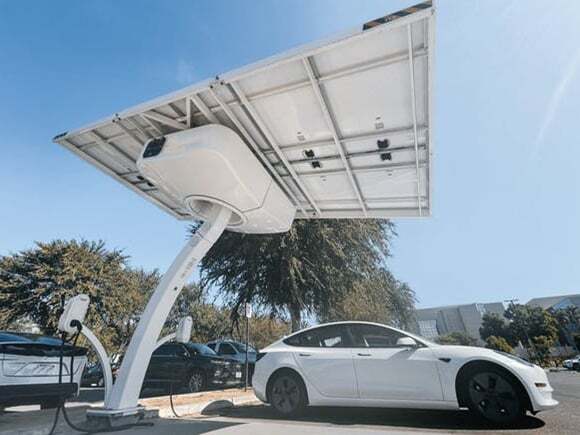
One of the most common questions new owners ask is: “Can I charge my tesla with solar panels?” or “Can you charge tesla with solar panels?” The answer is yes, but the mechanics need to be explained. Solar panels produce Direct Current (DC) power, and your Tesla battery holds DC power. In the majority of residential installations, however, the electricity has to be converted in a way that allows compatibility and stability.
This “handshake” between the sun and your vehicle takes place in two main ways:
Elon Musk has been a proponent of this two-pronged solution: a self-sustaining ecosystem in which the roof produces the fuel to the car. This is thermodynamically and economically a closed loop, which protects the homeowner against external energy price shocks.
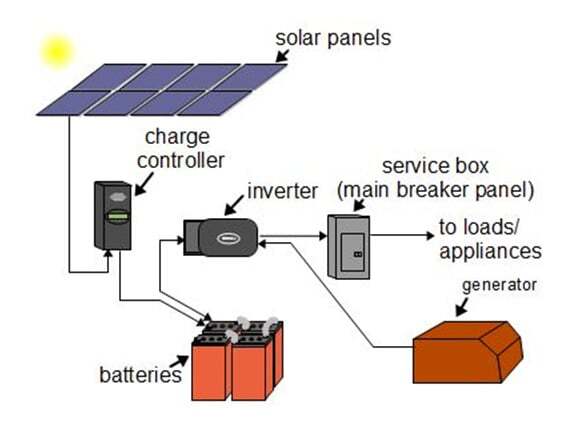
In order to recreate the utility of a gas station at home with solar power, you are basically creating a micro-utility. The bigger the energy requirements, the larger the size of your solar PV array will have to be to provide sufficient energy output to power an EV.
What are the exact tools required, other than the solar panels themselves?
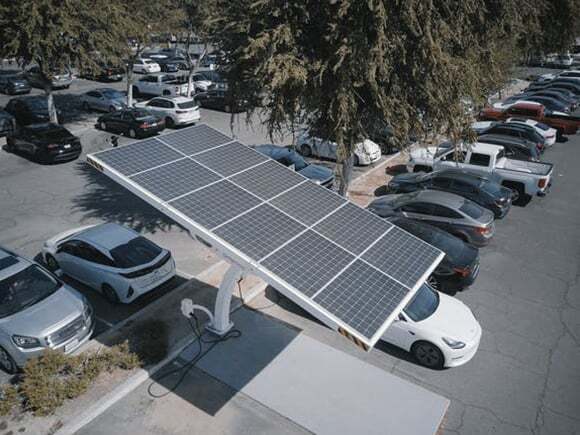
This is the most important calculation for any homeowner asking “how many solar panels do i need to charge my tesla? The number of solar panels needed is not an estimate; it is based on your driving habits, the panel’s power rating, and car’s efficiency.
An average of 8 to 10 solar panels (400 watts each) will be required to charge a Tesla Model 3 that consumes about 18.1 kwh of electricity per 62.13 miles. This is based on the fact that the average American driver covers by Americans is about 13,476 miles per year. Therefore, the system addition of about 3.2 kW to 4 kW of DC production power is sufficient only to meet the requirements of the vehicle.
To identify your particular need —whether you need a solar panel for tesla model y or are looking into solar roof tesla model 3 charging – you need to examine the effectiveness of the particular model. Factors involved include:
The table below gives a baseline of a driver with the annual average of 13,500 miles, using standard 400W panels.
The following table provides a baseline for a driver covering the annual average of 13,500 miles, utilizing standard 400W panels.
| Tesla Model | Efficiency (kWh/100 mi) | Annual kWh Required | Dedicated Solar Panels Needed (Est.) |
| Model 3 | 24 – 26 | ~3,500 | 6 – 8 |
| Model Y | 28 | ~3,800 | 7 – 9 |
| Model S | 28 – 30 | ~4,050 | 8 – 10 |
| Roadster | 30 – 33 | ~4,100 | 10 – 12 |
| Model X | 33 – 36 | ~4,850 | 10 – 12 |
| Cybertruck | 45+ | ~6,000+ | 14 – 16 |
Note: This data is based on an average location of sun exposure. The number of solar panels required by residents in cloudy areas such as Seattle can be 20% higher than those in Arizona. thereby optimizing the charging process and ensuring sustainability in their energy use.
The approach you take will affect the effectiveness of energy transfer and the comfort of your way of life.
1. Direct Solar Charging (Daytime)
This is the most cost effective approach. When the sun is at its best (typically 10:00 AM to 3:00 PM) you plug the vehicle in.
2. Solar + Battery Storage (Nighttime)
This is the “Time-Shift” method. During the day, your solar array charges a home battery (stationary storage). You come home at night and empty that battery into your Tesla.
3. Grid-Buffered Charging (Net Metering)
During the day, you add more solar to the grid (earning credits) and draw grid electricity at night to charge the car.
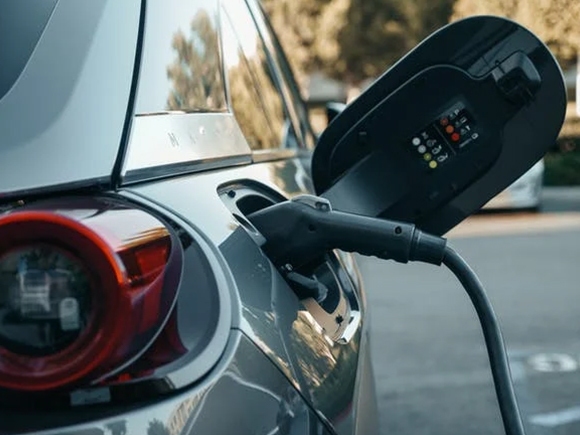
A frequent question among new owners is “how long does it take to fully charge a tesla?” The bottleneck in the system determines the fill-up time: the power output of the charger and the area of your solar array. Consider it in the following manner: the water source is solar energy, the bucket is the battery, and the hose is the charger.
Whereas a typical Level 1 outlet (120 V) is more of a dripping tap, requiring days to fill the “bucket” a special solar integration system targets Level 2 Charging. But the time of the day when it happens is very different depending on what Tesla you are driving.
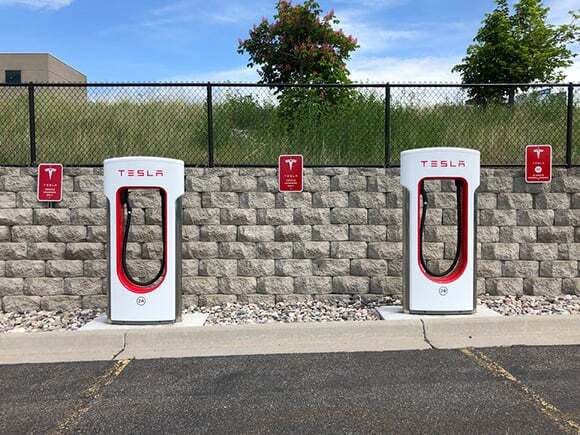
Understanding the solar panel requirements for various Tesla models is pivotal for optimizing charging efficiency. A Model 3 and a Cybertruck have vastly different “appetites.” To make your solar infrastructure economically viable and technically adequate, you must take a granular approach.
The table below outlines the specific requirements for each model. It details the kwh battery capacity, the estimated solar system size (kW) needed to match that capacity efficiently, and the charging time under optimal solar conditions.
| Tesla Model | Battery Capacity (kWh) | Estimated Solar Panel Output Required (kW) | Average Solar Charging Time (hrs)* |
| Model S | 100 | 12 | 7 – 8 |
| Model 3 | 75 | 9 | 6 – 7 |
| Model X | 100 | 12 | 7 – 8 |
| Model Y | 75 | 9 | 6 – 7 |
| Roadster | 200 | 24 | 14 – 16 |
| Cybertruck | 200 | 24 | 14 – 16 |
*Note: These values are based on ideal solar conditions. The total number of hours of peak power production is called the “Average Solar Charging Time”. With the average number of peak sun hours per day of 5-6, it might take several days to charge a Roadster or Cybertruck to full capacity using only the sun, or it might need a battery backup.
Critical Insight for System Builders
According to the data, to charge a Cybertruck or Roadster, one would need a huge 24 kW of solar output.
In the analysis of the economics of solar charging, it is necessary to consider it as capital expenditure (CapEx) and operating expenditure (OpEx).
Conventional gas cars and grid-charged EVs are low-CapEx (no solar install) and high, indefinite OpEX (monthly fuel/electricity costs). A solar charging system is expensive in terms of CapEx and low in terms of OpEx.
The Economic Comparison:
| Cost Factor | Solar Panel Charging System | Traditional Grid Charging |
| Upfront Investment | $12,000 – $20,000 (Before incentives) | $0 – $1,000 (Charger install) |
| Cost per “Gallon” | Equivalent to $0.40 – $0.50 (Amortized) | Equivalent to $1.50 – $4.00 (Depends on rates) |
| Inflation Risk | None (Sunlight is free fixed cost) | High (Rates rise ~3-5% annually) |
| ROI Horizon | 6 – 9 Years | N/A (Perpetual cost) |
Recent energy statistics show that the national average cost of electricity is at about $0.18/kWh, though in major EV markets such as California or the Northeast, it may be over $0.32/kWh. If you ask how much is it to charge a tesla? At such prices, charging a 75kWh Tesla Model Y costs about ¥28.50 through the grid. That marginal cost is reduced practically to zero with a paid-off solar system.
Furthermore, you must consider the federal solar tax credit. This solar tax credit (ITC) can significantly reduce your upfront cost and solar panel costs by allowing you to deduct a percentage of your system’s price from your taxes. When factoring in this tax credit, the average cost drops, accelerating your return on investment.
The fuel savings alone can be over $25,000 over the 25 years of a solar system, which is basically the cost of the solar system.
Critical Photovoltaic Protection:
Normal domestic breakers do not usually meet the special needs of solar DC power. An effective system must have three lines of defense that cannot be compromised:
Smart EV Chargers (Dynamic Load Balancing):
Intelligence should be accompanied by safety. A charger with Dynamic Load Balancing (DLB) is required to maximize ROI. A DLB-enabled unit will show you the total energy consumption of your home in real-time, unlike a standard charger. It also automatically slows down charging rates to avoid tripped breakers when appliances such as A/C are on, and increases charging rates when excess solar energy is detected- so that all kilowatts of the free solar power is used efficiently.
Why BENY
This level of “micro-grid” complexity is where BENY excels. With over 30 years of experience in electrical protection, we don’t just meet these safety standards—we define them.
The future of solar EV charging is evolving at a very high pace, moving beyond mere connectivity to smart energy independence. This landscape is being redefined by three major trends driven by the need to address climate change:
Bidirectional Charging (V2H & V2G) The future generation of chargers will make your Tesla not a passive load, but an active energy resource. With Vehicle-to-Home (V2H) technology, your EV serves as a giant battery backup in times of blackouts. Moreover, Vehicle-to-Grid (V2G) enables you to sell stored solar energy to the grid at peak times, making your driveway a profit center.
Hyper-Efficient Photovoltaics Solar technology is pushing the boundaries. As N-type and HJT cell technologies are on the rise, the panel efficiency is increasing between 20 and more than 25 percent. This density of power implies that smaller rooftops can finally produce enough excess to charge a daily driver, which makes solar charging a possibility in urban households with limited space.
Vehicle-Integrated PV (VIPV) Emerging Perovskite cell technology is a technology that offers lightweight, flexible solar skins that can be sprayed on the surface of the vehicle. Although this innovation does not substitute rooftop arrays, it may enable cars to passively recharge 1020 miles of range each day by simply parking in the sun, which will further decrease grid dependency.
The final fulfillment of the electric vehicle promise is to charge a Tesla with solar panels. It separates the driver and the carbon emissions of the grid and the volatility of energy markets. Although the initial complexity of computing panel requirements and choosing components may be overwhelming, the long-term statistics are obvious: it is a financial winner.
The success of this system however depends on quality. Every chain in the chain is important, starting with the computation of the array size, the choice of safety-critical protective devices, and intelligent charging hardware. By creating a system that is based on safety and efficiency, you make sure that your future is not only clean, but also safe.
Q: Can I use a portable solar panel to charge my Tesla?
A: Yes, technically, but it is not practical to use in everyday life. Portable panels typically produce low power (100W-200W). It would take days or weeks to charge a Tesla battery even in ideal circumstances. They should not be used as a major source of charging but only as an emergency top-up when camping.
Q: Does charging a Tesla with solar panels work on cloudy days?
A: Yes, solar panels still generate electricity in indirect sunlight, though efficiency may drop to 10-25% of their maximum output. However, if your system is grid-tied or has a battery backup, you will not lose the ability to charge; you will simply supplement the reduced solar power with grid energy or stored battery power.
Q: How to charge a Tesla at home?
A: How do you charge a tesla efficiently? You have two primary options for home charging:
Process: Simply press the button on the connector handle to open the charge port, plug it in, and look for the pulsing green light. You can monitor and schedule tesla charging at home directly through the Tesla App.ls, which can range in numbers from 6 to 12.