Fixed low-voltage switchgear keeps circuit equipment mounted and wired in place. Withdrawable switchgear uses specified units designed to be removed through purpose-built connections. A fixed layout may suit scheduled in-place service; a withdrawable layout is worth assessing when the maintenance plan calls for replacing individual circuit units.
The difference matters when a circuit needs service: will equipment be repaired in place or removed as a unit, and what else must be isolated? The answer affects the room layout, spare-parts plan and the value of each proposal.
Here is how fixed and withdrawable low-voltage switchgear compare in practice, using BENY GGD and GCS as examples. Both still need to meet the site’s electrical requirements.
Fixed vs Withdrawable Switchgear at a Glance
Both designs distribute an incoming electrical supply to outgoing circuits and provide switching and protection. The table compares how the circuit equipment is installed and maintained—not a ranking of which cabinet is always better.
| What to compare | Fixed switchgear | Withdrawable switchgear |
|---|---|---|
| Circuit construction | Equipment is mounted and wired in place. | Specified circuit equipment forms a unit that can be withdrawn through designed connections. |
| Maintenance plan | Plan access to service or replace installed devices and their connections. | Plan removal and replacement of a designated unit, with compatible spares and settings. |
| Room layout | Allow operating, cable and service access; BENY’s published GGD arrangement needs rear maintenance space. | Allow operating and service access, plus space to withdraw, handle and store units. |
| Spare-parts strategy | Identify replacement devices, ratings and settings for the installed circuits. | Also identify which complete spare units fit the proposed drawer connections and functions. |
| A reason to shortlist it | The site can plan in-place service and provides access to the installed devices and connections. | The site needs planned replacement of designated circuit units and can keep compatible spares. |
On a small screen, swipe the table sideways to see all three columns. The required isolation and shutdown scope depend on the specific task and design, not the structure name alone.
Electrical Checks Both Designs Must Meet
Start with the circuits you need to supply: lighting, ventilation, production equipment, pumps or other loads. For motors, say whether starting, stopping and protection must be included or are provided elsewhere. If you are expanding an existing site, have its assembly assessed before assuming another cabinet is needed.
Match the Supply Voltage and Frequency
Give the supplier the site’s operating voltage, frequency, earthing arrangement and power sources. Identify any separate supply needed for controls. The proposed cabinet and its components must match the project supply—not simply a familiar model name.
Operating voltage and insulation voltage are different specifications. A higher insulation-voltage figure is not permission to operate the cabinet at that voltage.
Check Normal Operation and Fault Protection Separately
The load list tells your electrical designer what must run at the same time, including motor-starting needs and planned additions. This helps establish the current the assembly needs to carry under the site’s operating conditions.
Short-circuit capability answers a different question: what happens during a fault? The designer establishes the possible fault current at the installation point. The proposal then needs a suitable assembly short-circuit rating, with its duration or protective-device conditions, and suitable breaker capability and protection settings.
In a quotation, look for both the normal-current rating and the short-circuit rating of the proposed assembly. A large ampere figure—or the rating of its main breaker alone—does not describe both.
When Does Fixed Make Sense, and When Should You Consider Withdrawable?
Focus on a task your maintenance team expects to perform, such as replacing the equipment serving one motor circuit. The useful question is: what needs to be removed, and what else must stop for that job?
BENY GGD: A Starting Point for Fixed AC Distribution
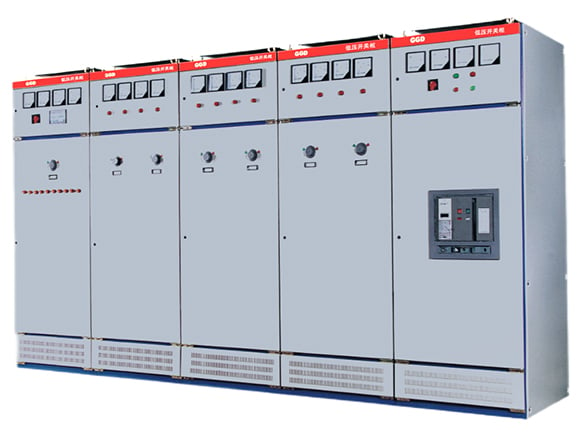
BENY GGD low-voltage switchgear is a fixed-type AC distribution cabinet for general power distribution.
Suppose a workshop needs supplies for lighting, ventilation and production machines. It can close the affected area for scheduled service. A fixed GGD proposal is a reasonable starting point—but the room must work as well as the electrical design.
BENY’s published GGD arrangement requires rear maintenance access. The layout should therefore show the cabinet, cable routes and service space together. If the room cannot provide that access, revise the layout or equipment arrangement before approving the order.
BENY GCS: Plan for Individual Circuit Replacement
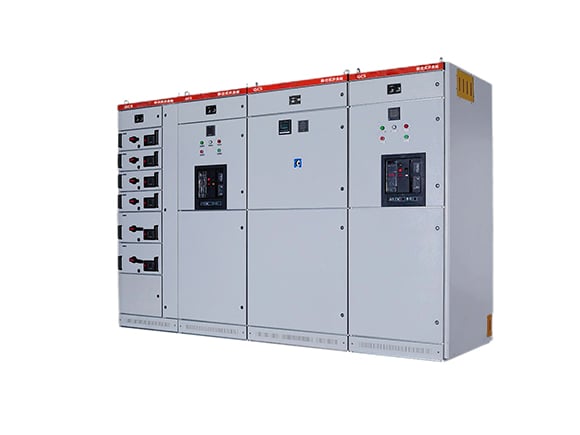
BENY GCS withdrawable switchgear uses a drawer-based arrangement with distribution and motor-control options. Specify the functions you need; they are not automatically included in every cabinet.
Consider a plant with several pump or fan circuits. Its maintenance plan calls for removing and replacing the equipment serving one motor circuit. A GCS proposal should identify which circuits use drawers, what each drawer contains, and the compatible spare units and settings needed.
Ask the supplier to describe that replacement task: which circuit is isolated, which other equipment must stop, and how the unit is removed and handled. This turns “withdrawable” from a catalogue feature into a maintenance plan.
Plan the shutdown as well as the replacement. Removing one unit is different from repairing a fault on a shared busbar—the conductor distributing power inside the cabinet. Drawers do not guarantee uninterrupted operation. Competent personnel must plan and carry out isolation and servicing under the specific design, local rules and approved procedures. The UK’s HSE electrical-work guidance explains safe isolation and competent working.
Space and Expansion: Compare the Installed Layouts
A cabinet can fit on a floor plan yet be difficult to install or service. Check the delivery route and door openings, cable-entry direction, ventilation, and space to operate doors and reach connections. A drawer layout also needs room to withdraw and handle its units.
Tell BENY about temperature, altitude, dust, moisture and corrosive conditions. Choose enclosure protection for those conditions. An IP code describes specified contact and ingress protection; corrosion resistance, outdoor suitability and internal-arc performance require separate assessment.
For future expansion, ask what can actually be added. An empty compartment is useful only when the electrical capacity, connections, cable access and compatible equipment support the new circuit.
Cost: Compare Complete Fixed and Withdrawable Proposals
There is no universal price difference between the two. To judge whether a drawer arrangement is worth the investment, compare its unit-replacement approach and spare-unit plan with the fixed proposal’s service arrangements. Include installation, access and support in the comparison.
Send suppliers the same circuit diagram, load list and site requirements. Otherwise, a lower price may reflect different equipment or a smaller scope rather than better value.
Before comparing totals, check that each proposal identifies:
- What is supplied: incoming and outgoing circuits, protective devices, motor-control functions, metering and any communications.
- How it fits: cabinet arrangement, cable entries and the operating and maintenance space.
- How it will be supported: spare parts or drawer units, settings, service scope and delivery terms.
- What documents come with it: agreed drawings, electrical ratings, applicable standards and editions, and verification records.
For projects using the IEC framework, IEC 61439-1 provides general rules and is used with the relevant product part; IEC 61439-2 covers power switchgear and controlgear assemblies.
Request evidence for the offered design and routine-verification records for the supplied assembly. BEAMA’s assembly-verification guide explains design verification, routine verification and the buyer’s specification responsibilities. Separately, agree any project-specific factory acceptance tests before ordering. A certificate for one component does not, by itself, verify the complete cabinet.
Which Should You Choose for Your Project?
Start by assessing fixed GGD for general distribution where the required circuits, planned service and room access fit a fixed installation. Assess withdrawable GCS where your maintenance strategy calls for replacing designated circuit units and keeping compatible spares.
Start with the information you already have: a single-line diagram showing supplies and outgoing circuits, the equipment load list, supply details, room layout and installation country. Add your maintenance priorities, expansion plans and required documents.
If the design is not finished, identify what is still unknown. BENY can review the available information with your project team to assess a fixed or withdrawable arrangement and clarify the configuration needed for a quotation.
Explore BENY power distribution systems and send your project brief. Ask for a proposal that shows what the cabinet supplies, how it fits the site, and how your team will maintain it.
Frequently Asked Questions
Does withdrawable switchgear mean maintenance can happen without a shutdown?
No. Ask which circuit and other equipment must be isolated for the specific job. A removable unit can support a planned replacement strategy, but it does not guarantee hot-swap operation or that all other circuits can remain energized.
Does a withdrawable main breaker mean all outgoing circuits are drawers?
No. Different connection arrangements can exist within the same assembly. Ask for the circuit schedule to identify which units are fixed, removable or withdrawable, including any motor-control units you expect to replace.
Is the model name enough to compare two offers?
No. GGD and GCS identify cabinet arrangements, not a complete project specification. Compare the actual circuits, ratings, components, access requirements and supplied documents in each offer.
References
Accessed 19 October 2026. The IEC links verify titles, editions and published scope; These references explain the selection framework, not certification of a particular BENY cabinet.
- IEC 61439-1:2020 — general rules.
- IEC 61439-2:2020 — power switchgear and controlgear assemblies.
- BEAMA — Guide to Verification for Power Switchgear and Controlgear Assemblies, July 2023; UK guide to BS EN IEC 61439-2.
- HSE — Electricity at Work: Safe Working Practices (HSG85), UK safety guidance.