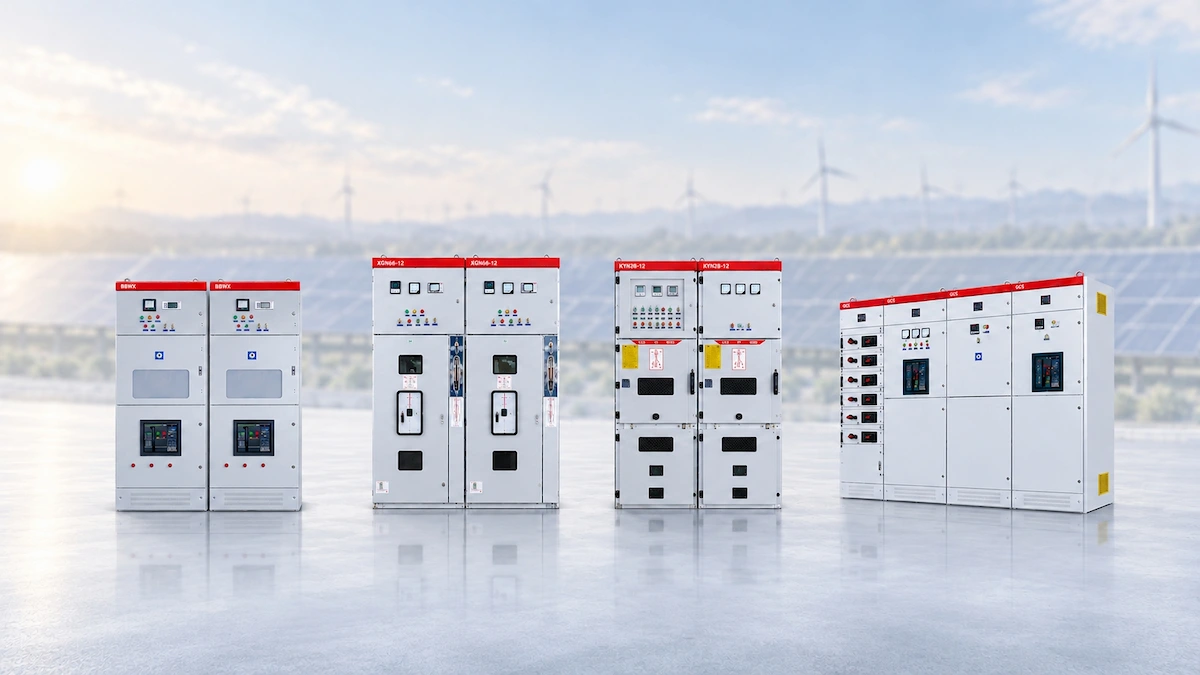
Power distribution equipment suppliers to compare include BENY, Schneider Electric, Siemens, ABB, Eaton, Legrand, Mitsubishi Electric, LS ELECTRIC, CHINT and Powell Industries. The right choice depends on what you are buying: a complete switchgear assembly, distribution panels, a panel-and-busbar system or a prefabricated electrical package.
A factory expansion and a new EV charging site may both need distribution equipment, but they do not necessarily need the same supplier or product range. Start with the equipment scope, then compare the companies that can supply it.
This guide is published by BENY and includes our own products. It is a procurement shortlist based on published product ranges, not a ranking by sales, market share or independent product testing. The focus is permanently installed electrical distribution for commercial, industrial and energy projects—not stage-power boxes or server-rack power strips. Brand names and logos identify the companies discussed; their inclusion does not imply sponsorship or endorsement.
Quick Comparison: 10 Power Distribution Equipment Suppliers
Use the table to identify relevant product ranges before requesting a quotation. The examples are starting points, not the complete catalogue of each company.
| Supplier | Relevant equipment | A useful starting point for |
|---|---|---|
| BENY | GGD/GCS cabinets, switchgear, PV metering cabinets and prefabricated substations | Distribution equipment for solar, EV charging and industrial projects |
| Schneider Electric | SeT assemblies, motor-control systems and Canalis busbar trunking | Coordinating several parts of a facility’s distribution system |
| Siemens | SIVACON S8 switchboards and SIVACON 8PS busbar trunking | Low-voltage distribution with planned busbar routes and monitoring |
| ABB | MNS low-voltage switchgear and motor-control assemblies | Industrial distribution and motor-control requirements |
| Eaton | Switchgear, switchboards, panelboards, motor control centers and busway | Main and downstream distribution within the locally offered range |
| Legrand | Distribution panels, protective devices and Zucchini busbar trunking | Building and industrial panel-and-busbar distribution |
| Mitsubishi Electric | MS-E and AL-P switchgear, motor control centers and circuit breakers | Projects combining incoming distribution and motor control |
| LS ELECTRIC | Medium- and low-voltage switchgear, ring main units and protection devices | Comparing complete assemblies alongside their protection components |
| CHINT | Main, sub- and final distribution boards; NGC8 low-voltage assemblies | Modular distribution from the main board to downstream circuits |
| Powell Industries | Switchgear and integrated PCR/E-House electrical packages | Industrial projects combining equipment and a prefabricated electrical room |
The 10 Suppliers and What to Compare
We selected manufacturers and equipment brands with identifiable distribution products. Some offer complete assemblies; others also supply the systems and components used by panel builders. Availability, delivery responsibility and product approvals must be established for the installation country and the actual quotation.

1. BENY — Distribution Equipment for Solar, Charging and Industrial Projects
BENY’s power distribution systems range brings together low-voltage cabinets, switchgear, photovoltaic metering cabinets and prefabricated substations. It gives buyers a place to discuss distribution equipment alongside the needs of a solar or charging project.
The range includes GGD fixed low-voltage cabinets and GCS withdrawable cabinets, as well as KYN28-12 and XGN66-12 switchgear. GGD uses a fixed-unit layout, while GCS offers withdrawable drawer units for designated circuits. Our fixed vs withdrawable switchgear guide explains how the choice affects layout and maintenance.
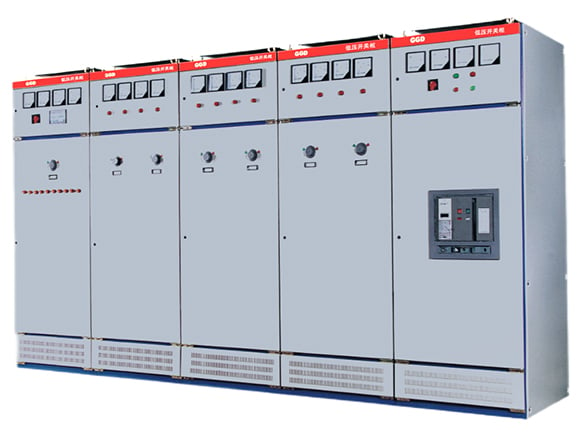
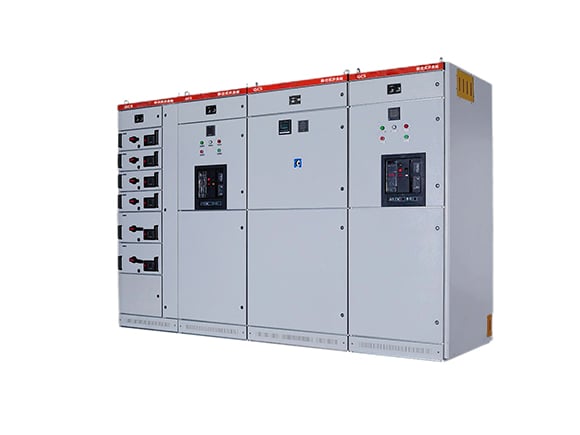
For a PV project, the purchasing discussion may also include grid-connected metering cabinets and a prefabricated substation. For a charging site, it may include a charging-station prefabricated substation. These are different equipment scopes, not interchangeable names for the same cabinet.
When to include BENY: you need distribution equipment for a solar, charging or industrial project and want to discuss the cabinet arrangement against your site plan. Send the available drawings, supply details and equipment list so BENY can recommend a suitable configuration and identify what remains to be designed.

2. Schneider Electric — A Broad Distribution-System Portfolio
Schneider Electric’s SeT portfolio covers low- and medium-voltage assemblies, motor control and busbar distribution. Examples include PrismaSeT switchboards, Okken and BlokSeT distribution and motor-control systems, and Canalis busbar trunking.
This is a useful comparison when a facility needs several connected parts of its electrical distribution system. Establish whether the quotation is for factory-built equipment or an assembly delivered by an authorized panel-building partner, and identify who takes responsibility for the finished assembly.

3. Siemens — Low-Voltage Switchboards and Busbar Distribution
Siemens offers SIVACON systems for low-voltage distribution, including SIVACON S8 switchboards and SIVACON 8PS busbar trunking. Busbar trunking uses enclosed conductors to distribute power along a building or factory route.
The range is relevant when the switchboard, power-distribution routes and monitoring requirements need to be planned together. Define which operating data you want to collect and how it will connect to the site’s management system, rather than treating digital connectivity as a single standard feature.
4. ABB — Industrial Distribution and Motor Control
ABB’s MNS platform combines low-voltage distribution and motor control, with fixed, plug-in and withdrawable arrangements. A motor control center groups the equipment used to switch and protect multiple motors.
MNS is worth comparing for a plant with pumps, fans or other motor loads as well as general distribution circuits. Specify the required circuit functions and maintenance arrangement. The global MNS platform and the separately described US-market MNS SG offering should not be treated as one identical product specification.

5. Eaton — Main and Downstream Distribution Equipment
Eaton’s portfolio includes switchgear, switchboards, panelboards, motor control centers and busway. Examples include xEnergy Main for low-voltage distribution and motor-control arrangements, and Pow-R-Line Xpert panelboards in its US catalogue.
This breadth makes Eaton relevant when the purchasing list covers both the main distribution equipment and the panels supplying smaller circuits. First identify the range offered in the installation market; series shown in different regional catalogues are not automatically interchangeable.

6. Legrand — Panels, Protection and Busbar Routes
Legrand’s distribution offering includes switchboards, circuit protection and busbar trunking. Its Indian portfolio, for example, lists XL3 DO switchboards, DPX3 molded-case circuit breakers and Zucchini busbar systems.
It is a relevant candidate for a building or industrial project that needs to coordinate panels, protective devices and power-distribution routes. Distinguish a component purchase from a completed panel: a list of compatible products is not the same deliverable as a designed, assembled and verified cabinet.

7. Mitsubishi Electric — Distribution and Motor-Control Equipment
Mitsubishi Electric’s range includes MS-E medium-voltage switchgear, AL-P low-voltage switchgear, motor control centers and AE-SW air circuit breakers. These product groups cover different tasks within a facility’s power system.
For a factory combining incoming distribution with motor-driven production equipment, compare the switchgear and motor-control sections together. The key question is how the proposed sections fit the plant’s circuit plan and operating needs.

8. LS ELECTRIC — Assemblies and Protection Components
LS ELECTRIC offers medium- and low-voltage switchgear, ring main units and protection devices, including Susol and Metasol breaker families. A ring main unit is compact switching equipment used in medium-voltage distribution networks.
For a project spanning a medium-voltage incoming supply and low-voltage loads, LS provides several equipment categories to discuss with one manufacturer. Separate the finished assemblies from any devices being purchased for installation by a panel builder.

9. CHINT — Modular Main and Downstream Distribution
CHINT’s distribution range covers main boards, sub-distribution boards and final distribution boxes. NGC8 is one of its identifiable low-voltage assembly families, with modular construction and monitoring functions described in its product material.
The range is relevant when a building or factory needs distribution at several levels, from the incoming supply to smaller groups of circuits. Identify which circuits need central monitoring or control and which need simpler downstream distribution.

10. Powell Industries — Switchgear and Packaged Electrical Rooms
Powell combines switchgear families such as PowlVac and Power/Vac with low-voltage equipment and integrated electrical packages. Its Power Control Room (PCR) and E-House offerings bring equipment and power/control connections into a prefabricated electrical room.
This approach is relevant to industrial projects that need to coordinate the switchgear with its building enclosure and site interfaces. Compare what is factory-installed and tested, what remains site work, and which of Powell’s separate North American or IEC product ranges is proposed.
How to Turn the List Into a Useful Shortlist
Choose the supply route before comparing prices. You may need a manufacturer to deliver a complete assembly, a panel builder to assemble a specified system, or a distributor to source replacement parts. Those are different purchasing tasks.
- For an existing facility: have the existing equipment assessed first. The job may be a compatible replacement or an extension, not a new distribution lineup.
- For a new factory or commercial building: compare the main assembly, downstream panels and any motor-control or busbar requirements as one defined equipment list.
- For solar or charging infrastructure: show where the new equipment connects to the existing supply, and identify metering, protection, controls and any prefabricated package requirements.
- For an electrical-room package: include transport, lifting, cable entries and site connections in the scope—not only the equipment inside.
For example, a charging depot may ask for an incoming distribution cabinet while another quotation also includes metering, a prefabricated enclosure and site commissioning. The prices are not comparable until those differences are visible. This is a purchasing example, not a reported customer project.
What to Ask Before You Place an Order
Send each shortlisted supplier the same project brief. You do not need to have every engineering decision finished, but mark what is known and what still needs assessment.
- Project and location: installation country, application, indoor or outdoor conditions, and the required delivery date.
- Electrical information: available single-line diagram, supply voltage and frequency, load list and any fault-level information from the project designer. A single-line diagram is a simplified drawing of supplies and circuits.
- Supply scope: cabinets, breakers, metering, motor control, communications, enclosures and accessories to be included.
- Installation and maintenance: room layout, cable routes, access, expansion plans and spare-parts needs.
- Acceptance and support: drawings, applicable standards and editions, verification records, agreed factory tests, commissioning responsibilities, warranty terms and local support arrangements.
Ask for evidence covering the offered assembly and configuration, not only a certificate for one component or a general company quality certificate. Product approvals and installation requirements also vary by market. UL Solutions’ power-distribution overview describes component and system testing across different equipment categories and national requirements.
The better proposal is the one that makes the equipment, responsibilities and remaining work clear. A familiar logo or a lower initial price cannot answer those questions on its own.
Discuss Your Distribution Project With BENY
For industrial distribution, PV grid connection or EV charging infrastructure, start with the BENY power distribution range. Share your project location, available drawings, equipment list and space constraints.
BENY can review that information with your project team, recommend a suitable equipment arrangement and clarify the configuration needed for a quotation. If the design is still at an early stage, send what you have and identify the decisions you need help making.
Frequently Asked Questions
What equipment does a power distribution supplier provide?
Depending on its range, a supplier may provide switchgear, switchboards, panelboards, busbar systems, protective devices, metering or prefabricated electrical packages. State which items must be supplied as a complete assembly and which are separate purchases.
Is a switchgear manufacturer the same as an electrical distributor?
Not necessarily. A manufacturer or assembly builder produces equipment, while a distributor sells and sources products. Some businesses perform more than one role. The quotation should identify who manufactures, verifies, warrants and supports the finished equipment.
How many suppliers should I request quotations from?
A manageable shortlist of two or three can be enough for a focused comparison if each meets the project scope. This is a practical starting point, not an industry rule. Resolve major scope differences before comparing totals.
Can the same cabinet be used in every country?
Do not assume so. The required supply, equipment ratings, approvals and installation rules vary. Establish the installation country and ask for the specific product version and supporting documents in the proposal.
References
Product ranges were reviewed on 19 October 2026. The references below cover BENY’s listed equipment and general procurement-verification context; they are not independent endorsements or certifications of the suppliers in this guide.
- BENY — Power Distribution Systems. Accessed 19 October 2026.
- UL Solutions — Power Distribution. Accessed 19 October 2026.