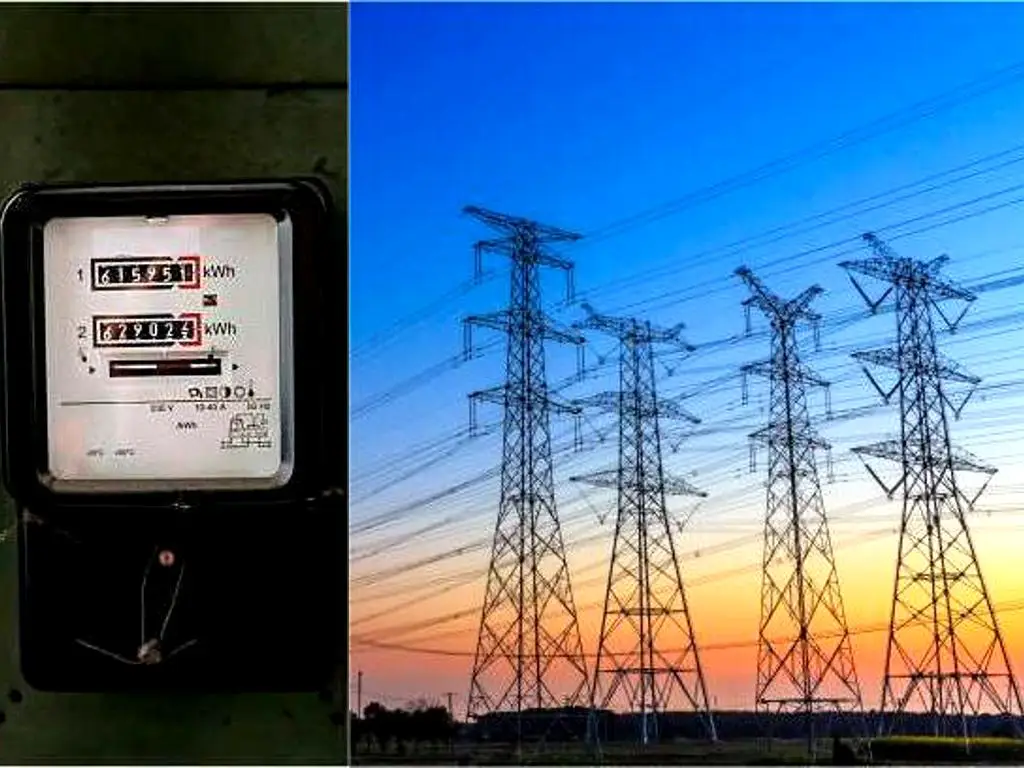
This guide will not just discuss the principles upon which the MCB is based, but will also shed light on the essential differences that must be made to ensure that the MCB is used safely and effectively in these contemporary DC applications.
The modern society runs on electricity. Complex electrical networks are found in every home, office, and industrial plant and supply the power required in everyday life and operation. There are dangers to this convenience, however. Uncontrolled discharge of electrical current can lead to disastrous failures, which are severe electrical hazards that can lead to broken equipment, severe fire, and electric shock.
The primary dangers to any electrical circuit are overcurrents, which are of two primary types, i.e. overloads and short circuits. An overload is a state of a circuit where the current flowing through it is more than the current that is supposed to be flowing through it over a long period of time. A short circuit is a far more dangerous effect, where a low-resistance circuit allows a colossal and nearly instantaneous rush of excessive current to flow.
To minimize these risks, overcurrent protection is an essential element of a safe electrical installation. These protective devices are supposed to be the weakest link in the strongest chain and are supposed to fail safely and predictably to prevent further destruction of the electrical wiring and other electrical devices that are connected to it. This use of the lowly fuse has been decades old. The international standard: the Miniature Circuit Breaker is a more sophisticated and reliable solution nowadays.

A Miniature Circuit Breaker (MCB) is an automatic, reusable electromechanical switch that is used to protect an electrical circuit against overcurrents. Unlike a traditional fuse, which is a single-use device that melts to open a circuit, an MCB detects a fault and opens a mechanical connection. Once the fault has been cleared, the MCB can be reset manually, and power is restored without replacement. This renders it an essential and dependable type of protection to individual circuits, usually up to 125 amperes.
Although most commonly observed in the Alternating Current (AC) panels of residential and commercial buildings, the work of the MCB goes much further. A special and highly essential type of MCB is that which is specifically designed to work with Direct Current (DC) systems. They are critical to the safety of the current technologies, such as solar PV installations, battery energy storage (BESS), and EV charging stations, where the electrical nature and protection needs are fundamentally different. The major differences to DC systems are that the voltages are often higher and the current is constant and does not have the natural zero-crossing point of AC. Such a lack of a zero-crossing makes it much harder to interrupt a fault current, requiring a special design of MCB to avoid disastrous failures.
The ingeniousness of the MCB is that it has a dual trip mechanism, a complex mechanism, that allows it to be intelligent enough to distinguish between the two primary types of overcurrent faults: the slow, progressive heating of an overload and the sudden, violent explosion of a short circuit. This is done through two independent yet cooperative internal factors.
The overload protection system is a thermal system that is founded on a well-calibrated bimetallic strip. This component consists of two metals with different thermal expansion coefficients and is bonded. Under normal current flow of the load, the current does not generate enough heat to cause any significant impact on this strip.
However, in the case of overloading a circuit, the constant flow of current at a higher rate than the circuit’s capacity results in the strip of bimetallic material becoming hot. When one of the metals heats more than the other, the strip is forced to bend. This curving motion is precisely adjusted to trigger the trip unit when the current exceeds a predetermined value within a specified period of time. The trip unit is operated, and the latch of the operating mechanism is released, breaking the circuit contacts and stopping the flow of electricity. This time-delay characteristic is necessary since it prevents the MCB from tripping due to non-hazardous momentary inrush currents, e.g., when a motor is started.
The magnetic mechanism is supposed to react immediately when there is a short circuit situation. This system is built around a solenoid coil. A short circuit current increases exponentially when a short circuit occurs or a high-level earth fault occurs, often reaching hundreds or thousands of amperes in milliseconds.
This large current passing through the solenoid creates a powerful magnetic field and this creates an immediate and powerful magnetic force. This force causes a plunger or armature to move, striking the trip latch with a significant amount of force, breaking the contacts almost immediately, typically in 2.5 milliseconds. It is this quick parting of the contacts that prevents the current, but the manner in which the resulting electrical arc is suppressed is the distinguishing feature between types of breakers. An AC breaker uses the natural ‘zero-crossing’ rhythm of the current to assist in extinguishing the arc, but a dedicated DC breaker needs a more powerful means, such as internal magnets, to safely extinguish the persistent, stubborn arc of a DC fault and prevent a fire.
The only way to know an MCB is to know how it is physically built. It is small but contains a number of high-precision parts. The most critical include:
The physical size of MCBs is also defined by the number of poles. This is the number of independent circuits that the device can protect:
To choose the correct MCB, the trip curve must be matched with the electrical load that it is protecting. Nevertheless, the most basic rule is to align the breaker with the type of system: Alternating Current (AC) or Direct Current (DC). These cannot be used interchangeably. Application of an AC-rated MCB in a DC circuit is highly dangerous because its arc-quenching system is inadequate to handle the arc-sustaining arc of DC, which may result in equipment damage and fire.
Having that important safety difference in mind, the following is a list of the typical MCB types and their particular uses in both AC and DC systems. It is important to restate that this B, C, or D rating of a DC MCB is a guide to its trip characteristics, not a replacement for appropriate ratings. When choosing a breaker, you should always make sure that you choose a device that is clearly labeled with the correct DC voltage (Vdc) and breaking capacity of your particular system.
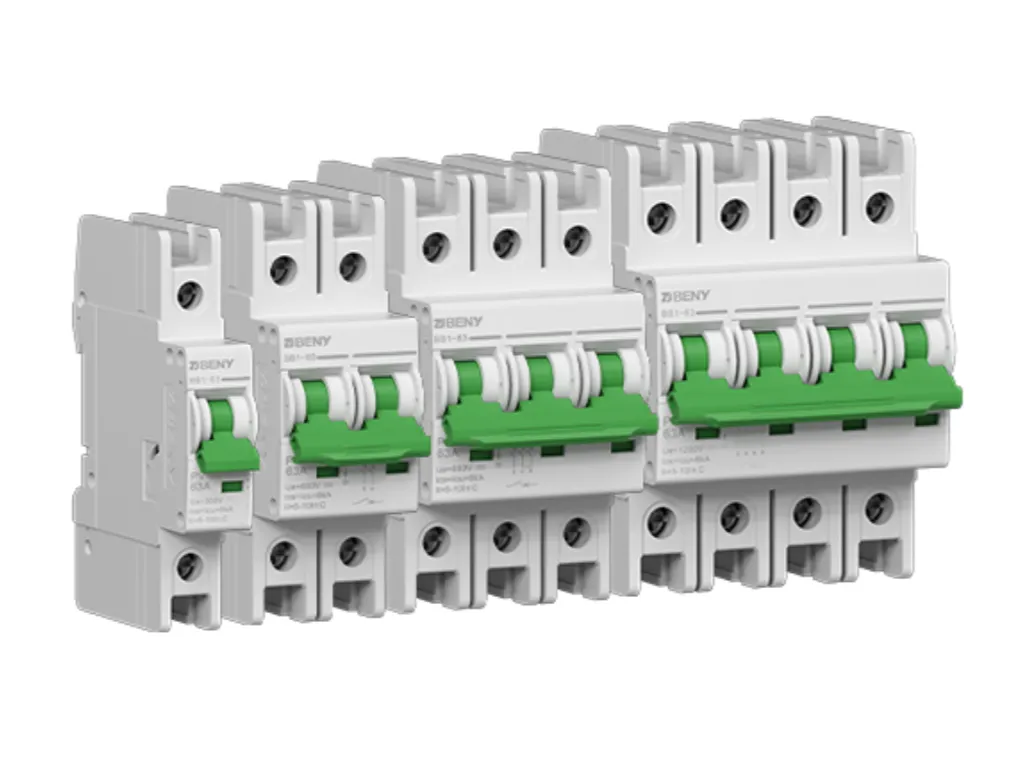
The most sensitive type of breaker is a Type B breaker, which is intended to operate instantly once the current becomes 3 to 5 times the rated load. It is designed to be used in circuits with very low switching surges.
A Type C breaker is the most popular and general-purpose breaker, and is set to trip at 5 to 10 times the rated load. This enables it to withstand moderate inrush currents of small inductive loads without nuisance tripping.
It is the least sensitive trip curve, designed to withstand large electrical surges by tripping at 10 to 20 times its rated load. It is a specialist breaker of equipment with a large startup current.
Although the most widespread are B, C, and D, there are two other types, Z and K, which are applied to certain industrial and electronic purposes.
The most sensitive trip curve is a Type Z breaker, which is set to clear at only 2 to 3 times its rated load to provide very rapid short-circuit protection.
A Type K breaker is set to operate at 8 to 12 times its rated load, which puts its sensitivity between the C and D types.
Although both Miniature Circuit Breakers (MCBs) and conventional fuses are created with the same basic purpose of overcurrent protection, their mechanisms of operation, safety, and long-term value differ significantly. An MCB is a complex, electromechanical component, and a fuse is a simple, sacrificial component. This difference results in a number of major benefits of the MCB in contemporary electrical installations.
The following comparison brings out the practical differences and explains why the MCB is the choice of almost all modern applications.
| Feature | Miniature Circuit Breaker (MCB) | Traditional Fuse |
|---|---|---|
| Operation | Automatic Switch; Trips and can be reset. | Sacrificial Wire; Melts and must be replaced. |
| Usability | Reusable. Can be reset thousands of times. | Single-Use. Requires replacement after every fault. |
| Safety | High. Internal mechanism is fully enclosed. No exposed parts. | Lower. Replacement can expose user to live electrical contacts. |
| Troubleshooting | Easy. Tripped lever provides clear visual indication of the faulty circuit. | Difficult. Requires testing or visual inspection to find the blown fuse. |
| Precision | High. Precise, factory-calibrated tripping characteristics. | Variable. Less precise; can degrade with age. |
| Sensitivity | More sensitive to both overloads and short circuits. | Slower to react to minor overloads. |
| Long-Term Cost | Lower. No replacement parts needed. | Higher. Continuous cost of replacement fuses. |
| Convenience | High. Power is restored instantly by flipping a switch. | Low. Requires having the correct spare fuse on hand. |
| Status Indication | Clear ON / OFF / TRIPPED status. | No status indication; appears the same until removed. |
A Miniature Circuit Breaker (MCB) and a Molded Case Circuit Breaker (MCCB) are at first sight used to do the same thing: automatic overcurrent protection. They are, however, intended for a very different scale of application. Their differences are important to know in order to design electrical systems properly. An MCB is used in fine-tuning final circuit protection, whereas an MCCB is used in high-current distribution.
The major differences are as follows:
| Feature | Miniature Circuit Breaker (MCB) | Molded Case Circuit Breaker (MCCB) |
|---|---|---|
| Rated Current | Lower currents, typically up to 125A. | Higher currents, from 100A up to 2,500A. |
| Breaking Capacity (kA) | Lower, suitable for residential and light commercial faults (e.g., 6kA, 10kA). | Much higher, designed for large industrial faults (e.g., 25kA to 100kA). |
| Adjustability | Fixed trip settings. A 20A MCB will always trip based on its fixed factory-calibrated curve. | Often adjustable. Many MCCBs have electronic trip units allowing for precise adjustment of overload and short-circuit settings. |
| Size & Mounting | Compact, standardized size, DIN rail mountable. | Significantly larger and heavier, typically bolted onto a panel. |
| Primary Application | Final circuit protection: lighting, socket outlets, small appliances in AC and DC systems. | Main/sub-main distribution: protecting entire panelboards, large motors, and industrial machinery. |
This is arguably the most important difference in electrical safety because it isolates the protection of property and the protection of human life. A Residual Current Circuit Breaker (RCCB) is not interchangeable with an MCB and a Residual Current Device (RCD) as they address two entirely different issues.
Consider it in the following way: MCB protects equipment against catching fire because of overcurrents. RCD helps to save lives of people who may be subjected to fatal electric shock by leakage currents.
| Feature | Miniature Circuit Breaker (MCB) | Residual Current Device (RCD/RCCB) |
|---|---|---|
| Primary Function | Overcurrent Protection (Overload & Short Circuit). | Earth Leakage Protection. |
| Protects Against | Equipment damage and electrical fires. | Fatal electric shock and electrocution. |
| How it Works | Senses large currents (Amperes) from overloads or short circuits. | Senses tiny imbalances (milliamperes) between the live and neutral wires, indicating current is leaking to the ground (e.g., through a person). |
| Trip Sensitivity | Trips at its rated current (e.g., 16A). | Trips at a very small leakage current (e.g., 30mA or 0.03A). |
| Typical Use | On all circuits to protect wiring and appliances. | On circuits where people are at risk of shock, such as socket outlets, bathrooms, and outdoor equipment. |
MCBs in Alternating Current (AC) systems are the silent protectors of our lives, making it safe and convenient.
An MCB serves as the safety switch for every individual circuit in a home’s consumer unit (panelboard), from lighting and power outlets to major appliances like air conditioners and water heaters.
MCBs are used to protect office equipment, commercial lighting, HVAC systems, and light machinery with higher power final circuits. They also enable easy isolation of certain circuits to be maintained or repaired without closing down a whole floor or business.
Constant current flow and higher voltages in Direct Current (DC) systems tend to increase the stakes. In this case, the purpose of a specialized DC MCB is no longer a convenience but critical asset protection.
A DC MCB is necessary to offer overcurrent protection to PV strings within a combiner box or the DC line that links the solar array to the inverter.
It shields the battery bank against hazardous short circuits. This is essential since batteries may release huge quantities of energy within a very short period of time, and a fault is highly violent.
In a DC fast charger, the DC MCB offers essential overcurrent protection to the high-power charging equipment and, indirectly, to the vehicle that is connected to it.
Caution: This is an informational guide. Any electrical installation should be done by a qualified and licensed electrician as per the instructions of the manufacturer and all the local codes and regulations. Poor installation may lead to equipment destruction, fire, and lethal electric shock.

A defective breaker is a grave fire risk. Change it as soon as you notice the following signs:
The Miniature Circuit Breaker is much more than a mere switch. It is an advanced, reusable, and vital safety device whose internal principles and solid design have established it as a pillar of current electrical safety. Its role is fundamental in protecting a home lighting circuit, as well as in the operational integrity of a utility-scale solar farm.
The distinction between its thermal and magnetic principles, its different types and its essential uses in both AC and DC systems is important to the application of effective electrical protection. The need to have specialized high-reliability DC protection will only increase as our energy systems keep being upgraded with solar, battery storage, and electric vehicles. Collaborating with a specialist in DC protection, such as BENY, is an important measure in making sure that these projects are not only efficient but are inherently safe, and the investment is secured as well as the future of energy.
© 2025 MCB Guide – Professional DC & AC Protection Solutions