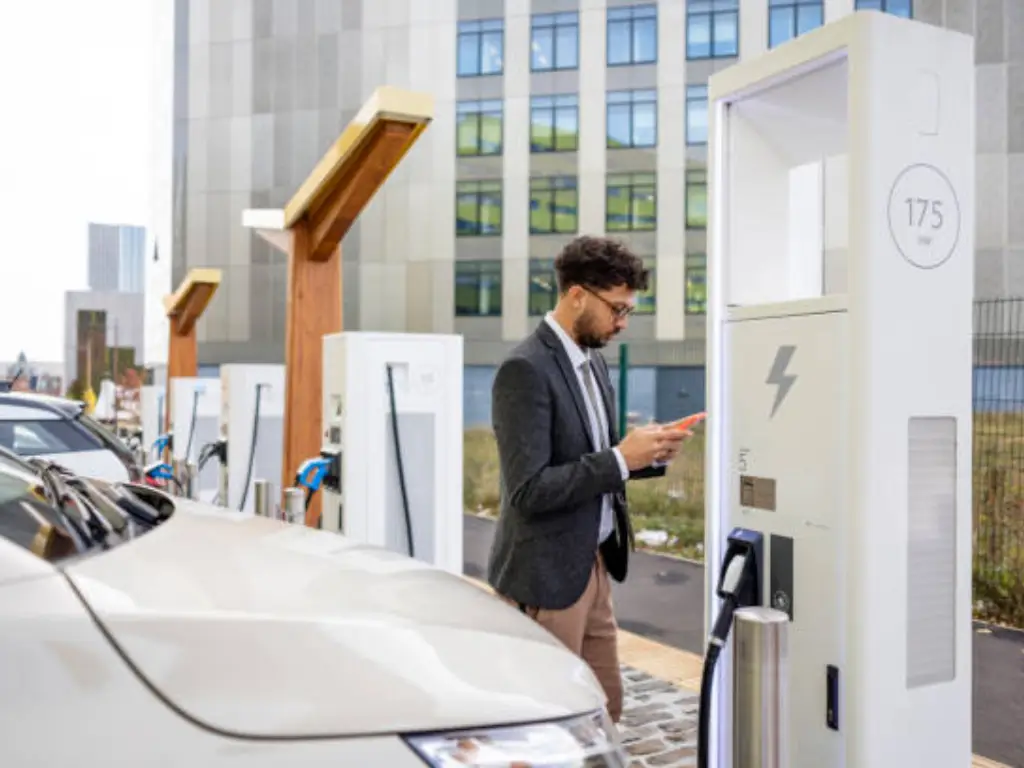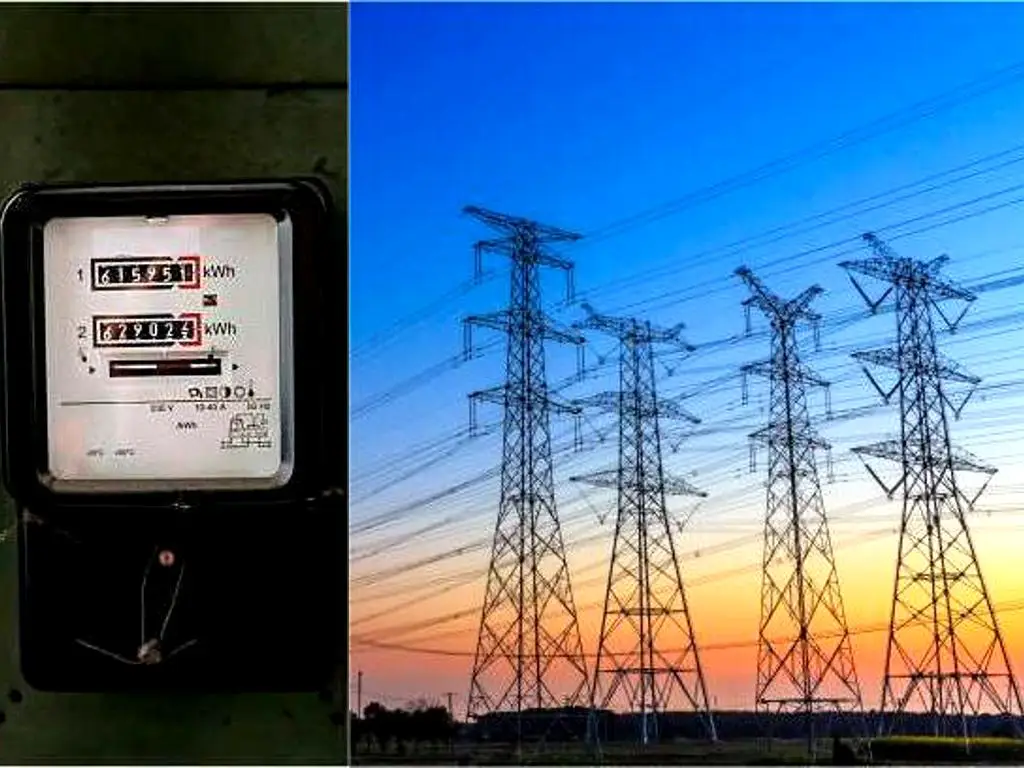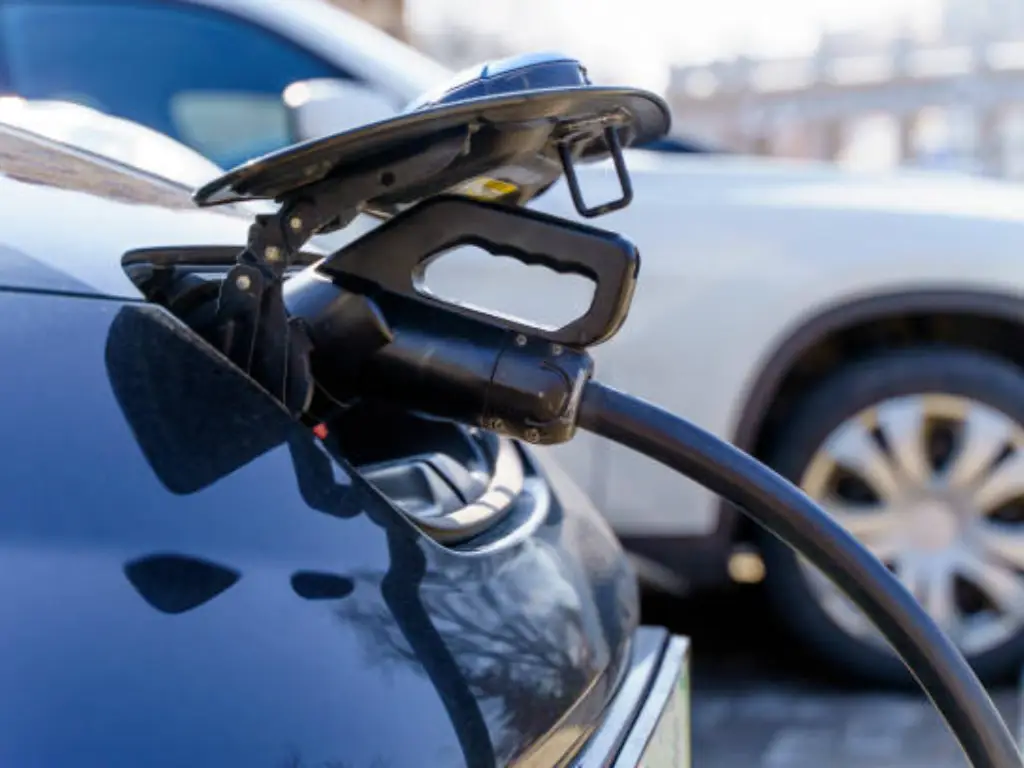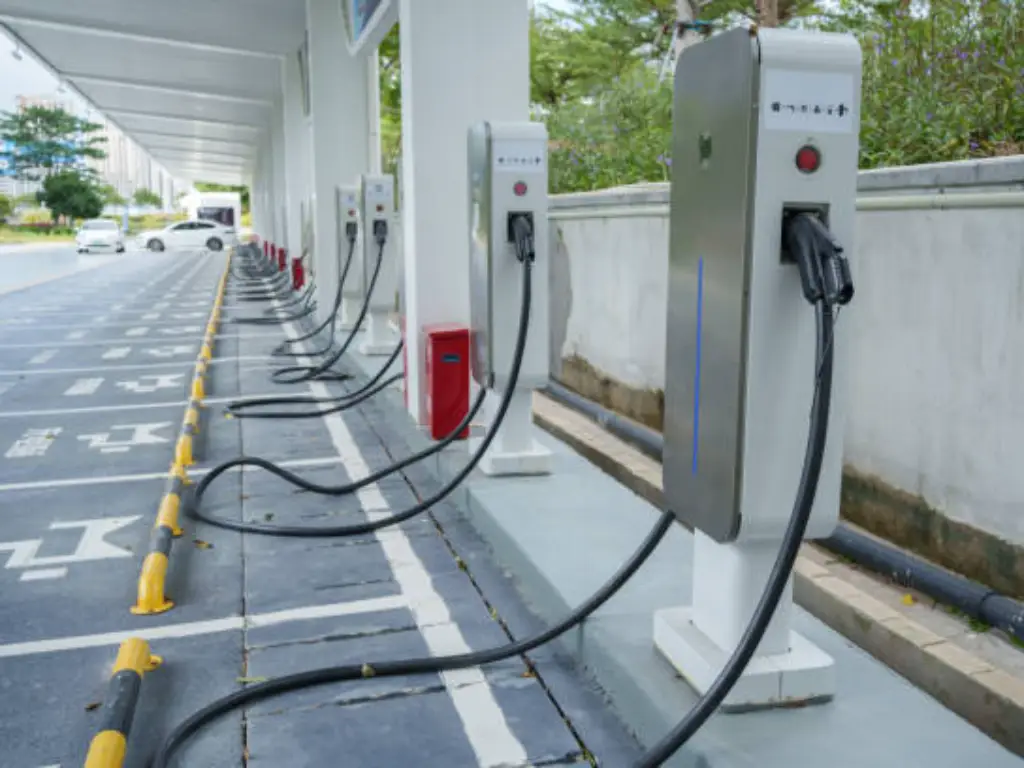
Direct Current Fast Charging (DCFC) is the most common and universally known level 3 charging method in the industry, and is the quickest and most powerful way to charge an electric vehicle. To get the idea of how it works, you must first get the basic distinction between alternating current (AC) and direct current (DC). Power is transmitted by the electrical grid in AC, whereas the battery in an electric vehicle can only store power in DC.
In typical home charging, the AC power is supplied to the vehicle by the grid and a device within the vehicle known as the onboard charger transforms the AC power into DC power which is then used to charge the battery. This conversion process is slow by nature because of the size and thermal constraints of the hardware within the vehicle.
Level 3 charging does not rely on internal hardware of the vehicle at all. The huge charging station itself contains huge industrial rectifiers that transform the AC power of the grid into DC power before it even reaches the car. This power is then fed directly into the battery pack of the vehicle. You may imagine a typical onboard charger as a small funnel that pours water into a barrel, but a Level 3 charger eliminates the funnel and instead uses a high-pressure firehose that directly pours water into the container. Since the conversion occurs externally in a high-capacity, actively cooled unit, Level 3 chargers are based on advanced high-voltage architectures (usually between 400 V and 1000 V) to provide enormous power. This power is usually between 50kW to a staggering 350kW or even 600kW in case of commercial fleet use. This enables compatible vehicles to gain hundreds of miles of range within minutes instead of hours, with the industry record of charging an EV battery to 80 percent in as little as 15 to 45 minutes.
To comprehend the charging ecosystem, it is necessary to have a clear dimensional comparison of the three levels of EV charging that have been established. Level 1 and Level 2 chargers are AC chargers, which are inherently constrained by the onboard conversion capacity of the vehicle. They are very efficient in certain long-dwell situations but structurally unable to support long-distance travel. Level 3 is a completely new type of operation.
To show the dramatic differences, we have to consider the electrical requirements, the common speeds and the magnitude of investment needed at each level.
| Comparison Metric | Level 1 Charging (AC) | Level 2 Charging (AC) | Level 3 Charging (DC Fast Charge) |
|---|---|---|---|
| Power Supply Requirements | Standard household wall outlet (110-120V). | Dedicated high-voltage supply (240V). | Commercial three-phase power (480V to 1000V+). |
| Current Delivered to Car | Alternating Current (AC). | Alternating Current (AC). | Direct Current (DC). |
| Typical Power Output | 1.4 kW to 1.9 kW. | 3.3 kW to 19.2 kW. | 50 kW to 600 kW+. |
| Average Charging Speed | 3 to 5 miles of range added per hour. | 12 to 80 miles of range added per hour. | 80% battery capacity reached in 20 to 40 minutes. |
| Hardware & Install Cost | Minimal. Cable often included with vehicle. | Hundreds to a few thousand dollars. | Tens of thousands to hundreds of thousands of dollars. |
| Primary Application | Emergency backup or low-mileage overnight home use. | Primary home charging, workplace parking, hotels. | Highway corridors, commercial fleets, retail hubs. |
| Maintenance Profile | Practically zero maintenance required. | Low maintenance, occasional cable inspection. | High maintenance, requires liquid cooling checks and filter changes. |
The above data shows a bleak picture regarding the EV charging ecosystem. Although Level 1 and Level 2 chargers are essential to owning an EV, they pose a critical bottleneck to fast mobility because they introduce a considerable time cost. Since they provide alternating current (AC), the charging rate is limited rigidly by the onboard charger of the vehicle. Level 1 is a simple trickle charge, and Level 2 still takes four to eight hours to be completely recharged. This renders AC charging a destination solution, which can only work in cases where a vehicle has long dwell times. In the case of commercial fleets or cross-country travel, the use of AC charging causes enormous delays in operations, making continuous travel entirely impossible.
Level 3 charging fully reverses this dynamic by removing the AC conversion bottleneck. It converts the EV experience of parking to charge to refuel by direct current (DC) by pushing it directly into the battery. The range of drivers can be extended by hundreds of miles during the time they spend getting a cup of coffee. This is the only technical solution that can be used in long distance travel, which is very fast. The high-throughput and extreme power output of Level 3 DCFC maximize vehicle uptime and station profitability to charging network operators, highway corridors, and heavy-duty fleets, and is therefore the unquestioned backbone of modern electrified transport.
The assessment of Level 3 charging needs an objective examination of its transformative advantages and its significant challenges. This technology is not a one-size-fits-all solution and it is equally important to know its weaknesses as much as its strengths.

The overlap of high-voltage fast charging and lithium-ion battery life is an issue of controversy and common misconception among EV owners. The main issue is whether the introduction of huge loads of DC power into a battery pack will lead to faster degradation.
To know about battery health, you need to know the physics of the 80 percent charging rule. The internal chemistry of a battery is very open to the large influx of electrons when the battery is almost empty. Internal resistance however increases as the battery fills. All modern electric cars have a very advanced Battery Management System (BMS) which serves as the brain of the car.
At about 80 percent battery state of charge, the BMS deliberately slows the charging rate to a slow trickle. This trickle charging process is an important protection measure that is meant to make sure that the battery is fully charged without any harm to the cells by overheating and also to reduce the chances of losing its life prematurely. It is like stuffing a tightly packed suitcase when forcing a battery to take high amperage when it is nearly full; it takes too much force to squeeze those last few items in and this can easily burst the seams. This pressure in a battery is in the form of excessive heat, the main cause of cell degradation, and thus this controlled reduction is necessary to ensure that the structural integrity of the battery chemistry is not compromised in thousands of cycles.
The mathematical consequence of frequent, exclusive use of Level 3 charging will be a slightly faster loss in battery capacity over a decade than exclusive use of slow AC charging. But practical experience with hundreds of thousands of EVs demonstrates that this degradation is much less serious than early critics had imagined, in large part due to the active liquid cooling systems within modern battery packs. The most scientifically reasonable solution to the problem of an EV owner is to use Level 2 charging on a daily basis at home, and use Level 3 charging without reservations on a road trip and required quick top-ups.
The connector standardization is the main driver of vehicle resale value and infrastructure ROI in 2026. With the industry shifting towards non-fragmentation, the choice of interface is essential in ensuring compatibility in the long run. The main Level 3 connector standards in use are the following:
To car owners in North America, it is now necessary to focus on NACS-native vehicles or have a high-quality NACS-to-CCS adapter to access the vast Supercharger network. Modularity is the safest approach to commercial operators. By installing charging cabinets with dual-cable configurations (NACS + CCS) or replaceable cable modules, you will be able to keep your hardware efficient and profitable as the market keeps changing.
Due to the high power demands, Level 3 chargers are highly commercial and industrial properties. It is like trying to fit a Level 3 charger in a residential garage and trying to run a commercial jet on a lawnmower engine; the typical residential electrical system is simply not designed to support the 480-volt, three-phase power load. Thus, deployment should be very tactical.

The installation of a Level 3 DC Fast Charger (DCFC) is a significant infrastructure project in which the cost of the hardware itself is frequently not the most significant factor, but rather the civil and electrical installation to support it. The actual issue with commercial operators is that it is difficult to bridge the gap between a high-power equipment purchase and a grid-ready installation.
The following is a confirmed cost of a single Level 3 installation (50kW to 350kW) using market benchmarks of 2026:
| Category | Estimated Cost (USD) | Key Factors |
|---|---|---|
| Hardware | $40,000 – $165,000 | Power output (50kW vs. 350kW), dual ports, and liquid-cooling tech. |
| Site Prep & Trenching | $15,000 – $60,000 | Distance to power source; costs avg. $100+ per linear foot for excavation and repaving. |
| Grid & Electrical Upgrades | $25,000 – $120,000+ | New heavy-duty transformers, 480V 3-phase service, and switchgear. |
| Permitting & Engineering | $8,000 – $25,000 | Electrical design, municipal approvals, and ADA parking compliance. |
| Ongoing Demand Charges | Variable ($$$) | Monthly penalties from the utility for drawing high-power “bursts.” |
In a standard business implementation, hardware will consume about half of the entire budget, and the other half will be consumed by what is underground. The most unpredictable costs are trenching and civil work, when your charging station is over 50 feet away your electrical panel, or when you need to cut through reinforced concrete, the cost of copper cabling and conduit labor and material can easily be over 30,000. The available commercial sites also do not have the spare electrical capacity to support Level 3 loads, and a dedicated transformer and panel upgrade is an inevitable six-figure obstacle to high-power (150kW+) sites.
On top of the first construction, the silent tax of demand charges may undermine your ROI. Since Level 3 chargers consume huge quantities of electricity within brief intervals, utilities impose a premium on your peak 15-minute consumption during the month. A single charging session might unwillingly increase your entire monthly utility bill at your facility without smart load management or onsite battery storage (BESS) to smooth these peaks.
Luckily, the economic shock of installation is greatly cushioned by huge government projects. Such programs as the NEVI formula program in the United States, and strong state-level tax credits and utility rebates, can frequently cover up to eighty percent of the overall project cost to eligible commercial entities.
To commercial purchasers, the purchase of a Level 3 charging station is a significant capital expenditure that requires strict vetting of vendors. You are not merely purchasing a metal box, you are purchasing long-term industrial reliability.
The first criterion is hardware flexibility. You need to choose a unit that can serve the largest possible number of customers, i.e. require multi-protocol support (NACS, CCS, etc.) and wide voltage ranges that can serve both standard passenger EVs and high-voltage designs such as those of modern luxury EVs and electric trucks.
Secondly, focus on a modular power architecture. Equipment downtime is a bleeding artery in the commercial charging business, which bleeds profitability and customer trust. When a charger has a monolithic power design and one of the internal components fails, the whole machine will shut down. A modular design, on the other hand, makes use of several redundant power modules; in case one of them fails, the station will still operate at a slightly reduced capacity, but the failed module will serve as a quick tourniquet, which can be replaced by a technician within minutes.
Lastly, do not sacrifice environmental sustainability. Outdoor charging stations are exposed to inhumane conditions. Make sure that the hardware has a high ingress protection rating (NEMA 3R or IP65) to ensure complete protection against heavy rain, dust storms, and extreme temperatures. A tradeoff between these demanding requirements and cost-effectiveness is a challenge in selecting hardware, and that is why BENY has designed its Level 3 DC fast chargers to surpass these requirements with modularity and durability that is industry-leading.

The move to internal combustion engines is not a hypothetical future, but a current, ongoing infrastructure change. The key to this transition at the global level is level 3 charging. Whereas Level 1 and Level 2 chargers will always play the crucial role of slow, overnight recharging, direct current fast charging is the only technology that can compete with the speed and convenience of the legacy fossil fuel network. To consumers, it is important to know how fast charging works to manage the battery and have a hassle-free road trip. To commercial property owners and fleet operators, the implementation of the appropriate high-quality, intelligently designed Level 3 hardware is a generational opportunity to gain market share, generate revenue, and place their businesses at the center of the clean energy economy of the next century.
⚡ Is level 3 charging bad for battery?
The occasional Level 3 charging is absolutely safe, however, when it is used regularly and exclusively, it may cause a slight increase in battery degradation because of the high heat produced during the rapid energy transfer.
🔌 How fast is level 3 charging?
Level 3 charging usually provides 50kW to more than 350kW of power, with most electric vehicles being able to charge to 80 percent capacity in 15 to 45 minutes.
🏠 Can you get level 3 charging at home?
No, Level 3 charging is not compatible with residential grids since it needs a dedicated 480-volt, three-phase commercial power supply and is prohibitively expensive to install.
🚗 Is Tesla a level 3 charger?
Yes, Tesla Superchargers are a particular model of Level 3 DC fast charger, but typical Tesla home chargers (Wall Connectors) are Level 2.
© 2026 Level 3 Charging Guide – Professional EV Charging Solutions