The global energy transition is no longer merely a conceptual debate regarding sustainability; it has aggressively morphed into a physical engineering challenge dictated by grid physics and capital markets. As we navigate through 2026, utility scale battery energy storage systems (BESS) represent the most critical, highly scrutinized infrastructure asset class on the planet. However, navigating this multi-million-dollar market requires far more than a superficial understanding of battery cell chemistries.
For project developers, EPCs (Engineering, Procurement, and Construction), and institutional investors, success demands a rigorous financial evaluation of the Levelized Cost of Storage (LCOS), complex revenue stacking models, and uncompromised safety compliances. This definitive guide completely bypasses the consumer-level fluff to break down the hardcore engineering architecture, the brutal commercial realities, and the strategic operational lifecycles of modern BESS infrastructure.
WHAT EXACTLY IS UTILITY-SCALE BATTERY STORAGE?
To fundamentally grasp the necessity of utility-scale storage, one must think of the traditional power grid as a colossal, highly pressurized water pipe without a holding tank—every single electron generated must be consumed at that exact millisecond to prevent catastrophic grid collapse. A Utility-Scale Battery Energy Storage System (BESS) acts as the massive, highly intelligent water tower for the power grid, absorbing immense excess generation and discharging it precisely when the grid begins to buckle under peak demand.
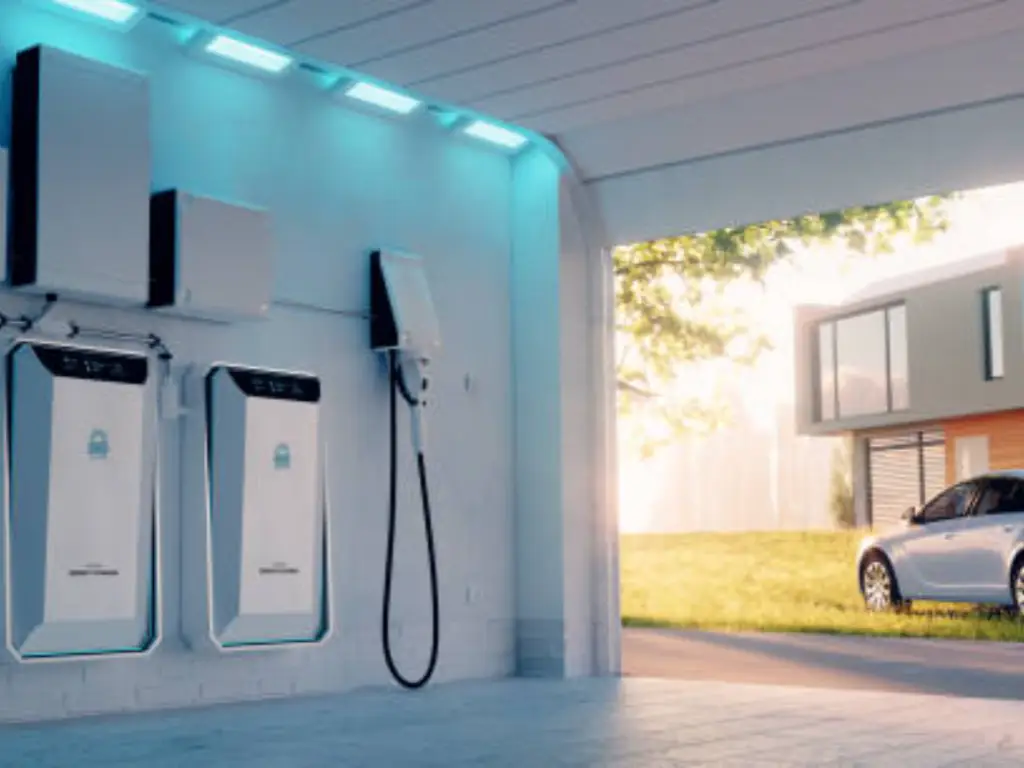
Unlike the small residential battery pack mounted in a garage or a localized commercial backup unit, these are heavy-duty, front-of-the-meter (FTM) infrastructure projects intrinsically tied to high-voltage transmission networks. When evaluating these massive assets, financial modelers and grid operators speak in two foundational, non-interchangeable metrics: Megawatts (MW) and Megawatt-hours (MWh).
The Megawatt (MW) rating defines the system’s power—the diameter of the pipe—which dictates the absolute maximum amount of electricity the system can inject into the grid instantaneously. Conversely, the Megawatt-hour (MWh) metric defines the capacity—the total volume of the reservoir—which dictates exactly how long that power can be sustained. For instance, assuming a real-world 100MW/400MWh system, this implies that the infrastructure can discharge electricity at its absolute 100-megawatt limit for exactly 4 continuous hours before completely depleting its reserves. It is not merely a supersized battery; it is a highly dynamic, digitally dispatchable power plant.
INSIDE THE BOX: THE CORE COMPONENTS THAT MAKE IT TICK
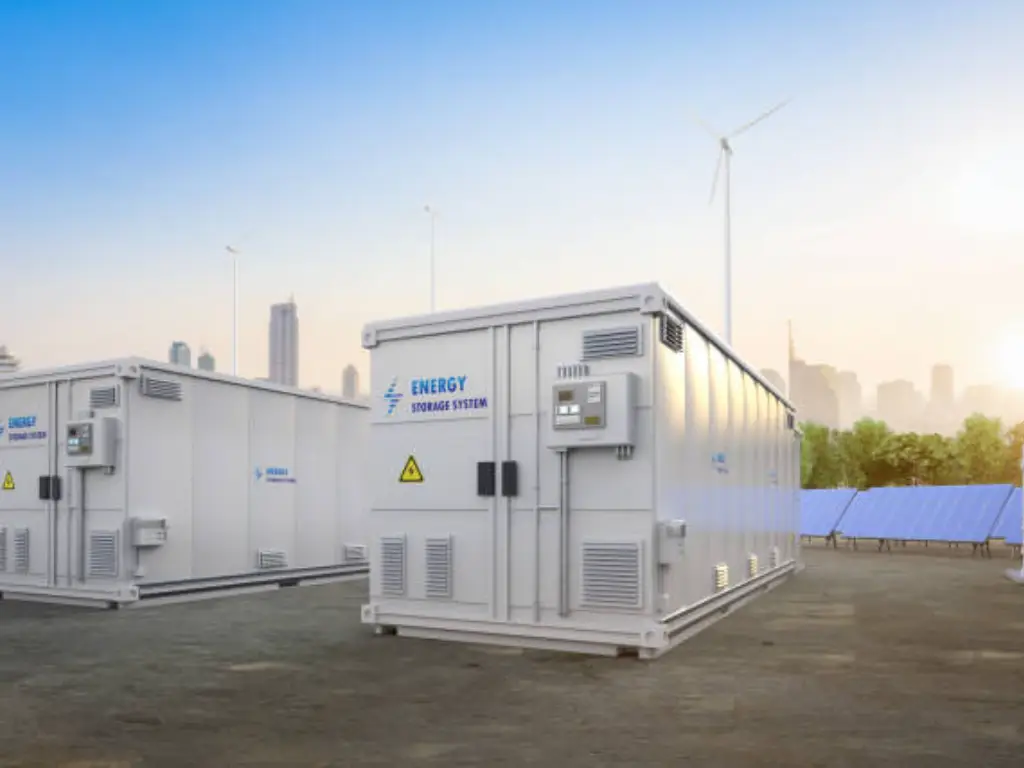
A utility-scale BESS is a synchronized, hyper-sensitive ecosystem. Opening the heavy steel doors of these massive containers reveals that the battery cells are merely the baseline storage medium—they are just one piece of a vastly complex electrical and thermal engineering puzzle.
The Battery Rack: High-Density Cells and Modular Architecture
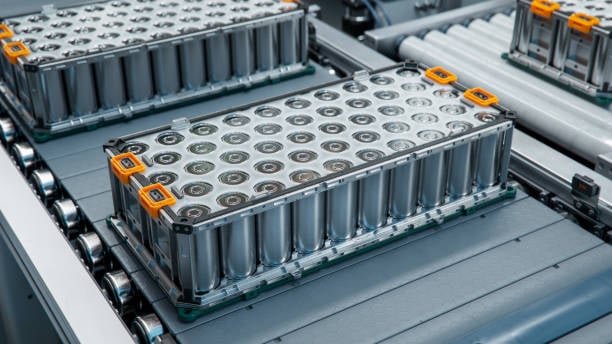
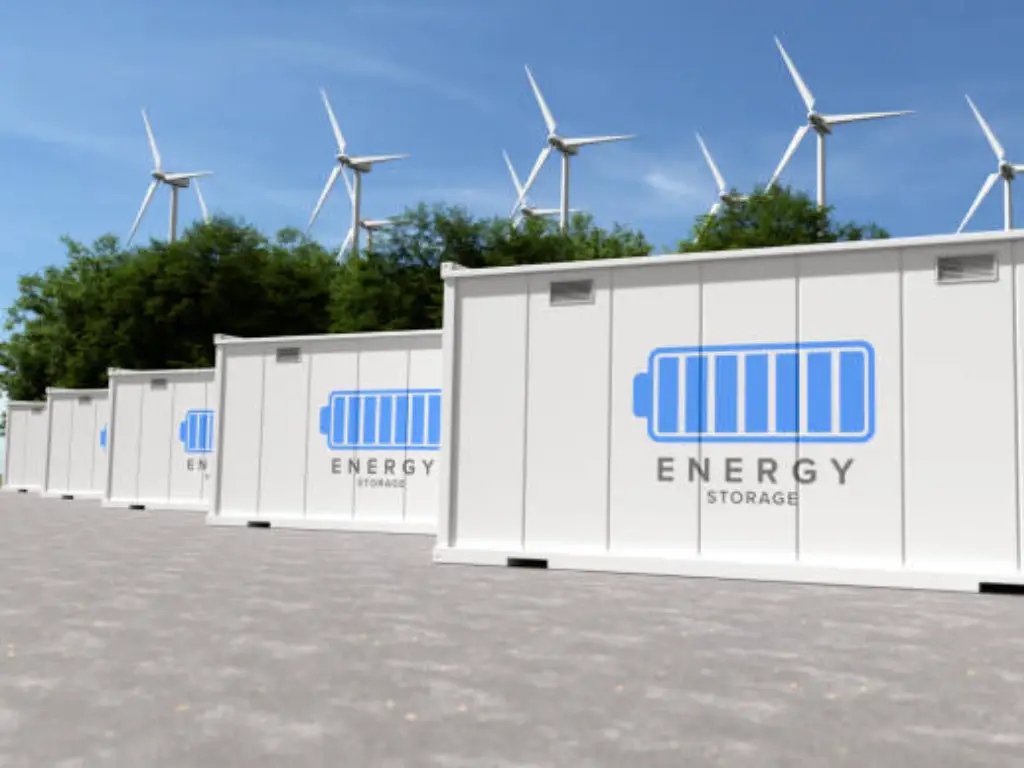
The physical storage relies on a deeply nested, modular hierarchy that prioritizes spatial efficiency and localized fault containment. It starts with the absolute smallest unit: the battery Cell. These cells are densely bundled together in series and parallel to form larger Modules, which are then stacked vertically into towering Racks. Ultimately, these racks are integrated into a heavily reinforced, climate-controlled Container (often a standard 20-foot equivalent unit).
The industrial evolution of this architecture has been violent and rapid. In just a few short years, the baseline energy density packed into a standard 20-foot container has skyrocketed from a modest 3.4MWh to an astonishing 5MWh and beyond. Within this incredibly dense physical footprint, thousands of high-capacity cells are operating simultaneously, generating immense localized heat that must be managed with absolute surgical precision.
The Balance of System (BOS): The Unsung Heroes
While the actual battery cells dominate the media headlines and the procurement discussions, the Balance of System (BOS) represents a massive portion of the capital expenditure (CAPEX) and ultimately serves as the true operational brain of the asset. The BOS components determine whether the project reaches its 15-year financial lifespan or burns to the ground in Year 3.
The critical BOS infrastructure includes the PCS (Power Conversion System), which acts as the crucial bidirectional joint translating the batteries’ Direct Current (DC) into grid-compliant Alternating Current (AC). It is paired with the BMS (Battery Management System), the localized nervous system monitoring individual cell voltages and temperatures, and the EMS (Energy Management System), the macroeconomic brain dictating exactly when to buy cheap power or sell at a premium based on market signals.
The Liquid Cooling Mandate: When a 20-foot container’s capacity breaches the 5MWh threshold, traditional forced-air HVAC systems face total physical failure—they simply cannot push cold air deep enough into the racks to prevent thermal pooling. This is exactly why top-tier developers now strictly mandate high-precision Liquid Cooling Systems (LCS). For example, premium utility scale battery storage companies like BENY have engineered 100kW/230kWh liquid-cooled BESS architectures that not only deeply integrate the BMS and PCS, but utilize an advanced micro-circulation liquid loop to aggressively lock the temperature variance between any two cells to an astonishing ≤3°C. This extreme BOS thermal synergy prevents the deadly wooden barrel effect, ensuring no single localized hot spot forces the entire multi-million-dollar rack into premature degradation.
THE BIG THREE: HOW BESS PROJECTS ACTUALLY MAKE MONEY
Capital markets are not injecting billions into utility-scale storage purely for environmental philanthropy. These systems, when deployed strategically, are highly lucrative cash-generating assets designed to exploit the inherent volatility of modern power grids.
Taming the Weather: Renewable Energy Integration
Wind and solar generation suffer from a fatal flaw: they are weather-dependent and non-dispatchable. This mismatch leads to massive grid inefficiencies, most notably catastrophic curtailment where grid operators are forced to throw away gigawatts of clean energy simply because there is nowhere to put it.
In markets like California, the infamous Duck Curve visually illustrates how solar overproduces at noon—often driving wholesale electricity prices into the negative—while demand remains low. Through Solar Shifting, BESS acts as an economic sponge, absorbing discounted energy and discharging it during the 7:00 PM evening peak when prices are highest.
Millisecond Reflexes: Grid Ancillary Services
The alternating current power grid is incredibly fragile; its frequency must be perfectly balanced every single second. When a transmission line fails or a plant trips, the grid’s frequency drops violently, risking cascading blackouts.
To counter this, traditional gas plants require minutes to ramp up. A BESS, however, utilizes solid-state inverters to provide sub-second response times. Grid operators pay a massive premium for this hyper-fast Frequency Regulation service, treating the battery as a highly-paid, instant-response security guard.
Buy Low, Sell High: Energy Arbitrage & Capacity Markets
The bedrock of a bankable storage project relies on Revenue Stacking. Beyond Energy Arbitrage, developers secure long-term, highly predictable contracts in the Capacity Market.
In this mechanism, grid operators pay a guaranteed retainer fee simply for the BESS promising to be available during the top 10 most stressed grid-emergency days. By stacking volatile arbitrage revenue on top of fixed capacity payments, financial modelers can guarantee the IRR required by institutional lenders.
THE BATTLE OF CHEMISTRIES: LITHIUM-ION VS. THE REST
When committing tens of millions of dollars to a 15-year infrastructure project, technology selection is ruthless. To build a completely mutually exclusive and collectively exhaustive (MECE) framework for technology selection, we must analyze the undisputed kings of short-duration storage alongside the emerging titans of Long-Duration Energy Storage (LDES).
| Technology Metric | LFP (Lithium Iron Phosphate) | NMC (Nickel Manganese Cobalt) | VRFB (Vanadium Redox Flow Batteries) |
|---|---|---|---|
| Target Duration (Discharge): | 2 to 4 Hours | 1 to 2 Hours | 8 to 12+ Hours (LDES) |
| Thermal Runaway Threshold: | High Safety (~270°C before failure) | Lower Safety (~150°C – 210°C) | Absolute Safety (Non-flammable liquid aqueous electrolyte) |
| Real-World Cycle Life: | 6,000 – 8,000+ Cycles (Minimal degradation) | 1,000 – 3,000 Cycles (Rapid fade under heavy use) | 20,000+ Cycles (Practically zero capacity degradation over 25 years) |
| Cost & Supply Chain Risk: | Highly Cost-Effective (Abundant iron/phosphate) | High Volatility (Heavy reliance on expensive Cobalt and Nickel) | High Initial CAPEX (Complex pumps/tanks), but lowest LCOS over 20 years |
The Professional Verdict: NMC chemistries are engineered for electric sports cars where lightweight burst power is paramount; they have no place in stationary utility storage. LFP is the absolute, undisputed king of 4-hour grid infrastructure due to its extreme durability, low cost, and thermal resilience. However, as grids aim for 100% renewables, Vanadium Redox Flow Batteries (The Rest) represent the inevitable future for 10-hour Long-Duration Energy Storage (LDES) requirements, separating power from capacity entirely via massive liquid electrolyte tanks.
DECODING THE PRICE TAG: CAPEX, OPEX, AND FUTURE TRENDS
A fatal mistake made by amateur developers is assuming that falling lithium carbonate prices directly equate to dirt-cheap utility storage systems. Hardcore financial structuring relies exclusively on the Levelized Cost of Storage (LCOS), which incorporates every single dollar spent over the project’s entire lifecycle.
- CAPEX (Capital Expenditure): Assuming a standard 4-hour duration system model, the actual battery racks (cells and enclosures) typically only account for 50% to 60% of the total initial capital. The remaining budget is ruthlessly devoured by the Power Conversion Systems (PCS), massive high-voltage step-up transformers, heavy civil engineering and EPC labor, and exorbitant grid interconnection upgrade fees. According to the highly respected benchmarks established by the National Renewable Energy Laboratory (NREL), the fully installed cost target for a utility-scale 4-hour system hovers around $245/kWh. Even if battery cell costs drop to zero, the heavy metal and concrete soft costs create a rigid floor for CAPEX.
- OPEX (Operational Expenditure): This is the silent killer where poorly modeled projects go bankrupt. Beyond the initial purchase, operators must budget heavily for routine HVAC coolant flushes, specialized high-voltage maintenance labor, and staggering insurance premiums (especially if the system sits near populated areas). OPEX models must also ring-fence substantial capital reserves for future system hardware upgrades, ensuring the asset can still meet its contractual capacity obligations a decade into its lifecycle.
THE TAX CATALYST: NAVIGATING ITC AND REAL-WORLD FRICTION
Macroeconomic policies have forcefully intervened to warp the standard ROI timeline, creating an unprecedented window of opportunity. In the United States, the passage of the Inflation Reduction Act (IRA) introduced the monumental Standalone Storage Investment Tax Credit (ITC), allowing utility-scale storage projects to qualify for baseline tax credits of 30%, which can scale even higher with domestic content or energy community adders.
However, professional B2B financial modelers know that this is not free cash handed out by the government. The overwhelming majority of project developers do not carry enough passive tax liability to actually use a $30 million tax credit themselves. To monetize this incentive, they are forced to utilize complex Tax Equity financing structures or the newly established Transferability mechanism to sell these credits to massive corporate entities or Wall Street banks.
In the real-world financial trenches, this monetization process involves brutal friction costs. When developers sell their ITC credits to a third party, the current market clearing rate dictates they only receive 85 to 90 cents on the dollar, with the remainder lost to institutional discounts, heavy legal structuring fees, and compliance insurance. Even with this substantial 10-15% value bleed, the ITC acts as a massive financial adrenaline shot, effectively subsidizing the initial CAPEX enough to transform mathematically marginal arbitrage models into institutional-grade, highly bankable cash cows.
THE UGLY TRUTH: DEGRADATION, FIRE RISKS, AND GRID DELAYS
Sophisticated investors must violently look past the glossy, overly optimistic OEM sales brochures. Here is the unvarnished, hardcore engineering reality of the three existential threats that can completely derail a multi-million-dollar BESS deployment:
- The Interconnection Queue Nightmare: You may have the capital fully secured, the land leased, and the hardware ready to ship, but administrative reality is utterly unforgiving. In heavily congested grid territories like CAISO (California) or PJM (East Coast), submitting a project to the Interconnection Queue means waiting for grid operators to conduct exhaustive cluster studies to ensure your system won’t melt local substations. This bureaucratic bottleneck routinely delays projects by a devastating 3 to 5 years before a final interconnection agreement is signed.
- Thermal Runaway and the UL 9540A Mandate: Fire safety in megawatt-scale lithium storage is not based on the naive premise of guaranteeing the cells never catch fire. The engineering reality acknowledges that a microscopic manufacturing defect can eventually cause a cell to enter Thermal Runaway. The true standard of safety is guaranteeing that the fire absolutely does not cascade. Bankable systems must pass the grueling, destructive UL 9540A cabinet-level propagation test, proving empirically that if one cell violently ignites, the thermal event is physically contained and will not burn down the adjacent racks or the entire multi-million-dollar facility.
- Capacity Fade and the Bleeding of Augmentation: This is the ultimate, silent financial assassin. Your shiny 100MWh system will absolutely not hold 100MWh five years from now. Due to irreversible electrochemical Capacity Fade, standard commercial cells degrade rapidly under heavy daily arbitrage cycling.
By Year 6, standard systems often breach their contractual capacity limits, forcing the developer into their first Augmentation Node—requiring them to purchase and install brand new battery racks into empty reserved slots just to maintain baseline output. This forced OPEX bloodletting easily destroys 15% to 20% of the original CAPEX value. Extremely shrewd EPCs block this risk at the procurement stage by rejecting cheap generic batteries and specifically mandating ESS-specific high-capacity prismatic cells (e.g., 314Ah format) designed purely for heavy grid cycling. For instance, when integrating BENY’s high-tier BESS architectures, their underlying heavy-duty ESS cells—backed by aggressive sub-3°C liquid cooling—are engineered to deliver a staggering ≥8000 cycle lifespan. This hardcore industrial spec changes the entire financial model: it forcibly pushes that catastrophic first augmentation expenditure all the way out to Year 10. When competitors are bleeding millions in Year 6 just to stay operational, an 8000-cycle system is still executing pure-profit peak shaving, effectively shielding the project’s Internal Rate of Return (IRR) from total collapse.
CONCLUSION: HOW TO EVALUATE YOUR NEXT BESS PROJECT
Navigating the battery storage utility scale market is unequivocally the cornerstone of the next-generation power grid, but it is entirely unforgiving to amateur execution. It is not a plug-and-play money printer. It requires a mastery of deeply integrated hardware engineering, cutthroat LCOS and Tax Equity financial modeling, and a hyper-realistic view of physical asset degradation.
Ultimately, your project’s bankability relies heavily on the exact hardware ecosystem you select. Choosing suppliers who understand the critical interplay between high-capacity dedicated ESS cells, strict sub-3°C liquid cooling thermal management, and robust DC-side electrical protection is the only proven method to ensure your asset survives the grueling 15-year grid environment and actually delivers on its promised Revenue Stacking potential.