By 2026, the world energy environment has changed to no longer be a mere consumption but a strategic management. The Standalone Battery Energy Storage System (BESS) has become the heart of this revolution. Standalone storage is no longer a secondary accessory to solar energy installations, standalone energy storage has emerged as a primary, independent asset that gives facilities complete control over their energy costs and reliability.
Standalone BESS is grid-agnostic, unlike traditional integrated systems. It acts as a decentralized power store that lets you deal with the electric grid in your own way, to purchase and store power when electricity rates are low and release it when the prices are high or the grid goes offline. This flexibility transforms energy into a proactive financial asset in an age of growing market volatility and high energy supply demands.
This guide discusses the technical architecture, strategic benefits, and long-term potential of independent systems. You may be interested in removing demand charges, ensuring immediate backup power, or you may be interested in the new energy trading markets, but the first step to achieving real energy sovereignty is to understand the modern battery system.
What is Standalone Battery Energy Storage?
In its simplest definition, Standalone Battery Energy Storage is a system that stores electrical power from the power grid (or any other source available) and releases it when required, but is not physically tethered to a specific site of power generation such as a solar farm or wind turbine.
These systems are grid-agnostic in the 2026 context. these energy storage facilities act as decentralized sources of power. Whereas an integrated system (Solar + Storage) is aimed at maximizing the self-consumption of local solar power, a standalone system is aimed at arbitrage and energy resilience. It enables businesses and high-end residential complexes to communicate with the grid on their terms, capturing excess energy when it is the cheapest and utilizing it when the grid becomes prohibitively expensive or unstable.

The Logic of Low-Input, High-Output How Standalone Battery Storage Works
The working efficiency of a standalone battery storage system is based on the AC Coupling technology. In contrast to direct current (DC) coupled systems, which need to be connected to solar inverters, an AC-coupled architecture is connected to a main AC distribution board of a facility. This autonomy enables the system to operate efficiently in any setting, whether there is solar PV or not, by enabling a smooth, two-way energy transfer of stored energy between the utility grid and the battery cells.
Practically, the system is based on a strict three-step workflow to maximize project efficiency:
- Charging Phase: When the demand and the TOU (Time-of-Use) rates are the lowest—usually during off-peak hours—the system charges the grid. This AC electricity is converted into DC by the bi-directional inverter to be stored.
- Storage Phase: The energy is stored in high-density lithium-ion battery cells. A supervisory control system monitors the voltage and thermal well-being, keeping the energy on standby with minimum self-discharge or loss.
- Discharging Phase: In cases where the price of electricity is high during peak periods or overall grid conditions are unstable, the digital brain of the system causes a discharge. The DC energy stored is then transformed back into AC to supply the internal loads of the facility, thus avoiding the high rates imposed by the utility provider.
This is the working cycle of the Energy Time-shifting, which is the main economic force of the system. The timing of the energy intake can be changed so that the facility can substitute the expensive peak electrons with the cheap off-peak electrons. This reasoning will make the battery not a passive backup system, but a proactive financial tool, enabling businessesfor significant cost savings. and make energy management a foreseeable and cost-effective approach.
Breakdown of Core Components: What Supports Your Energy System?
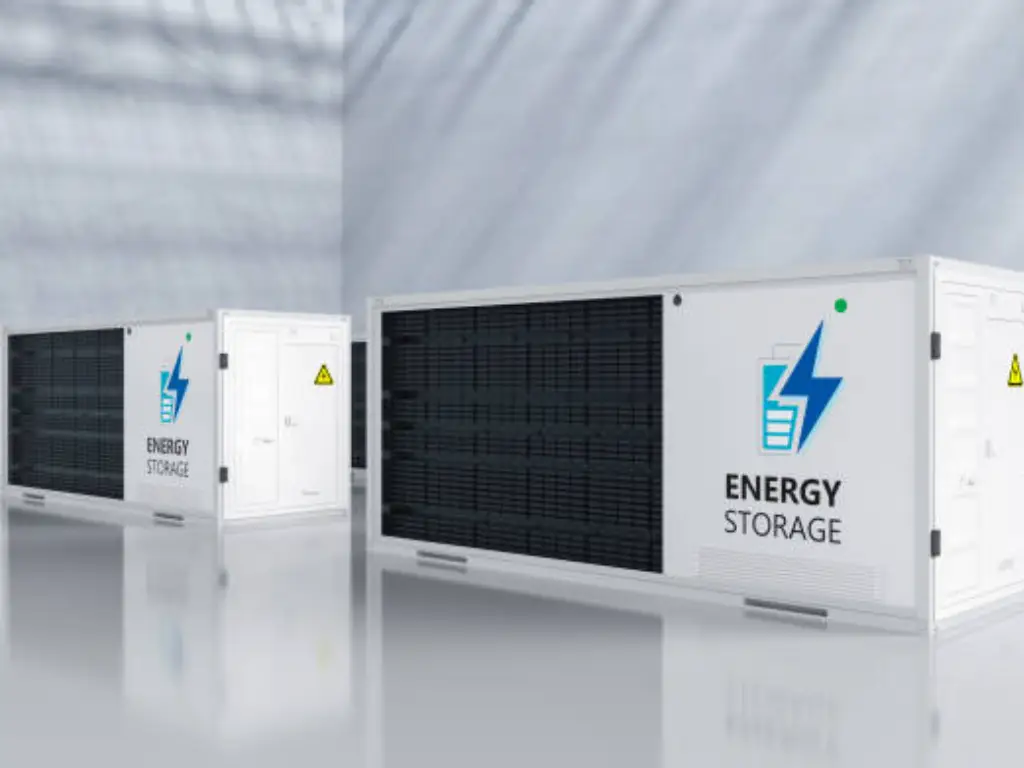
A Battery Energy Storage System (BESS) is an advanced combination of hardware and software that is created to offer dependable grid services and energy independence. The system is based on five key components components that operate in perfect synchronization to ensure high performance and a 25-year operational life:
- Lithium-ion Battery (LFP):
The core of the battery technology, which has become the industry standard in 2026 because of its high thermal stability and cost-effectiveness. These battery racks dictate the overall capacity of the system and have a cycle rating of 6,000 to 10,000 cycles, which directly affect the asset value and reliability of the BESS in the long term.
- BESS Enclosure:
BESS enclosure is a climate-controlled enclosure that shields internal components against elevated temperature and extreme weather. It is generally characterized by an IP66 level of protection and incorporates sophisticated liquid cooling mechanisms to maintain battery temperatures in a favorable range, which is essential in the elimination of cell degradation and fire safety.
- Bi-directional Inverter (PCS):
The Power Conversion System (PCS) controls the two-way flow of electricity between the utility grid and the battery. It transforms AC on the grid to DC to charge the batteries and transforms DC to AC to discharge. The current PCS units are more than 98 percent efficient and offer grid-support capabilities like frequency regulation and reactive power management.
- Battery Management System (BMS):
The BMS offers real-time cell and module monitoring and control. It monitors voltage, current, temperature, and State of Charge (SoC) to make sure that all cells are working within safe limits. It maintains a balance in the energy levels across the battery stack, avoiding overcharging and thermal runaway, which is the main safety measure of the hardware.
- Energy Management System (EMS):
The EMS is the upper-level software intelligence that organizes the work of the whole system according to the external data. It communicates with grid operators and electricity markets to determine precisely when to charge or discharge. The EMS maximizes the economic performance and the return on investment (ROI) of the system through the implementation of strategies like peak shaving and energy arbitrage.

Standalone BESS vs. Alternatives: Why Independent Storage is the Strategic Choice in 2026
Although solar-plus-storage continues to be a favorite option with new constructions, standalone storage is redefining energy freedom due to its sheer versatility. Decoupling storage and generation allows facilities to adopt high-capacity power backup and revenue-generating measures that could not be adopted with traditional systems.
In order to comprehend why standalone BESS is the strategic decision in 2026, it should be contrasted not only with integrated solar systems but also with the traditional backup (UPS) infrastructure.
| Feature |
Standalone Battery Storage (BESS) |
Integrated Solar-Plus-Storage |
Traditional Backup/UPS Systems |
| Primary Goal |
Arbitrage, Grid Services, Peak Shaving |
Self-Consumption of Green Energy |
Emergency Backup Only |
| Installation Site |
Flexible; anywhere with a grid connection |
Requires unshaded roof/ground space |
Indoor/Technical rooms |
| Grid Interaction |
Active: Bi-directional trading & Grid support |
Passive: Priority to offsetting solar |
Reactive: Only activates during failure |
| Environmental Impact |
High: Enables grid-wide decarbonization |
High: Direct use of local renewables |
Low: Standard grid consumption |
| Energy Independence |
High: Not dependent on weather/solar |
Medium: Limited by sun availability |
Low: Short-term emergency only |
| Grid Resilience |
Active: Provides frequency/voltage regulation |
Passive: Reduces local grid demand |
Limited: No support to the wider grid |
| ROI Strategy |
Revenue Generation: Selling to the grid |
Cost Avoidance: Reducing utility bills |
Pure OPEX: Sunk cost for insurance |
Strategic Benefits of Standalone BESS
- Flexible Site Utilization and Deployment:
A standalone BESS can be located anywhere with a grid connection, unlike solar-plus-storage, which is strictly constrained by unshaded roof space or large land area. This renders it the best choice in commercial buildings in congested urban areas or in historical areas where buildings have structural limitations. Whereas conventional UPS systems may be restricted to indoor technical rooms with limited capacity, the standalone BESS is housed in small, IP66-rated enclosures that can be installed in parking lots or small outdoor footprints to make the most of the available land value.
- Driving Grid-Wide Decarbonization and Sustainability:
The environmental advantage of a standalone BESS is not limited to local solar generation. These systems can be charged at off-peak times, which means that they tend to be loaded when the grid is overloaded with renewable energy, e.g. nighttime wind power. This is an effective way of storing green energy that would otherwise go to waste (curtailment), to balance the grid and eliminate the necessity of fossil-fueled peaker plants. Whereas solar-plus-storage is concerned with local green energy, standalone BESS is a driver to the overall utility ecosystem clean-up. Conventional UPS systems, in their turn, do not provide any environmental strategy and merely consume power irrespective of the carbon intensity of the grid.
- Unswerving Energy Independence and Resilience:
Standalone BESS offers a degree of security that cannot be attained by integrated solar systems and UPS units alone. Solar-plus-storage is weather-dependent; in case there are a few cloudy days, the system loses its independence. An independent BESS guarantees high power supply irrespective of weather conditions. When there is a blackout, it goes to Island Mode in milliseconds to save important loads. Moreover, a standalone BESS is more proactive than a UPS, which only idles until a failure happens, and thus the whole local infrastructure becomes more resilient to fluctuations.
- Turning Energy into a Revenue Stream:
The fundamental principle of an independent BESS is the Buy Low, Use High. A standalone system is a financial asset, unlike a traditional UPS, which is a pure operational expense (OPEX), which serves as an insurance policy. It facilitates Energy Arbitrage whereby facilities can charge when the price is low and discharge or sell back to the grid when the tariff is high. Whereas solar-plus-storage is concerned with Cost Avoidance by relying on onsite generation, a standalone BESS opens the Revenue Generation opportunity by participating in grid-service-revenue-generation-streams, which are not available to traditional backup systems.
- Simplified Financial Incentives and Tax Credits:
In 2026, regulatory changes have made standalone storage more financially appealing than ever. The Investment Tax Credit (ITC) is no longer tied to the requirements of solar installations. This enables facilities to get substantial subsidies on storage alone, which gives a clear financial direction to businesses that are not able to install solar panels. Conventional UPS systems are seldom eligible to such green-energy incentives, and solar-plus-storage credits are frequently pegged to complicated production metrics, so standalone BESS is the simplest path to a quick payback.
- Modular Scalability vs. System Complexity:
New standalone BESS units are intended to be modularized through AC coupling. When the energy requirement of a facility increases, you just add another battery module to the stack. Conversely, the scaling up of a solar-plus-storage system can frequently necessitate a total redesign of DC-string ratios and inverter capacities to suit the solar array. Standalone systems do not require the technical complexity of matching variable solar input with battery chemistry, and provide a more stable, scalable and easier to maintain architecture compared to either integrated solar systems or fixed capacity UPS infrastructures.
Practical Applications: What is the Location of Standalone Battery Energy Storage?
Standalone Battery Energy Storage Systems (BESS) offer a flexible energy option since they are not connected to a particular source of generation. Their implementation is now a strategic requirement in a number of high-impact areas by 2026:
- Industrial/Manufacturing:
BESS is used in large-scale factories mainly in Peak Shaving. These systems save the costly demand charges imposed by utility companies on peak power usage by releasing energy when starting high-power machinery. They are also used as high-speed voltage stabilizers to safeguard delicate production lines against grid variations.
- Commercial Buildings and Complexes:
BESS is used in High-rise offices and shopping malls to do Load Shifting. These plants set batteries at night when the cost of electricity is low and run power-intensive HVAC (heating, ventilation, and air conditioning) systems during the peak of the day when tariffs are the highest. This plan reduces the cost of operation to a large extent and may even make a profit by arbitrage of energy.
- EV Charging Stations:
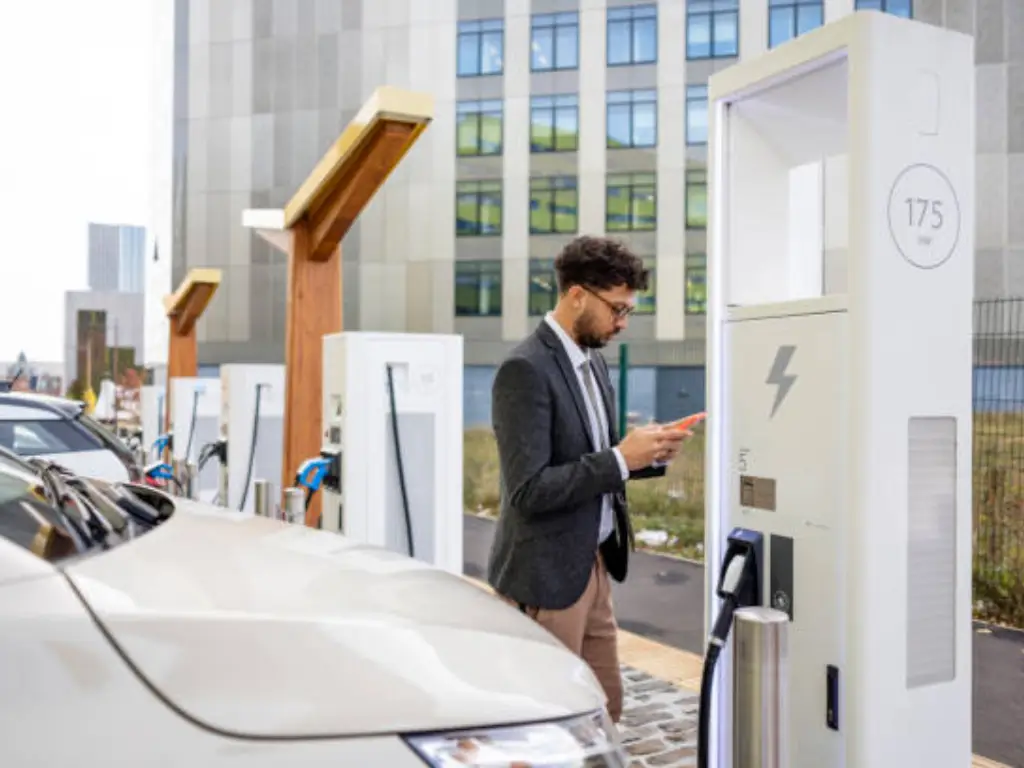
With ultra-fast charging becoming the norm, standalone batteries serve as a Power Buffer. They pull power gradually off the grid and send high-voltage bursts to vehicles, enabling operators to place high-speed chargers in places where a full upgrade of the grid transformer would be physically impossible or prohibitively expensive.
- Medical Institutions and Data Centers:
BESS can be used as a Tier-4 Redundancy Safety Net of critical infrastructure. These systems operate grid-forming inverters to go to Island Mode in milliseconds during a blackout. This is the key to the gap that diesel generators need to start before the equipment that saves lives and servers are not affected by the power outage.
- High-End Residential and Apartments:
Luxury developments incorporate standalone BESS as a high-end facility to guarantee Uninterrupted Living. These systems offer high energy availability despite the health of municipal grids, keeping residents safe against flickering lights and keeping critical smart-home systems online in case of local grid instability.
Selection Guide: How to Compute the Capacity and Power You Need?
The choice of the appropriate standalone BESS is a tradeoff between two parameters: Power (kW) and Capacity (kWh). These are the four steps to use in identifying the best specifications of your facility:
Step 1: Determine Your Peak Power Demand (kW)
Power defines the highest amount of energy that the system can emit at a particular time. To scale your system, determine the maximum electricity spike on your utility bill that is above your target. In the case of industrial peak shaving, a Power Conversion System (PCS) with a rating of 200kW or more is required when your equipment generates a 200kW spike. To use as a backup, just add up all the wattage of all the essential equipment that needs to be operating at the same time in case of a blackout.
Step 2: Determine Storage Capacity (kWh) Required
Capacity is the amount of time your system can maintain its power output. Calculate: Power (kW) × Duration (Hours) = Capacity (kWh). As an example, a data center with a 100kW backup period of 2 hours to enable the generator to synchronize must have a minimum capacity of 200kWh. This number is the foundation of your energy arbitrage or resilience plan.
Step 3: C-Rate and Depth of Discharge (DoD) Adjustment
Discharge intensity and safety buffers have to be considered in order to safeguard long-term battery health. A 1C rating or greater is used when rapid bursts of power are required, whereas a 0.5C rating is less expensive when long-duration energy shift is required. Also, since batteries are not supposed to be completely discharged, schedule an 80 percent to 90 percent Depth of Discharge (DoD). To avoid over-discharging and early aging, always oversize your system by 10-20 percent of the calculated requirement.
Step 4: Consider Environmental and Safety Efficiency
Energy retrieval is directly affected by external conditions. Integrated liquid cooling systems keep the internal temperatures constant, eliminating the 5-10% capacity loss that occurs in air-cooled systems in extreme weather. Lastly, make sure that the system is certified to UL 9540 and NFPA 855. These certifications ensure that your calculated power is stable and safe when there is high demand or when there is intense safety monitoring.
Lifespan and Maintenance of Standalone Battery Storage
A standalone Battery Energy Storage System (BESS) is a long-term infrastructure asset with a service life of 25 years or longer. This has to be achieved by balancing natural battery degradation and a planned maintenance and upgrade strategy.
- Service Life and Capacity Management:
LFP batteries have a typical cycle of 6,000 to 10,000 cycles, but they also lose capacity with time as a result of lithium loss. When the State of Health (SOH) of a system reduces to 70 percent of its initial capacity, the system is considered to be at the End of Life to be used as a high-performance system, typically after 1015 years. To sustain the necessary energy production beyond 25 years, operators tend to overbuild initial capacity or employ augmentation, that is, adding new battery modules every 5-7 years to counter this natural degradation.
- Critical Maintenance and Component Overhaids:
The Battery Management System (BMS) is the main protection against overcharging and cell-level failure. By 2026, the industry has moved to Predictive O&M, where cloud diagnostics is used to correct cell imbalances before they lead to downtime. Although the battery racks are robust, the Power Conversion System (PCS) and inverters are subject to severe thermal stress and normally need a significant mid-life service or component replacement between years 12 and 15 to maintain optimal conversion efficiency.
- Future-Proofing through Retrofitting:
Since the energy requirements tend to fluctuate before the hardware becomes obsolete, retrofitting is a tactical method of ensuring your BESS remains profitable. The software can be upgraded or new modules added to enable the system to respond to new market opportunities, including energy arbitrage or grid services. A standalone BESS is a high-payback asset throughout its life with regular preventative maintenance and scheduled hardware upgrades.
Cons and Problems of Standalone Battery Storage
Although standalone BESS is a strategic asset in 2026, the effective implementation of this technology is fraught with certain operational and financial challenges that must be overcome with the help of an expert planning to achieve profitability.
- First Investment and Soft Costs:
The first obstacle is the high initial CapEx of industrial grade LFP cells and 1500 V bi-directional inverters. Nonetheless, the actual difficulty is usually in the so-called soft costs, such as site engineering, local permitting, and complicated grid impact studies, which may take up to 30 percent of the overall budget unless the system is designed to be installed quickly.
- Grid Interconnection and Compliance:
The most time-consuming step is often the utility approval. The utilities need tedious interconnection studies to make sure that the BESS will not destabilize the local grid, which may take months of bureaucracy. Also, city installations should comply with rigorous safety standards, including NFPA 855, which requires a particular fire suppression and setback distance.
- Thermal Efficiency and Parasitic Loads:
Large-scale systems have to be operated within small temperature ranges to avoid accelerated degradation. Inadequately designed thermal management results in a parasitic load, in which the system uses its own power to drive cooling units, which can decrease the overall efficiency by 5-10%.
These obstacles cannot be overcome with a battery alone but with a better, combined system. This is where Beny is doing better, offering superior energy storage solutions that are designed to be at their best and to be in compliance seamlessly.
Potential of Standalone Battery Storage in Future
The future of standalone BESS is in the fact that it will cease to be a passive backup device but rather an active and revenue-generating node in a decentralized energy network.
- Autonomous Revenue through Virtual Power Plants (VPPs):
Future systems will be operated by AI-based Energy Management Systems (EMS) that will be involved in real-time electricity markets. Your BESS will automatically purchase energy when it is cheap and automatically sell it back when the grid is under peak stress. This makes your battery a 24/7 independent revenue generator, and buildings can become local utility providers.
- Next-Gen Chemistry and Long-Duration Storage:
Although LFP is the standard today, the emergence of Sodium-ion and Solid-State batteries will further reduce costs and enhance safety in extreme temperatures. Moreover, the industry is moving towards Long-Duration Energy Storage (LDES), which allows facilities to operate on stored renewables longer than 10 hours, which is the last step to making 100% renewable microgrids an economic reality.
- Complete Sovereignty and Grid-Forming Technology:
Future standalone systems will have grid-forming inverters, which will enable them to create their own local voltage and frequency without any connection to the central utility. This gives it the ability to start black, so that industrial complexes and high-security zones can be fully operational even in case of complete grid failures or blackouts.

Conclusion
Standalone Battery Energy Storage is a paradigm change to energy sovereignty. The capability to separate storage and generation in 2026 enables facilities to maneuver volatile markets with complete accuracy. Businesses can avoid paying peak demand charges by becoming active energy managers instead of passive consumers, and access new revenue by participating in the grid.
A standalone BESS is a long-term competitive move to invest in today. The more the power landscape is decentralized, the more the value of these assets will be added by the integration of AI-driven trading and long-duration storage. Finally, standalone storage offers the resilience and financial control required to succeed in the new energy economy.
FAQs
⚠️ Why are people against BESS?
The main issues are fire safety hazards (thermal runaway), large initial capital expenditure, environmental effects of lithium mining and possible noise or land-use problems in large-scale utility developments.
🔋 What is the way to store a battery when it is not used?
To store it properly, it is important to maintain a 40%60% state of charge (SoC), store the unit in a cool and dry climate-controlled place, and do periodic recharges to avoid irreversible loss of capacity due to deep discharge.
💡 Why do I have a high electric bill when I have solar panels?
High bills are usually caused by high energy use at night when panels are not generating, high-cost peak-hour Demand Charges, insufficient battery storage to store excess production during the day, or a mismatch between peak production and peak use periods.
🔊 Do BESS systems make noise?
BESS systems produce moderate noise, mostly due to cooling fans, liquid cooling pumps, and the high-frequency electronic hum of the power conversion system (PCS), but new models are designed to operate at low decibel levels.
© 2025 Standalone Battery Energy Storage Guide – Professional BESS Solutions