We will cut right through the noise. By 2026, when you are considering a solar system, the discussion has changed radically to not just to produce energy but to store it. The fluctuating utility policies and unreliability of the grid have necessitated backup power through battery storage as a need and not a luxury. Nevertheless, it is extremely hard to obtain a direct answer to the question of pricing among the majority of buyers, as energy usage profiles vary so significantly.
Installers tend to package figures, hide the margins of the equipment, and hide the installation costs in the small print. You must have a clear-cut account of how the total cost of each dollar is spent in order to make a profitable and safe investment. You must have a clear-cut account of how each dollar is spent in order to make a profitable and safe investment. This guide removes the marketing fluff to reveal to you the actual cost of a solar battery today, providing peace of mind while exploring the factors that cause the price to rise or fall and whether the financial payback period is worth the initial investment.

The total installed price and the cost per kilowatt-hour of storage are the two factors that you need to consider to determine the financial commitment. A typical residential solar battery storage system in 2026 will have an upfront cost between 10,000 and 20,000 installed, without any federal or state tax incentives.
When you divide this up into the per-unit battery prices, you are typically looking at an average cost of 800 to 1200 per kwh of storage capacity. This broad range is due to the fact that the end product is never simply the battery cells. You are paying the inverter technology that is built in, the sophisticated energy management software, shipping and highly specialized electrical work. Online buying a standalone unit may display a price tag of $6,000, but without the hardware and professional battery installation, the unit is just a useless box. The actual cost is always that of a fully commissioned grid-connected system.
The battery capacity of your unit is determined by your daily consumption, and it is the only single biggest factor in your overall cost. Purchasing too little exposes you to outages and purchasing too much ties up capital that will never be recovered. The following is the alignment of the costs with the practical amount of energy required for home use.
The price is greatly dependent on the manufacturer you select, which is usually based on proprietary battery technology, integrated hardware, and brand reputation. A realistic comparison of the key factors and players in the 2026 market is provided below.
| Brand and Model | Usable Capacity | Average Equipment Cost | Estimated Installed Cost |
|---|---|---|---|
| Tesla Powerwall 3 | 13.5 kWh | $7,300 | $11,500 – $14,500 |
| Enphase IQ Battery 5P | 5.0 kWh | $3,800 | $6,500 – $8,500 |
| SolarEdge Energy Bank | 9.7 kWh | $7,000 | $11,000 – $13,500 |
| FranklinWH aPower | 13.6 kWh | $7,500 | $12,000 – $15,000 |
| LG Chem RESU16H Prime | 16.0 kWh | $8,500 | $13,500 – $16,500 |
The pricing logic behind this is largely based on integration. The Powerwall 3 has a powerful built-in inverter, which is included in Tesla, making it easy to install and very cost-effective in size. Enphase employs a modular microinverter design; the initial price per kWh may seem more expensive, but the type of battery system here is highly reliable. SolarEdge batteries are specifically made to be used with a SolarEdge solar panel system, so their price is very competitive when you already have invested in their ecosystem, but very high when you need a full new system. In most instances, the premium charged on a particular brand is in effect the premium charged on smooth software integration and a track record of warranty.
Absolutely. The materials that are used in the casing determine not only the amount that you will pay on the first day, but also the higher efficiency and the duration of the asset before it requires replacement.
| Chemistry Type | Initial Cost Profile | Expected Lifespan | Maintenance Level |
|---|---|---|---|
| Lithium Iron Phosphate (LFP) | Moderate to High | 6,000 to 10,000 cycles | Zero maintenance |
| Nickel Manganese Cobalt (NMC) | High | 4,000 to 6,000 cycles | Zero maintenance |
| Lead-Acid | Very Low | 500 to 1,000 cycles | Routine checks required |
| Flow Batteries | Extremely High | 10,000+ cycles | Annual professional service |
Lithium Iron Phosphate is the unquestioned leader of residential and commercial storage in 2026. Although LFP needs a moderate start-up capital, its thermal stability is outstanding, which eliminates fire hazards. More to the point, LFP batteries can withstand thousands of charge cycles with a long lifespan, meaning their lifetime cost is much lower than less expensive options.
Nickel Manganese Cobalt is more energy-dense, i.e. it occupies less physical space on your wall, but it decays more quickly and poses more thermal hazards. Lead-acid is inexpensive in the short term but is a terrible long-term investment because of its incredibly low life cycle and severe depth-of-discharge restrictions.
Flow batteries are the industrial level of high-end; the initial cost is extremely high, but the chemistry of flow batteries enables an essentially unlimited number of cycles without loss of capacity. This changes the value of initial price to extreme longevity and thus they are the most economical solution to large scale projects that have to run over decades.
The hardware is only included in the sticker price of a battery module. To convert that hardware into a working, legal and safe energy source, you have to consider the installation complexity and infrastructure needed to connect it to the electrical system of your house.
The table below disaggregates the most frequent secondary costs and labor costs that usually shock homeowners when they are being quoted:
| Expense Category | Typical Price Range | Purpose & Impact |
|---|---|---|
| Professional Labor | $2,000 – $5,000 | High-voltage wiring, system commissioning, and software setup. |
| Panel Upgrades (MPU/Sub-panel) | $1,500 – $4,500 | Increasing capacity for old homes or isolating critical circuits for backup. |
| Smart Gateway / Transfer Switch | $1,500 – $3,000 | Safely disconnecting from the grid to prevent back-feeding during outages. |
| Permitting & Utility Fees | $500 – $1,500 | Municipal building permits, fire safety reviews, and grid connection fees. |
| Fire Safety & Site Compliance | $300 – $2,000 | Mandatory heat sensors, physical bollards, or trenching for cable runs. |
Professional labor and electrical infrastructure are usually the most significant add-ons to your bill. In case the main panel of your home is 100 amps or more than 20 years old, an upgrade is usually mandatory to support a new kwh battery system. Moreover, you will require a special critical loads sub-panel unless you invest in a whole-home backup. This hardware physically isolates critical circuits, such as your refrigerator and lights, so that the battery does not empty immediately by attempting to power high-draw appliances while disconnected from grid electricity in the event of a blackout.
Your system should have a smart gateway or automatic transfer switch to be legally used as a backup source. This device is a digital gatekeeper, which immediately isolates your home to the utility grid in the event of a power outage. This is a very important safety measure that will ensure that your battery does not release electricity back onto the power lines and this may electrocute utility workers. In addition to the hardware, the soft costs of building permits and utility interconnection applications cannot be negotiated. More safety equipment like special heat detectors or physical barriers are also required in many areas in 2026, where the fire codes are more stringent and the battery is installed in a garage.
These group charges may increase your original equipment purchase by 30 to 50 percent. Including them early will guarantee that your budget is accurate and represents the actual cost of a code-compliant turnkey installation.
To find out the actual worth of a solar battery, one has to look beyond the initial cost and examine the financial benefits within a period of ten years.
To homeowners in areas where frequent power outages are common, the value is instant, providing essential peace of mind as a financial shock absorber. A battery is a strong financial shock absorber, which prevents spoiled food, basement flooding caused by dead sump pumps, and lost income due to interrupted remote work.
Nevertheless, the main economic motivation in 2026 is the prevention of utility demand charges and Time-of-Use rates. Electricity costs used during the hours of 4 PM to 9 PM is being charged by the utilities at exorbitant prices. A solar battery will enable you to save the cheap solar energy of the day and use it in these high-priced evening hours, and will fully shield you against a skyrocketing energy bill.
Moreover, such policies as the NEM 3.0 in California have reduced significantly the amount of money homeowners get in terms of sending excess solar energy back to the grid. Since the utility is now paying you pennies to export your solar energy, it does not make financial sense to give it away. You should keep it and utilize it personally to get a good payback period on your solar investment. With such contemporary billing arrangements, a well-sized battery system will pay back in seven to nine years.
The retail cost of solar batteries may be daunting, but the net cost is often significantly less than it seems when you lay federal, state, and utility-level incentives atop each other. By 2026, it is not only to find the cheapest battery, but to use all the available programs to reduce your out-of-pocket costs by 40 percent or more.
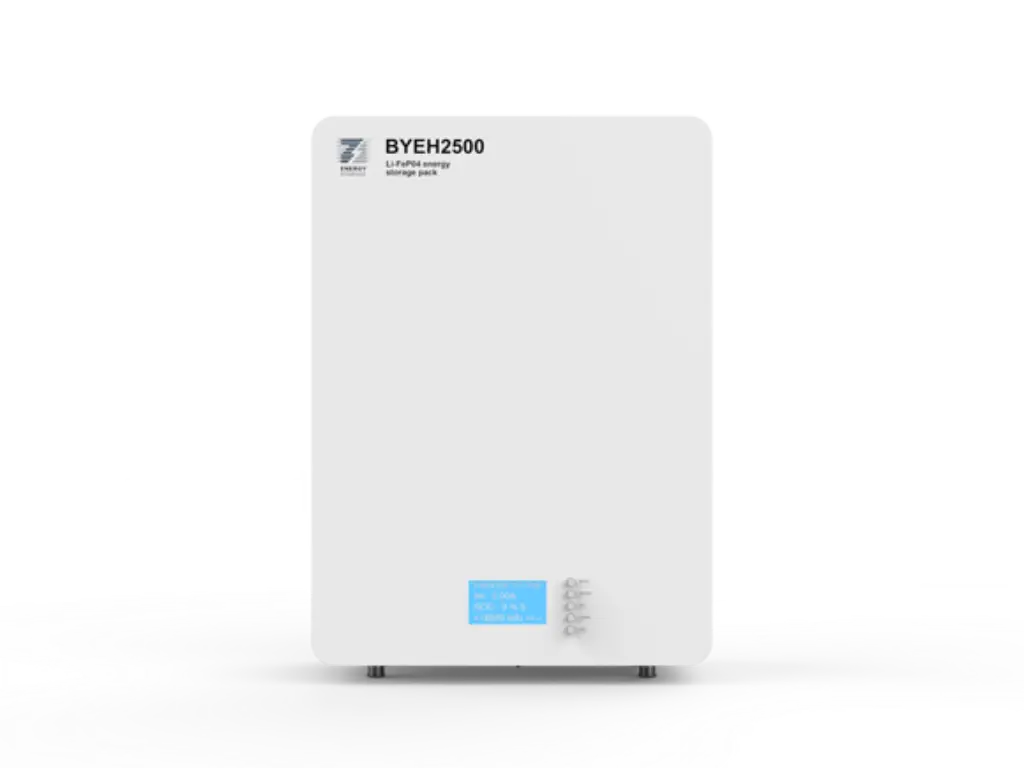
Although these incentives greatly reduce the barrier to entry, when combined with a high-efficiency BENY storage system, you can be assured of maximizing your long-term ROI by having high reliability and energy conversion.
The choice to install a solar battery must be viewed as a strategic infrastructure upgrade to your house. Although the initial investment of between 10,000 and more than 20,000 is quite high, the Federal tax credits, state incentives and savings on utility bills change the overall financial landscape drastically. With the power grids becoming increasingly overloaded and the electricity rates at the top steadily rising, the use of utility companies alone is proving to be a costly gamble. With the proper choice of capacity, safe LFP chemistry, and transparent manufacturers and installers, you will be able to achieve energy independence and get a stable, quantifiable payoff on your investment over decades.
🔋 What is the lifespan of a solar battery?
A solar battery can last 10-15 years of useful operation, with predictable daily charge cycles, predictable energy output, about 6,000 to 10,000 charge cycles with LFP chemistry, and long-term operation with adequate thermal management.
⚡ Is it worth getting a battery for solar panels?
A battery will offer the necessary backup security in times of grid outages, defense against costly peak-hour utility rates, maximum use of your own self-generated solar energy, and a hedge of vital importance against the dwindling credits provided by current net-metering policies.
⚠️ What are the disadvantages of solar batteries?
The main drawbacks are the high initial capital cost, the physical space needed to install it, the fact that its capacity will be lost over a 10-year period of operation, and it may require expensive upgrades of electrical panels.
💡 Why is my electric bill so high if I have solar panels?
A high bill with solar can be due to heavy night time energy use without storage, fixed non-bypassable utility service charges, high-draw appliances operating within peak rate periods or a system that is undersized relative to your actual household load.
© 2026 Solar Battery Guide – Smart Energy Solutions for Every Home