Managing a commercial or industrial facility in today’s economic climate feels like walking a permanent financial tightrope. On one hand, facility managers are under immense pressure to maximize production output, maintain strict environmental controls, and ensure zero downtime. On the other hand, they are constantly battling skyrocketing overhead expenses, with utility bills frequently taking the lead as the most uncontrollable line item. You might have already invested heavily in high-efficiency LED lighting retrofits, upgraded your building envelope insulation, and instructed your staff to rigorously power down idle equipment at the end of every shift. Yet, when the end of the month arrives, the utility bill lands on your desk and the financial figures are still staggeringly high. If your facility is demonstrably consuming less total energy month over month, but your overall utility costs continue to climb or remain painfully static, you are likely falling victim to the most misunderstood and punitive metric on your commercial energy bill. For facility managers wondering exactly how to reduce peak demand, this comprehensive engineering and financial guide will decode the complex mechanics of commercial electricity billing, explore the critical differences between behavioral shifting and hardware shaving strategies, and provide a clear, tiered roadmap for utilizing intelligent solutions—ranging from zero-cost scheduling to advanced Battery Energy Storage Systems—to permanently optimize your energy profile and protect your bottom line.
WHAT EXACTLY IS PEAK DEMAND? (AND WHY IT RUINS YOUR ENERGY BILL)
To fundamentally solve the problem of exorbitant commercial utility bills, an energy manager must first separate the concepts of total energy consumption and instantaneous power demand. Most residential consumers only pay for energy consumption, which is a straightforward calculation of the volume of electricity used over time. However, for commercial and industrial users, the regional utility company introduces a second, heavily weighted financial metric. The simplest way to comprehend this dual-billing structure is through an automotive analogy.
Energy Consumption: This represents the total distance your car travels over a month, measured in kilowatt-hours. It is the cumulative volume of electricity your facility uses.
Power Demand: This represents the absolute highest speed your car reached during that entire journey, measured in kilowatts. Even if you only drove at that extreme speed for a fraction of a minute, the utility company penalizes you for the capability.
Utility companies are legally obligated to build and maintain massive, expensive infrastructures, including power plants, substations, and heavy-duty transmission lines. They do not build this infrastructure to handle your average daily operations; they must build it to guarantee they can supply enough power during your absolute highest moment of need without causing a grid blackout. Consider an extreme industrial scenario: a manufacturing plant sits completely idle, drawing almost zero power, for twenty-nine days of a billing cycle. On the thirtieth day, the plant manager turns on every single piece of heavy machinery simultaneously for just fifteen minutes. The total energy consumption for the month is practically zero, but the grid must have the massive standby capacity ready to handle that violent surge on day thirty. Because maintaining that idle capacity is incredibly expensive, the grid passes the infrastructure cost directly to you. For many medium-to-large facilities, this specific charge can overshadow the cost of the actual energy consumed.
THE “RATCHET CHARGE” TRAP: THE MATH BEHIND YOUR HIGHEST BILL
Understanding the conceptual difference between volume and speed is only the first step. Understanding how the utility company mathematically weaponizes this against your operational budget is where the real urgency lies. Utilities typically measure your power usage continuously, breaking the month down into small calculation windows. In North America, the standard is the fifteen-minute integration interval. The grid’s smart meter records your average active power draw during each of these sequential windows. At the end of the billing cycle, the utility scans all the intervals, identifies the single highest fifteen-minute window, and uses that specific peak number to calculate your demand charge for the entire month.
However, the financial penalty often extends far beyond a single bad month due to a highly punitive billing mechanism designed to protect utility revenues.
Ratchet Clause: A contractual billing stipulation dictating that your highest peak demand recorded in a specific month will set a mandatory minimum billing threshold for the subsequent eleven months, regardless of how low your actual future demand drops.
To illustrate the devastating nature of this clause, let us examine a realistic financial breakdown for a mid-sized plastic injection molding facility. Assume the local utility demand rate is twenty dollars per kilowatt, and they enforce an eleven-month ratchet clause at eighty percent of the annual peak.
| Billing Parameter | Standard Baseline Operation | The 15-Minute Operational Error | Financial Impact (TCO) |
|---|---|---|---|
| Average Demand Level | 500 kW | 800 kW (Due to concurrent machine loading) | +300 kW Unnecessary Spike |
| Immediate Monthly Charge | $10,000 | $16,000 | $6,000 Penalty in Month 1 |
| Ratchet Minimum (Next 11 Months) | N/A (If steady) | 640 kW (80% of 800kW Peak) | Billed for 640kW even if actual usage is 500kW |
| Ongoing Monthly Penalty | $0 | 140 kW difference * $20 | $2,800 Wasted Every Single Month |
| Total Annual Financial Bleed | Standard Cost | $6,000 + ($2,800 * 11) | $36,800 Lost to a 15-Minute Mistake |
That single, fleeting fifteen-minute operational oversight—perhaps caused by a shift manager turning on the chillers and the extruders at the exact same time—can bleed a company’s financial resources for an entire year. This mathematical reality makes aggressive peak management not just an environmental initiative, but an absolute financial necessity for survival.
PEAK SHAVING VS. LOAD SHIFTING: CHOOSING YOUR REDUCTION STRATEGY
When facility directors begin researching effective methods for reducing peak demand and mitigating these devastating financial charges, they immediately encounter two technical terms that are frequently, and incorrectly, used interchangeably by amateur energy bloggers. Conflating these two distinct strategies leads to poor capital allocation, frustrating operational disruptions, and disappointing returns on investment. Before deploying capital, we must draw a strict line between behavioral management and hardware intervention.
The Mechanics of Load Shifting (Moving the Spikes)
This is fundamentally a strategy of time management and operational choreography. It does not require you to generate or store your own power behind the meter. Instead, you perform a deep audit of your facility’s daily workflow to identify energy-intensive tasks that are not strictly time-sensitive. You then intentionally reschedule these specific tasks from peak hours, when electricity demand rates are highest, to off-peak hours, typically late at night or early in the morning. Using a retail analogy, shifting is equivalent to offering a significant financial discount to customers who are willing to shop at three in the morning instead of seven in the evening. You are still moving the same volume of inventory, but you are distributing the foot traffic to avoid a chaotic rush hour that requires hiring extra security.
The Mechanics of Peak Shaving (Cutting the Spikes)
Conversely, this is a direct, hard-line engineering approach to demand management. When you implement this strategy, your facility does not alter its operational schedule or compromise its production targets. The machinery continues to run exactly when it needs to run. Instead of changing human behavior, you introduce a secondary, on-site energy asset to shoulder the extra burden during the highest stress periods. Returning to the analogy, when the store reaches maximum capacity, you do not turn customers away; instead, you instantly open a fully staffed temporary expansion wing to process the overflow. In commercial energy, that expansion wing is a high-capacity battery system.
| Strategic Dimension | Load Shifting (Behavioral) | Peak Shaving (Hardware) |
|---|---|---|
| Fundamental Mechanism | Rescheduling heavy energy usage to off-peak grid hours. | Injecting alternative stored power to offset grid draw. |
| Capital Expenditure (CAPEX) | Extremely low; requires operational software and planning. | High initial investment for battery systems and integration. |
| Ideal Facility Profile | Facilities with flexible workflows (e.g., water pumping, batch processing). | Facilities with rigid, continuous manufacturing schedules. |
TIER 1: ZERO-COST BEHAVIORAL SHIFTING (MASTERING YOUR SCHEDULE)
Before requesting capital expenditure approval from the board for heavy infrastructure to reduce peak demand, a prudent energy auditor will always exhaust all zero-cost behavioral optimization methods. Establishing a lean operational baseline ensures that when you do eventually size a hardware solution, you are not overpaying for unnecessary battery capacity simply to cover up sloppy human management.
Optimizing HVAC and Thermal Pre-Cooling
Heating, ventilation, and air conditioning systems are notoriously power-hungry, frequently representing the largest single load in commercial office buildings and light manufacturing. A highly effective strategy here relies on the physics of thermal mass. By running your HVAC system aggressively at five in the morning, during off-peak hours when demand charges are suspended, you effectively turn the concrete, steel, and physical air volume of the building itself into a giant thermal battery. By the time the heavy operations begin at nine in the morning, the building is already deeply cooled. The HVAC compressors can then drop into a much lower frequency just to maintain the ambient temperature, rather than fighting a massive heat load from scratch during the most expensive time of the day.
Staggering Sustained Heavy Machinery Loads
In the heavy industrial sector, poor shift scheduling is the absolute enemy of energy efficiency. A pervasive myth in the industry is that the instantaneous, millisecond-long in-rush current of starting an electric motor is what triggers the utility demand penalty. This is a fundamental misunderstanding of the fifteen-minute integration window. While motor starting currents are high, they are too brief to significantly move the fifteen-minute average.
Concurrent Sustained Loads: This is the true culprit of the ratchet charge. It occurs when multiple pieces of heavy equipment are operated at full capacity simultaneously for a prolonged duration.
The real danger occurs at the beginning of a shift when a floor manager instructs the team to start three large injection molding machines, two heavy-duty industrial chillers, and a pneumatic compressor system all within the same fifteen-minute window. Running all these heavy assets concurrently for twenty minutes will generate an astronomical average kilowatt reading. The operational fix is an enforced staggering protocol. By staggering the sustained operation of heavy machinery—ensuring the chillers reach their setpoint before the extruders begin their heating cycle—you prevent the sustained power draws from overlapping. This keeps the aggregate demand profile flat and entirely avoids unnecessary utility triggers without spending a single dollar on new equipment.
TIER 2: AUTOMATED CONTROL (BAS AND SMART SHEDDING)
Manual staggering protocols and human behavioral shifts are excellent starting points, but they are inherently fragile. They rely on perfect human execution, which eventually breaks down during high-pressure production rushes or staff turnovers. When human scheduling reaches its practical limit, facilities must transition to the second tier of demand reduction: light-asset automated control.
A sophisticated Building Automation System acts as the ruthless, unsleeping central nervous system for your facility’s energy management. Through a network of distributed sensors and smart relays, the automation system monitors the real-time power draw of the entire facility at the main utility feed. The true financial value of this system emerges when engineers program strict demand limit protocols into the central logic controller. If the system detects that the facility’s total power draw is rapidly approaching a pre-determined financial threshold—for example, creeping toward 450 kilowatts with ten minutes left in the interval—it executes a prioritized load-shedding sequence in milliseconds.
Without requiring any human intervention or approval, the system might automatically dim the lighting in non-essential warehouse corridors by twenty percent, pause the electric water heating elements, and send a signal to the variable frequency drives to throttle the HVAC fans down by fifteen percent. The human occupants barely register the environmental shift, but the utility meter records a perfectly suppressed demand curve. Once the critical fifteen-minute integration window resets, the automation system smoothly restores power to the non-essential systems, successfully navigating the danger zone without impacting core operations.
TIER 3: TRUE PEAK SHAVING WITH BESS (THE ULTIMATE BUFFER)
Automated load shedding is brilliant for managing flexible loads, but it hits a hard wall when applied to mission-critical continuous manufacturing. If you operate a semiconductor fab, a high-volume data center, or a continuous chemical processing plant, you simply cannot dim the lights or throttle the machines. Furthermore, many modern facilities rely on commercial solar arrays to offset costs. A dangerous misconception is that solar panels alone eliminate demand charges. If you experience a prolonged weather front—such as a dense thunderstorm rolling in at two in the afternoon and blocking the sun for forty-five minutes—your solar output drops to zero. Your critical facility machines cannot stop; they instantly pull the massive power deficit directly from the utility grid. Your fifteen-minute interval is completely ruined by unpredictable weather.
The Engineering Solution:
BENY Commercial Energy Storage
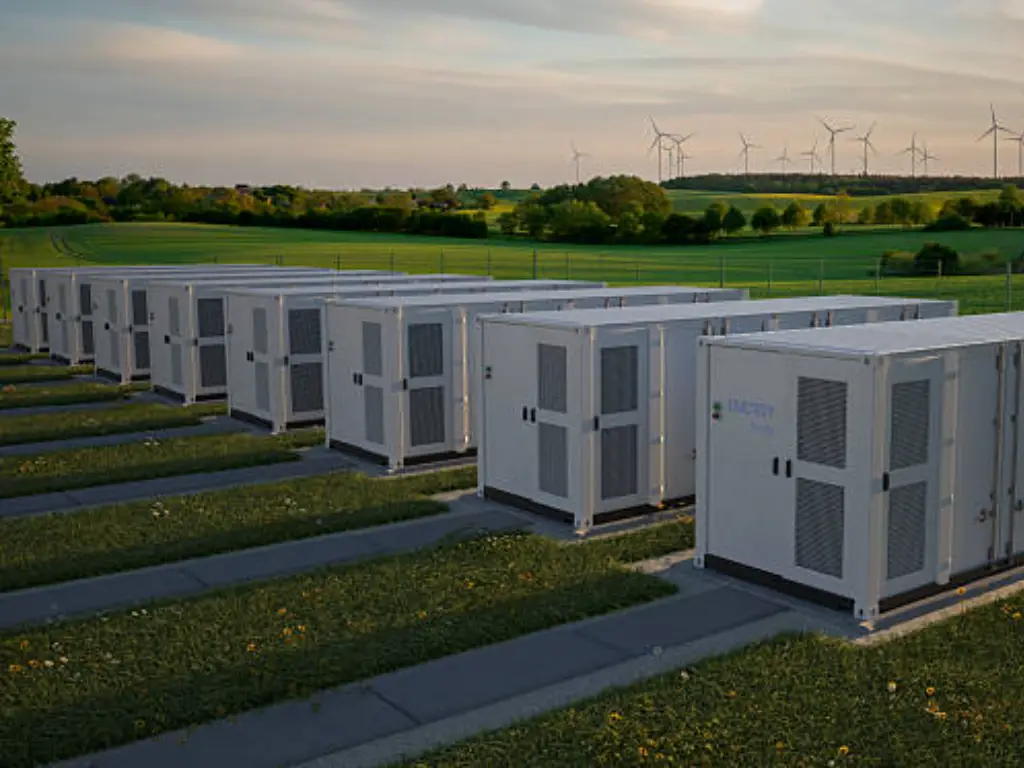
When you cannot alter your production schedule and you cannot control the weather, the only physical, engineering solution left is a high-response microgrid architecture. This is exactly where the BENY Commercial Energy Storage System serves as the ultimate, impenetrable buffer between your facility and the punitive utility grid.
Built around an ultra-safe Lithium Iron Phosphate cell chemistry, the true power of the BENY system lies in its proprietary Energy Management System. The EMS constantly analyzes the delta between your facility’s real-time consumption and your solar output. The moment a prolonged weather front cripples your solar generation, or a critical manufacturing process demands a massive sustained load, the BENY EMS detects the grid power influx in milliseconds. Instantly, the high-performance battery banks discharge, filling the exact power deficit. The transition is completely seamless to your machinery. The utility grid never sees the surge, the smart meter records a perfectly flat baseline, and your operations remain permanently immunized against ratchet charges, regardless of environmental chaos or production spikes.

PROVING THE ROI: ITC, DEMAND RESPONSE, AND VERIFIABLE PAYBACK
In the realm of high-level B2B facility management, technical elegance and engineering marvels mean nothing without a rigorous, defensible financial justification. Chief Financial Officers must see a clear, accelerated path to profitability that extends beyond theoretical savings. Fortunately, the financial modeling for commercial energy storage has fundamentally shifted from a long-term sustainability play to a high-yield operational asset.
The calculation of Total Cost of Ownership relies on stacking multiple revenue and savings streams. Defensively, the math is grounded in the elimination of the ratchet penalty. If a battery array consistently shaves 200 kilowatts off your peak in a jurisdiction charging twenty-five dollars per kilowatt, that is five thousand dollars of pure cash flow injected back into the business every single month. However, the financial model truly accelerates offensively through federal policy and grid participation.
According to data from the National Renewable Energy Laboratory, facilities located in high-demand-charge regions can achieve aggressive payback periods when leveraging modern policy frameworks. Under the Inflation Reduction Act, commercial entities investing in standalone energy storage systems can qualify for a baseline thirty percent Investment Tax Credit, immediately writing off nearly a third of the capital expenditure. Furthermore, modern utilities actively pay facilities to help stabilize the macro grid through Demand Response programs. By allowing the grid operator to tap into your BENY battery capacity during regional power emergencies, your facility earns substantial annual dividend checks. When you combine the defensive savings, the aggressive federal tax credits, and the lucrative demand response payouts, the verifiable payback period for a comprehensive commercial storage system frequently compresses from a daunting ten-year horizon down to an incredibly attractive three to five years.
YOUR PEAK DEMAND ACTION PLAN (WHERE TO START)
Understanding the punitive mechanics of utility billing and the tiered array of engineering solutions available for demand charge reduction is only valuable if it translates into immediate, structured execution. Transitioning your facility from a passive, penalized energy consumer to an active, optimized microgrid requires a systematic diagnostic approach. Follow this sequential blueprint to reclaim total control over your utility expenses.
-
Step 1: Secure Your Interval Data. Do not rely on the simplified summary page of your monthly utility bill. Log into your utility provider’s commercial portal and download the raw, fifteen-minute interval data in a CSV spreadsheet format for the past twelve months. This granular data is the foundational diagnostic DNA of your energy profile.
-
Step 2: Isolate the Concurrent Loads. Analyze the spreadsheet to identify exactly when your peaks are occurring. Are they happening simultaneously with shift changes? Do they correlate with prolonged summer heatwaves? Isolating the root cause dictates whether you can survive with zero-cost behavioral shifting or if you require the heavy intervention of peak shaving.
-
Step 3: Engineer the Financial Solution. Never guess when it comes to sizing capital electrical equipment. Over-sizing a battery wastes precious capital; under-sizing leaves you fatally exposed to the ratchet penalties you sought to avoid.
Stop Guessing, Start Modeling
Navigating the complexities of interval data, tax credits, and microgrid sizing requires specialized engineering software. You don’t have to do the complex math alone. Connect with our engineering team for a complimentary, strictly confidential microgrid sizing simulation based on your unique load profile.
Request a Free ROI SimulationCONCLUSION
Mastering peak demand reduction is no longer just an optional environmental initiative; it is a critical pillar of modern financial strategy and operational resilience for any B2B enterprise. By fundamentally understanding how utility companies penalize concurrent operational surges, implementing intelligent load shifting protocols, and deploying sophisticated, high-response hardware like commercial energy storage, you can permanently dismantle the threat of ratchet charges. The lithium-ion technology is mature, the federal financial incentives are heavily stacked in your favor, and the engineering path forward is clearer than ever. It is time to stop letting outdated utility grid mechanics dictate your operational costs, eliminate your financial blind spots, and take definitive control of your facility’s energy future.