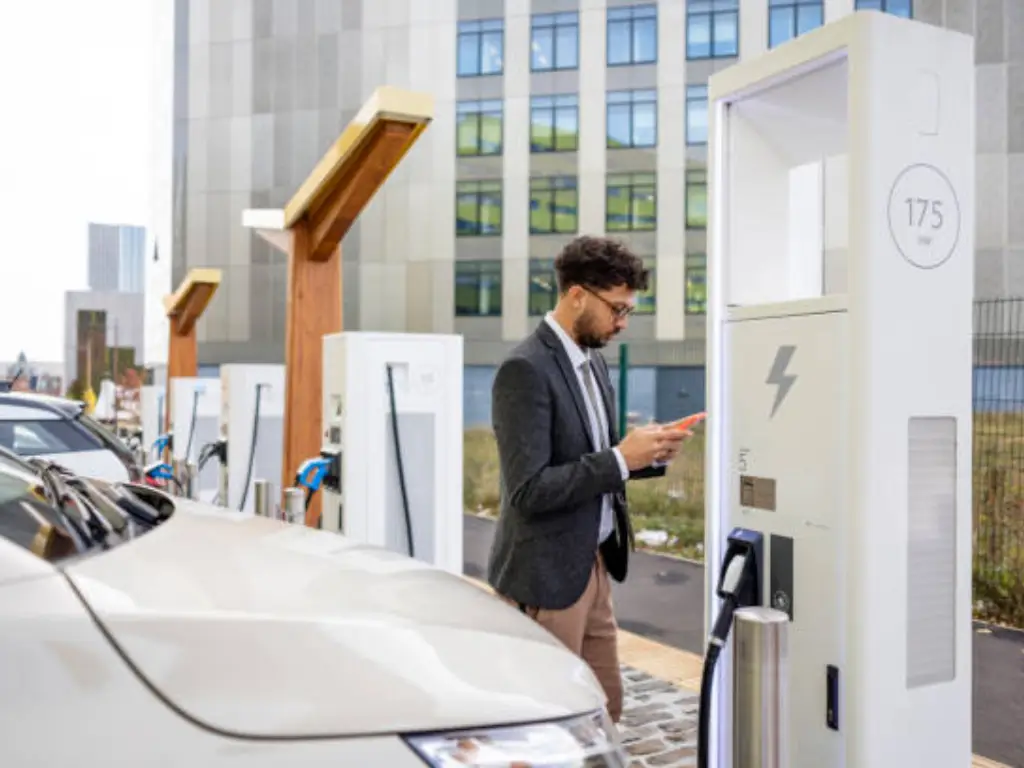
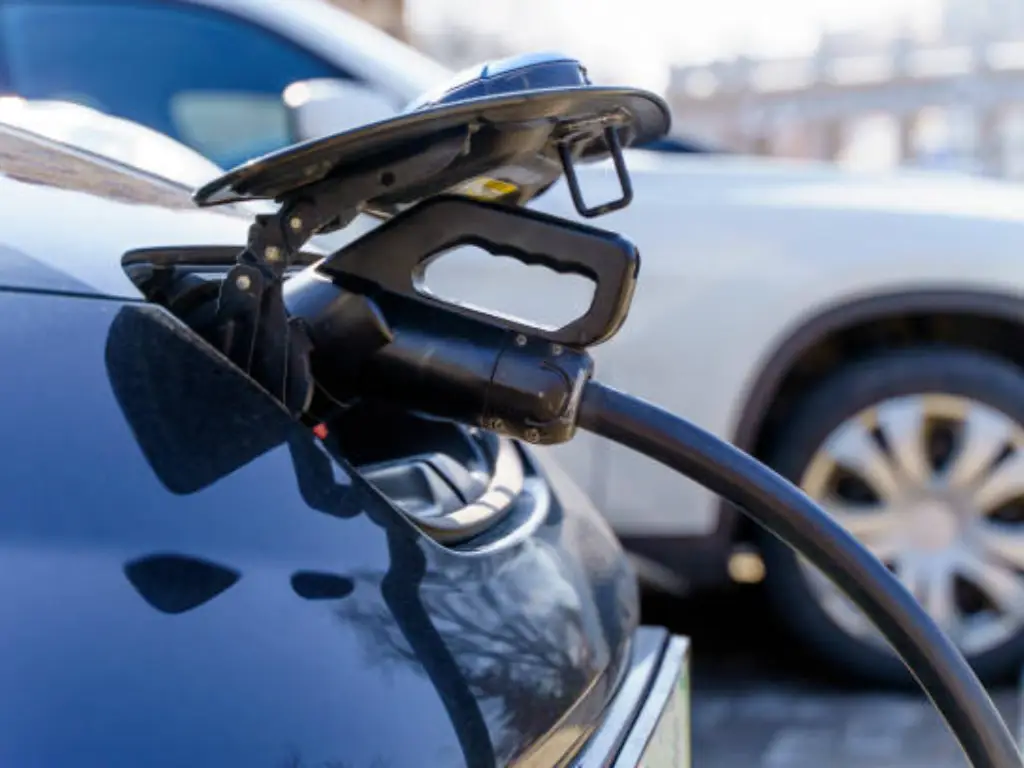
In late 2022, the North American Charging Standard (NACS), initially a proprietary interface developed by Tesla, was adopted as a universal industry standard named SAE J3400. It has already superseded the combined charging standard (CCS1) to become the primary charging port of new electric vehicles in North America by 2026. Its rapid implementation is a step towards consolidated and convenient combined charging system.
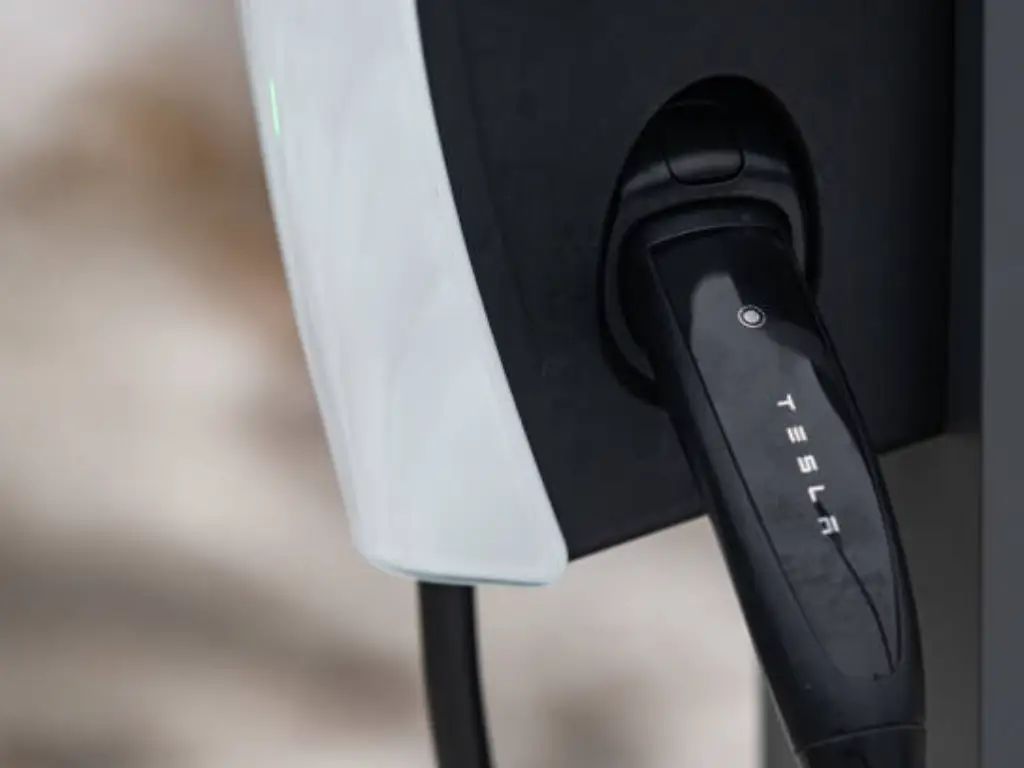
| Feature | NACS (SAE J3400) | CCS1 |
|---|---|---|
| Form Factor | Compact, ergonomic, and lightweight | Bulky, heavy, and often requires two hands |
| Pin Configuration | Integrated pins for both AC and DC | Dedicated, separate pins for AC and DC |
| User Experience | Seamless “Plug & Charge” focus | Often requires external apps or cards |
| Future Readiness | Native 1000V and bidirectional support | Limited by aging hardware designs |
The recent legal clarity and the strategic federal policy have resulted in the proliferation of NACS across all the 50 states. The center of this change is the $5 billion National Electric Vehicle Infrastructure (NEVI) program, which now mandates all federally-funded charging stations to be compatible with tesla charging connector (NACS). This is to ensure that new public infrastructure is future-proof, which will essentially prevent the issue of stranded assets of old plug types.
This expansion was legalized on January 23, 2026, when a federal judge ruled that the recent attempts to defund NEVI were illegal. This historic decision has triggered a manic infrastructure construction boom, which will see a tidal wave of highway charging stations constructed this year. This implies to the consumer a consistent, reliable network in which network operators offer natively support NACS-equipped vehicles without adapters or complex workarounds.
The change in market share has become a tipping point by the beginning of 2026. According to recent statistics, NACS public fast-charging ports currently represent about 48 percent of the total available infrastructure, and that figure is increasing each month as CCS1 installations have come to a crawl.
| Metric | NACS (SAE J3400) | CCS1 (Legacy) |
|---|---|---|
| 2026 Market Share (Ports) | ~48% and Growing | ~35% and Stagnating |
| New Vehicle Native Support | >90% of 2026 Models | <10% of 2026 Models |
| Physical Size | Compact, Single Hand Operation | Bulky, Dual-Cable Heavy |
| Max Voltage | 1000V | 1000V (Rarely utilized) |
As NACS is now the native standard on more than 90 percent of new models, it is the obvious option to buyers who want to future-proof their purchase. By choosing a vehicle with a NACS, you will be guaranteed of compatibility with the major charging infrastructure in North America in the long term and the highest possible resale value of your car in the future.
The year 2026 marks a turning point in the North American EV market with the key players officially abandoning the CCS1 connector in favor of the native NACS (J3400) standard. This shift makes the charging process easier, and drivers can use the Tesla Supercharger network without any inconvenience caused by external equipment.
| Brand | Models Transitioned to Native NACS | Release Month (2026) |
|---|---|---|
| General Motors | Silverado EV, Sierra EV, Lyriq, Blazer EV | January |
| Ford | F-150 Lightning, Mustang Mach-E | January |
| Rivian | R1S, R1T (Refresh), R2 Platform | February |
| Volvo | EX90, EX30, XC40 Recharge | March |
| Nissan | Ariya (NACS Edition), Leaf Successor | May |
The NACS port has been incorporated into the bodywork of the above-mentioned models by General Motors, Ford, Rivian, Volvo, and Nissan in full. These manufacturers have abandoned the CCS1 standard and thus removed the use of bulky and heavy adapters. The redesigned vehicles usually have port positions, including the rear-left or front-right, which are specifically designed to accommodate the cable length and design of current high-speed charging stalls.
Buyers should also be able to differentiate between real native hardware and short-term transitional solutions in the first half of 2026. Although most brands are promoting NACS compatibility, certain early-year deliveries or late-2025 carryover models can still have a physical CCS1 port. In such situations, the manufacturer may just add a factory-approved adapter in the trunk to fill the gap.
In order to be sure that you are buying a vehicle with the permanent J3400 hardware, you must physically confirm the presence of the charging port on the fender before signing. A native NACS port will be a small, single-plug device (like a Tesla port), but a CCS1 port will be a much larger, circular port. A native port would be more convenient in the long term and may preserve the resale value of the vehicle as the industry standardizes.
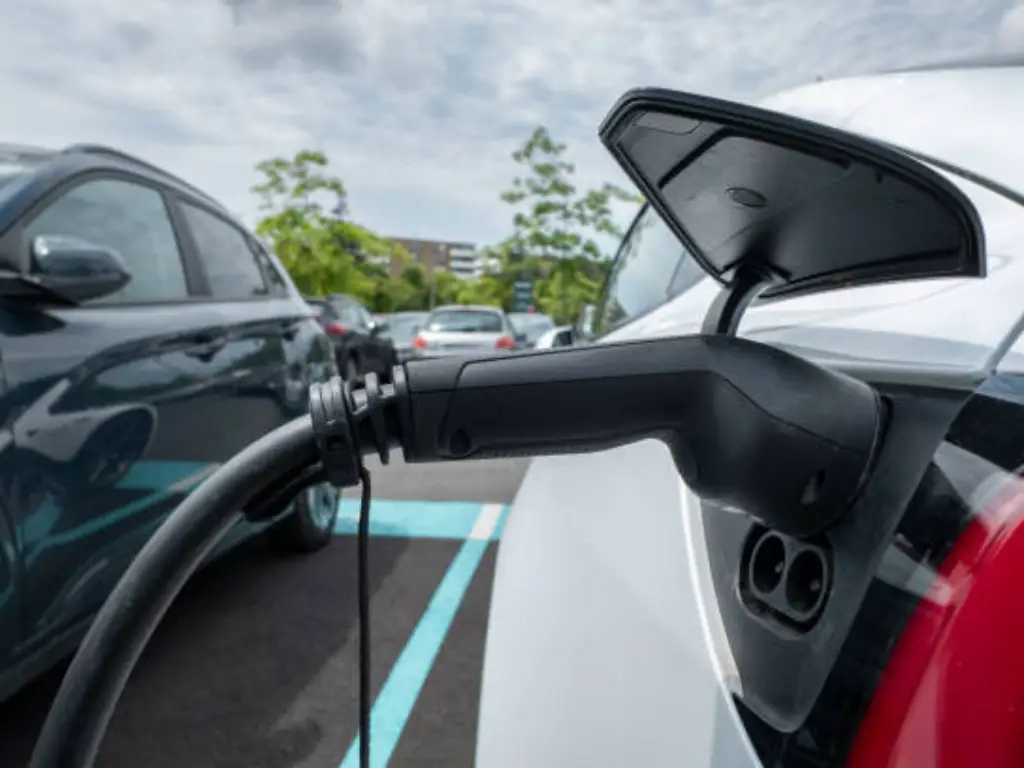
The Tesla Supercharger network has successfully broken down the walled garden, providing a gold standard of reliability to a broad variety of non-Tesla vehicles. The owners of older models with CCS1 are not left behind; Tesla still supports and adds more Magic Dock stations -stalls with built-in adapters- and third-party networks such as Electrify America still use CCS cables in addition to the newer NACS standard.
Large-scale manufacturers such as Ford, General Motors, Rivian, Volvo, and Nissan are fully integrated, and their drivers can easily access the network. The majority of these brands already provide access via their respective native apps (e.g., FordPass or MyChevrolet) or the Tesla app, and more recent models are starting to support Plug and Charge to provide a seamless experience. Other brands such as Volkswagen, Porsche and Mercedes-Benz have also become part of this ecosystem and now a huge majority of North American EVs can share the same high-speed charging infrastructure.
The Magic Dock is an essential tool to those who are operating a car without an official adapter or whose brand is still in the onboarding stage. These universal stalls are available by opening the Tesla app and going to the Charge Your Non-Tesla section. Just use the filter of Superchargers Open to Other EVs to narrow down to places that have an in-built adapter. The functionality is a good backup, as you can still find a high-speed charge even when you do not have your own hardware. It is also a good practice to check the official app of your vehicle manufacturer, which will give you a live map of authorized stations to prevent any unsuccessful detours.
The transition to the NACS (North American Charging Standard) ecosystem is a little more like the transition to Lightning to USB-C, it is better long-term, but the “dongle life” can be a temporary hurdle for eligible owners.
This is a sophisticated, technical guide to how to make this transition without being left behind or losing your warranty.
Although high-quality NACS-to-CCS adapters are designed to be durable, they are not quite pocket-sized. The majority weigh 2-3.5 lbs and increase the length of the charging handle considerably.
The concept of a permanent leave-on adapter is more of a myth to road trippers. Due to the weight and the manner in which these units are fitted into the charge port of the vehicle, leaving them in place during driving places undue stress on the internal port housing. In practice, you will be storing this in the sub-compartment of your trunk, and not have it plugged into the fender.
Efficiency is not only about speed, but also about heat. By adding an adapter, you add two additional points of contact where resistance may accumulate.
Losses in Efficiency: Native NACS connections generally outperform adapter configurations by 0.5 to 1.0 percent. Although that is insignificant, at a 250kW output, the energy that is lost is all in the form of heat.
Thermal Throttling: Adapters are a thermal bridge. When the internal thermistors on the adapter sense too much heat (which is usually caused by slightly loose tolerances) the car or the stall will automatically throttle your charge rate, sometimes to a frustrating 50kW peak to avoid melting.
A huge liability is the use of an adapter that is not certified by UL 2251 or officially approved by the manufacturer. Since the current EVs record all charging events, a BMS fault caused by uncertified equipment provides manufacturers with an easy way to rescind your high-voltage battery warranty. Should a poorly performing unit break your charging port or internal circuitry, then you will probably have to pay the entire amount of such costly repairs out of pocket.
The quality of performance is also undermined by untested equipment. Formal adapters are designed to withstand the high temperatures of 250kW charging, although numerous third-party options have significantly lower thermal limits. The safety measures of the vehicle will automatically reduce the current when these units start overheating during long and high-power sessions. This causes much slower charging rates that cannot even match the rated power of the stall, making a fast stop a slow wait.
Many brands provide a complimentary NACS adapter to bridge the gap. Eligibility usually depends on the vehicle details and purchase date. Keep a record of your position using this table:
| Brand | Policy | Estimated Cost | How to Claim |
|---|---|---|---|
| Ford | Free for early adopters | ~$200 (if missed window) | FordPass App notification |
| Rivian | Free for R1S/R1T owners | Included | Email invite / Owner Portal |
| GM | Owner-purchased | ~$225 | MyChevrolet/MyGMC App |
| Toyota/Lexus | Strategy pending (2025) | TBD | Dealership distribution |
The first step is to physically fit the plug into the socket. The actual magic occurs in the digital handshake which is controlled by ISO 15118 protocol. Unless your car can speak to the Tesla Supercharger, the physical connection is not helpful.
One of the most frequent complaints in 2026 is the so-called voltage mismatch between high-end 800 V vehicles and older 400 V NACS stalls.
The main technical challenge of 800 V cars such as the Hyundai Ioniq 5 or Porsche Taycan is the voltage difference at the old Tesla V3 stalls. These chargers are designed based on a 400 V platform, which is less than the operating voltage of your battery. In order to accept this power, your vehicle needs to turn on its internal boost converter to increase the voltage to an 800 V level. These onboard converters are physically constrained by hardware to about 135kW, so your charging rate will level off at that limit, even though the stall may be able to produce 250kW.
In order to avoid the bottleneck of the boost converter and achieve the maximum potential of your car, you have to find the real V4 Supercharger cabinets. These upgraded units, unlike older hardware, have a native output of up to 1,000V and can provide up to 500kW to compatible passenger EVs. These stations can be recognized by the taller, solid monolithic posts which do not have the central hole of the doughnut. They also have much longer cables, which means that high-voltage systems can finally have access to ultra-fast charging curves without the thermal and hardware limitations of traditional 400 V cabinets.
The main problem of non-Tesla drivers is not the software, but the range of the hardware. Tesla vehicles have traditionally put charging ports at the rear-left, so V3 Supercharger cables are made as short as possible, usually approximately 6.5 feet. The cable is physically inaccessible to the port on vehicles with other configurations, including the Mustang Mach-E (front-left) or Rivian (front-left/right-rear).
This often causes drivers to be in a two-stall situation where one vehicle takes up two charging points. One should realize that it is not often a matter of bad driving, but a simple incompatibility of the old charging infrastructure and the various designs of vehicles. Being aware of this will help to manage the realistic expectations of the dongle life and lessen the burden of feeling that you are breaking the rules.
Although the hardware incompatibility is a fact, you can reduce your footprint and remain in good favor with the charging community in a number of ways.

The panic that CCS-powered vehicles will be outdated like film cameras is mostly unfounded in 2026. Since millions of CCS cars are present on the roads of North America, the infrastructure is strong and will be maintained in the predictable future. Nevertheless, a price change of between 1,000 and 2,000 is to be anticipated on the used market when comparing a CCS model to the NACS-native one. This standardization discount is a bargaining point to the buyers and not an indicator of a technology that is on its deathbed.
Rather than considering a CCS port as a defect, consider it as a vehicle that needs a particular accessory. With a high-quality certified NACS-to-CCS adapter permanently installed in the vehicle, the charging experience can be almost the same as a native one. To a price-sensitive consumer, buying a CCS car at a lower price and paying a few hundred dollars on a nice adapter is a good financial decision that provides high-performance EV without the NACS tax on newer models.
The majority of EV charging occurs at home. In case you already have a J1772 Level 2 charger, you do not always need to upgrade it.
The protocol behind Level 2 AC charging is very simple and is consistent throughout the industry. The physical shape of the connector is the only functional difference between J1772 and NACS at home. Since your current charger is already safe to provide the required current, there is no technical performance advantage to paying a premium to install a new NACS wall box.
J1772 will remain a home charging standard in the next ten years. As long as your current station works, or your domestic power requirements do not vary greatly, the most rational economic decision is to continue using an adapter or a cable replacement.
The conversion of current infrastructure to NACS is a strategic calculation that aims at maximizing hardware life and station throughput. Retrofitting is much more cost-effective to operators than building new stations.
| Operational Factor | Estimated Impact | Strategic Advantage |
|---|---|---|
| Hardware Retrofit | $2,000 – $5,000 per port | Targets the cable and controller without costly civil engineering. |
| Utilization Growth | 25% – 40% increase | Captures the massive volume of Tesla and 2026-model EVs. |
| Federal Incentives | Up to 80% coverage | NEVI and state-level grants minimize initial capital outlay. |
| Payback Period | 14 – 18 months | Faster ROI compared to the 3-year average for legacy stations. |
| Maintenance OpEx | ~15% cost reduction | Lighter NACS handles reduce mechanical wear and cable fatigue. |
The uniformity of the NACS interface offers fleet managers a simplified operational platform that minimizes technical tension between different types of vehicles.
The first step to maximizing the ROI of your infrastructure is to have the correct hardware; the NACS-native charging solutions offered by BENY provide the high-efficiency and scalability your fleet requires to be the best.
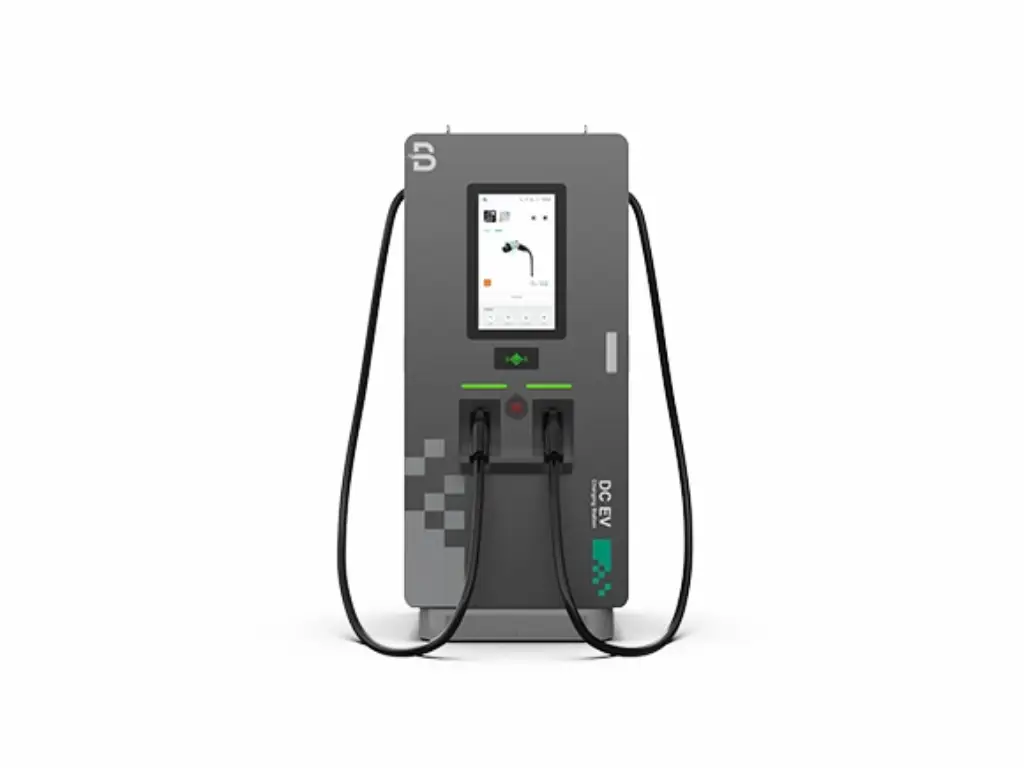
The choice of the appropriate interface is determined by your driving habits and priorities. The following is a brief guide to assist you in making the decision:
The North Star of the EV industry maturity is the transition to NACS. Although the transition will necessitate a certain change in manners and technical knowledge, the outcome will be a stronger, more accessible, and efficient energy network to all. The NACS standard will give you the confidence to take the electric future in your stride, whether you are a fleet operator and want to maximize ROI or a first-time buyer.
⚡ Is NACS better than J1772?
NACS is commonly regarded as the best option because of its small, ergonomic size and the possibility to charge both AC and DC using the same pins. In contrast to the J1772, which can only operate on AC and must use a large CCS extension to fast-charge, NACS (since standardized as SAE J3400) offers a more compact, “one-plug” solution to all charging requirements.
🚗 What cars are charged with NACS?
By 2026, NACS will be the standard of the North American market. Besides all Tesla models, native ports are now available on the Hyundai IONIQ 5 (2025+) and IONIQ 9, the Kia EV6 and EV9, the Rivian R1 series (2026 refresh), and the Toyota bZ. The other major brands such as Ford and GM are also fully compatible with NACS through approved adapters to their older fleet.
🔌 Is NACS DC only?
No, NACS interface is a hybrid standard. It is capable of supporting Level 2 AC charging to be used at home or at a destination and high-speed DC fast charging at stations such as the Tesla Supercharger network, all with the same connector and pin layout.
💰 Does Hyundai NACS adapter come free?
Hyundai provided free NACS adapters to owners of current CCS-equipped vehicles (including the IONIQ 5 and 6) who bought their cars before January 31, 2025. To the people who bought it after this deadline or did not redeem it within the redemption period, the adapter can be obtained as a paid accessory at authorized Hyundai dealerships.
© 2026 EV Charging Guide – Smart Charging Solutions for Every Driver