The global transition to decentralized renewable energy has placed battery chemistry at the absolute center of industrial infrastructure planning. Entering 2026, the commercial and industrial energy storage sector faces a critical inflection point. While automotive manufacturers continue their highly publicized balancing act between various lithium-ion formulations to optimize vehicle range, project developers in the stationary storage space are fighting a completely different battle. For commercial facility owners, grid operators, and independent power producers, selecting the wrong battery chemistry is no longer a minor engineering oversight—it is a catastrophic financial liability. The decision fundamentally alters the initial capital expenditure, dictates the ongoing cooling and maintenance costs, and completely defines the replacement cycle of the asset. This comprehensive engineering and financial guide strips away the consumer-grade marketing noise to analyze the microscopic structural differences in the nmc vs lfp battery landscape. By translating these chemical limits into a hardcore ten-year levelized cost of energy model, we provide Chief Financial Officers and system integrators with the ultimate blueprint for maximizing commercial storage profitability.

The Big Battery Debate: Why LFP vs NMC Dictates C&I Storage ROI
Navigating the modern energy storage landscape requires understanding that the rivalry between these two dominant lithium-ion technologies is not merely an academic chemistry debate; it is a brutal clash over project bankability. The commercial energy storage market in 2026 is defined by the tension between absolute energy density and long-term operational resilience. For years, the industry operated under the assumption that whatever battery technology was advancing the electric vehicle sector would naturally dominate stationary storage. That assumption has been entirely shattered. Commercial developers are now painfully aware that optimizing for weight and space—the primary drivers for automotive applications—often directly compromises the thermal stability and lifecycle endurance required for a profitable megawatt-scale deployment.
The core of this lfp battery vs nmc debate centers on a highly unforgiving financial reality. The true cost of a commercial battery energy storage system is never accurately reflected on the initial purchase order. The viability of an energy arbitrage or peak shaving project is dictated by the total cost of ownership across a ten-to-fifteen-year horizon. When a project heavily cycles its batteries every single day, the chemical degradation rates accelerate. If the chosen chemistry forces the facility to replace sixty percent of its battery modules at year six just to maintain contractual capacity, the financial model collapses. Therefore, securing a profitable return on investment requires aligning the specific chemical degradation profile of the battery with the exact dispatch profile of the commercial application.
Chemistry 101: The Engineering Mechanics of LFP and NMC
To accurately project how a commercial energy storage system will perform over thousands of demanding industrial cycles, procurement directors must look past the brand names and examine the nmc battery vs lfp microscopic crystalline structures. The macroscopic physical limits of a battery—its maximum lifespan, its temperature sensitivity, and its fire risk—are permanently locked in by the atomic architecture of its cathode.
LFP
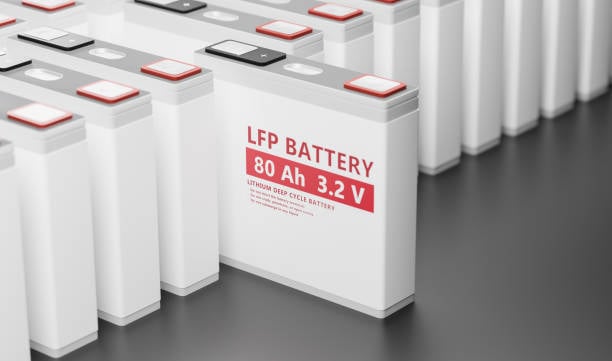
The engineering supremacy of Lithium Iron Phosphate in industrial applications is derived from its highly rigid olivine crystalline structure. At the molecular level, this architecture is bound together by exceptionally strong phosphorus-oxygen covalent bonds. This specific atomic arrangement is the defining characteristic that dictates the chemistry’s behavior under stress. Because the phosphorus-oxygen bond is incredibly difficult to break, the overall crystal lattice remains highly stable even when subjected to elevated temperatures or extreme states of charge. During the continuous process of lithium ions moving in and out of the cathode, the volumetric expansion of this olivine lattice is astonishingly minimal—typically expanding by less than five percent. This stubborn structural integrity prevents the internal micro-cracking that plagues other chemistries, forming the bedrock for its massive cycle life and inherent resistance to thermal degradation.
NMC
Conversely, Nickel Manganese Cobalt utilizes a layered oxide structure that is specifically engineered to pack the highest possible volume of lithium ions into the smallest physical space. In this chemical triad, nickel is heavily utilized to push the specific capacity to its absolute physical limits, cobalt acts as the essential structural glue that prevents the layers from immediately collapsing, and manganese provides a degree of thermal stabilization. However, this high-density layered configuration harbors a fatal engineering flaw when subjected to heavy industrial cycling. When the battery operates at a high state of charge and a massive amount of lithium is extracted from between the layers, the remaining structure experiences severe mechanical stress. Over time and repeated deep cycles, this stress induces irreversible phase transitions and micro-cracking within the cathode. These fractures permanently trap active lithium inventory, leading directly to a sharp decline in usable capacity and an increased vulnerability to thermal runaway.
The 4-Dimensional Battle: Physical Limits and Degradation
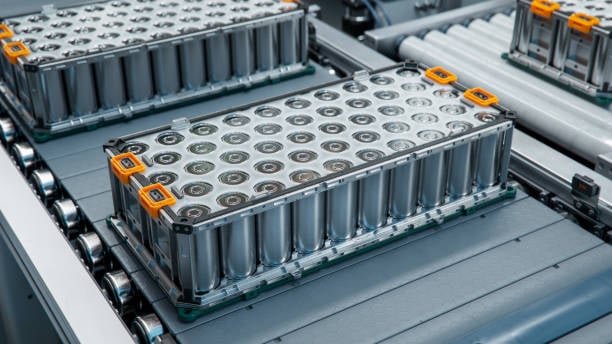
Translating these microscopic structural differences into tangible procurement metrics requires a highly objective lfp vs nmc batteries comparison of their physical limits. When deployed in a commercial environment, the theoretical laboratory data is quickly challenged by the harsh realities of daily operational demands.
Energy Density and Footprint Constraints
If physical volume and weight are the absolute ultimate constraints of an ncm vs lfp battery engineering project, the layered oxide chemistry holds a commanding advantage. Current 2026 industry data shows NMC cell-level energy densities routinely reaching between 250 and 300 watt-hours per kilogram. The olivine structure of LFP physically cannot match this, encountering an upper ceiling roughly between 160 and 210 watt-hours per kilogram. However, a critical question must be asked by the project developer: does physical space actually matter for this deployment? For a megawatt-scale commercial battery sitting on a reinforced concrete pad behind a manufacturing facility, requiring an extra ten percent of physical footprint to accommodate the slightly lower density of iron phosphate is entirely irrelevant to the project’s success. High energy density is largely a premium automotive metric that carries unnecessary chemical risks when forcibly applied to stationary grid storage.
Cycle Life and Degradation Curves
The true battleground for commercial storage is capacity retention over time. The structural fatigue inherent to the layered oxide design typically limits its operational health, with capacity routinely degrading to the eighty percent retirement threshold after just 1500 to 2500 full cycles. Under a heavy commercial load of one deep cycle per day, this translates to a functional lifespan of roughly five to seven years. Meanwhile, the robust covalent bonds of the iron phosphate structure allow it to easily exceed 4000 to 5000 cycles under identical conditions, theoretically enabling a deployment to operate continuously for fifteen years.
Securing Theoretical Lifespan with Industrial Hardware
While the iron phosphate chemistry theoretically guarantees a fifteen-year operational window, realizing that longevity in the field requires uncompromising physical hardware. Inferior cell consistency and poor thermal management will cause even the best chemistry to fail prematurely. BENY Energy Storage Solutions drastically mitigates thermal degradation and propagation risks by strictly utilizing Automotive A-Grade Lithium Iron Phosphate cells. Encased within an IP54 to IP65 industrial-grade aluminum architecture for superior environmental protection and heat dissipation, the BENY framework successfully locks in a highly bankable 6000 to 8000 cycle lifespan, transforming theoretical chemistry into a guaranteed commercial asset.
Fire Engineering: Thermal Runaway and NFPA 855 Compliance
For commercial building owners, data center operators, and engineering procurement firms, fire safety is not a marketing talking point—it is a strict regulatory barrier governed by stringent standards like NFPA 855 and UL 9540A. The distinct chemical structures of an nmc battery vs lifepo4 dictate completely different fire engineering strategies, drastically affecting the cost of the surrounding infrastructure.
The layered oxide chemistry presents a severe challenge for fire protection engineers. The thermal runaway threshold for NMC is dangerously low, often initiating between 150 and 200 degrees Celsius. More alarmingly, as the layered structure collapses under high heat, it undergoes a self-oxidizing reaction, physically generating and releasing massive amounts of internal oxygen. This creates a deeply misunderstood scenario in the industry regarding fire suppression. While water-based suppression systems cannot “smother” or starve a chemical fire that produces its own oxygen, they are absolutely critical for compliance. Under NFPA 855 guidelines, the core engineering function of a water deluge system is to provide continuous, massive cooling to absorb the ambient heat and prevent thermal propagation from the failing cell to adjacent battery racks. Because NMC is highly susceptible to explosive thermal propagation, the system demands incredibly expensive, highly redundant cooling and isolation infrastructure to satisfy safety inspectors.
Iron phosphate completely alters this engineering equation. The strong phosphorus-oxygen bonds push the thermal runaway threshold well beyond 270 degrees Celsius. Most importantly, even if catastrophic internal short-circuiting occurs and the cell breaches, the chemistry categorically refuses to release oxygen. Without an internal oxygen source, it is extraordinarily difficult for an LFP cell to erupt into an aggressive, propagating open flame. Thermal events are typically limited to localized heating and heavy smoke venting. This inherent stability drastically reduces the need for over-engineered, ultra-expensive active cooling redundancies, significantly lowering the overall balance of plant costs while streamlining the complex fire marshal approval process.
The Real Cost: 1MWh C&I Financial Sandbox and LCOE
To provide actionable intelligence for Chief Financial Officers, we must discard generalized cost statements and evaluate the total cost of ownership through a rigid lfp vs nmc battery comparison and ten-year mathematical model. The true financial disparity between these chemistries only becomes visible when plotting the initial capital expenditure against the inevitable operational and replacement costs over a prolonged commercial horizon.
The 10-Year TCO Mathematical Model
| 1MWh Financial Assessment Metric | NMC Storage Profile (Layered Oxide) | LFP Storage Profile (Olivine Structure) |
|---|---|---|
| Estimated 2026 Initial CAPEX ($/kWh) | $170 – $190 per kWh | $120 – $130 per kWh |
| Year 6 Replacement OPEX Requirement | ~60% of initial CAPEX (Cell augmentation required) | $0 (Sustains sufficient capacity) |
| HVAC & Thermal Management Overhead | Extremely High (Requires strict temperature control) | Low to Moderate (Wider thermal operating band) |
| Fire Suppression Infrastructure Cost | High (Extensive propagation barriers required) | Baseline compliance sufficient |
| 10-Year Levelized Cost of Energy (LCOE) | Economically prohibitive for daily cycling | Highly profitable arbitrage margin |
The mathematical reality is stark. While a facility operator saves approximately thirty percent on the initial capital outlay by choosing the iron phosphate route, the devastating financial blow for the layered oxide system arrives around year six. When the NMC system degrades past its usable limit, the facility is forced to authorize a massive secondary capital expenditure—often costing upwards of sixty percent of the original system price—simply to replace the exhausted cells and maintain grid compliance. When factoring in the compounding costs of aggressive HVAC cooling and inevitable downtime during the refit, the levelized cost of energy curve for NMC forms a catastrophic scissors gap compared to the steady, uninterrupted profitability of the LFP asset.
Geopolitics, Tariffs, and Supply Chain Compliance
However, modern financial modeling must also account for the heavy hand of geopolitics. While the physical cost of producing iron phosphate is undeniably lower, the global supply chain refinement capacity is highly asymmetrical. For developers operating in regions heavily regulated by the United States Inflation Reduction Act or the European Union’s new battery framework, sourcing locally manufactured components to unlock lucrative tax credits is paramount. In some scenarios, attempting to procure extremely scarce, non-tariffed LFP cells can introduce massive frontend premiums that temporarily obscure its inherent cost advantage. Consequently, the ultimate financial decision requires balancing the unquestionable physical durability of the chemistry against the severe compliance risks and import tariffs unique to the project’s geographical jurisdiction.
Algorithmic Dispatch: SoC Management and C&I Operations
Securing the right chemistry and surviving the financial audit is only the beginning. Once the commercial storage asset is deployed on the grid, the daily profitability of nmc vs lfp batteries is entirely dependent on the intelligence of the Battery Management System and its ability to execute precise economic dispatch commands.
Operating a layered oxide battery requires a highly conservative approach. To minimize the severe micro-cracking associated with its structure, operators are often forced to restrict the depth of discharge, keeping the operational state of charge within a narrow twenty to eighty percent window. This effectively strands a massive portion of the purchased capacity, rendering it unusable for revenue generation. Iron phosphate, conversely, allows operators to ruthlessly utilize the entire capacity of the battery without accelerating chemical decay. However, this robust durability introduces a highly complex software engineering challenge。
The discharge voltage curve of an iron phosphate cell is exceptionally flat. Unlike other chemistries where a drop in voltage directly correlates with a drop in remaining energy, an LFP cell maintains a nearly identical voltage whether it is at seventy percent capacity or forty percent capacity. For a megawatt-scale industrial system attempting to execute high-precision peak shaving, a simple voltage reading provides almost no actionable data. To prevent the system from dangerously miscalculating its reserves and shutting down during a critical dispatch event, the industrial Battery Management System must rely on highly sophisticated current sensors to perform continuous Coulomb counting. Furthermore, top-tier industrial systems employ advanced Kalman Filtering algorithms—dynamic mathematical models that constantly correct internal state-of-charge estimations based on real-time temperature and historical load data. Choosing LFP means you are no longer fighting the chemistry, but you are placing an immense burden on the computational processing power of the system’s software architecture.
C&I Decision Matrix: Matching Chemistry to Your Application
With the physical limits mapped, the ten-year financial models calculated, and the algorithmic dispatch challenges understood, the procurement decision ultimately distills down to the specific revenue generation strategy of the commercial facility.
Peak Shaving and Energy Arbitrage
If the financial model of the facility relies on aggressive, daily energy arbitrage—storing power during off-peak hours and discharging it during highly expensive peak demand windows—there is absolutely no debate. The operation requires a chemistry capable of executing thousands of deep cycles without demanding mid-life hardware replacements. For any project involving heavy solar self-consumption, grid stabilizing frequency regulation, or daily peak shaving, Lithium Iron Phosphate is the exclusive, undisputed commercial solution. Attempting to force a layered oxide battery into this operational profile guarantees that the asset will degrade to the point of unprofitability long before the initial capital investment is fully amortized.
Data Centers and Microgrid Backup
For hyperscale data centers, hospital microgrids, and critical industrial manufacturing lines, the battery serves primarily as an Uninterruptible Power Supply. While these systems do not cycle daily, they demand instant, massive discharge capabilities and an absolute, zero-tolerance policy for thermal runaway. Even in a standby role, the inherent fire safety, the lack of oxygen generation, and the significantly lower HVAC baseline requirements continue to make the iron phosphate architecture the superior choice for critical infrastructure.
Executing Seamless Industrial Integration
While the chemical superiority of LFP in the commercial sector is definitive, the most common point of failure for modern energy projects occurs during system integration. Deploying disjointed components leads to communication errors, inaccurate state-of-charge estimations, and disastrous downtime. The BENY High-Voltage Stacked Energy Storage System is engineered specifically to eliminate these integration bottlenecks. By utilizing a rugged, 15-layer modular stacking architecture, the system effortlessly scales to meet exact megawatt requirements without complex re-engineering. Furthermore, the proprietary intelligent Battery Management System is meticulously coded with advanced dynamic filtering algorithms, ensuring flawless state-of-charge accuracy and deep, native compatibility with the industry’s leading commercial inverters. Choosing BENY means bypassing the integration guesswork and securing a fully optimized, mathematically sound energy asset.
Future-Proofing: Next-Gen Tech and Supply Chain Resilience
As the energy landscape evolves toward the end of the decade, procurement directors must remain vigilant regarding supply chain ethics and emerging technologies. The layered oxide chemistry remains heavily burdened by the severe Environmental, Social, and Governance controversies surrounding the mining and extraction of cobalt, posing an ongoing reputational risk for corporate deployments. Meanwhile, the industry media continues to heavily hype next-generation alternatives such as solid-state architectures and sodium-ion batteries. However, commercial project developers must separate laboratory breakthroughs from industrial realities. Over the next three to five years, these emerging technologies simply cannot achieve the massive manufacturing scale, the proven supply chain reliability, or the aggressive cost parity required to displace the current lithium-ion duopoly in the megawatt-scale storage sector. Commercial decisions today must be grounded in proven engineering and verifiable financial data, not speculative future promises.
In conclusion, the modern commercial and industrial energy storage sector is entirely unforgiving to procurement errors driven by outdated assumptions or automotive-centric metrics. While the extreme energy density of the nickel-manganese-cobalt architecture remains essential for the tight physical constraints of luxury electric vehicles, it introduces unacceptable financial vulnerabilities. By understanding the difference between nmc and lfp battery architectures and projecting the total cost of ownership across a rigorous ten-year horizon, the data definitively proves that the Lithium Iron Phosphate chemistry holds an insurmountable advantage in lifecycle endurance, operational safety, and overall levelized cost of energy. To truly capitalize on this chemical advantage, developers must move beyond isolated component purchases and demand deeply integrated, industrial-grade systems equipped with advanced algorithmic management. Utilize this engineering and financial framework to ruthlessly audit your next commercial storage deployment, ensuring the asset delivers maximum resilience and uncompromising profitability.