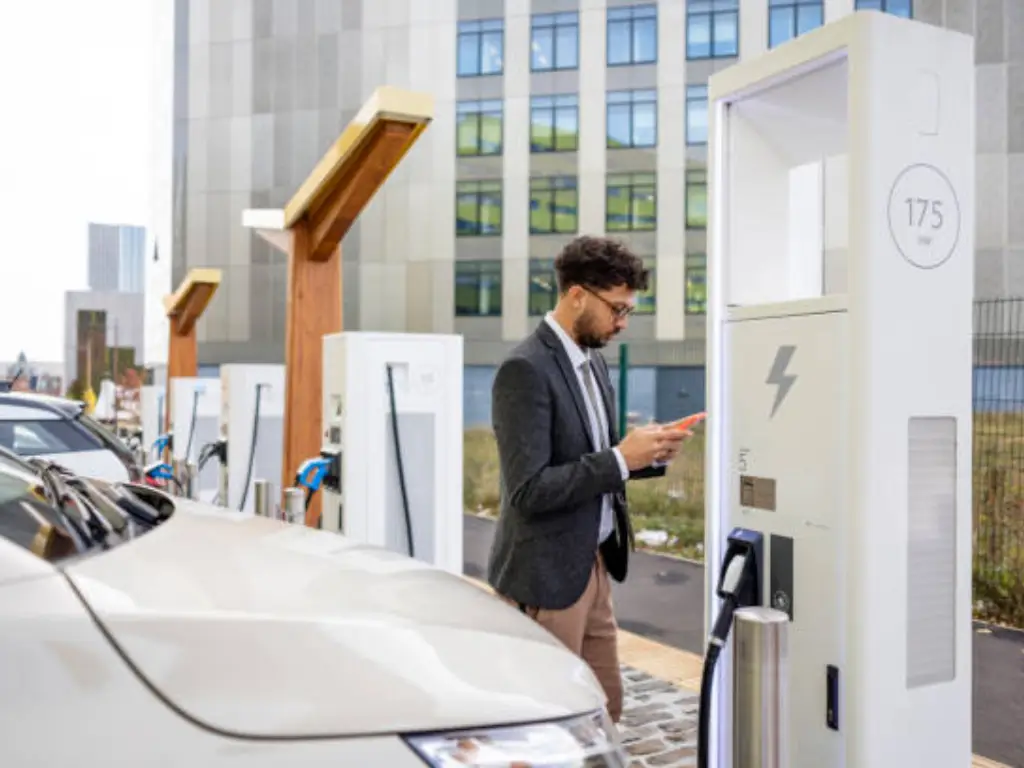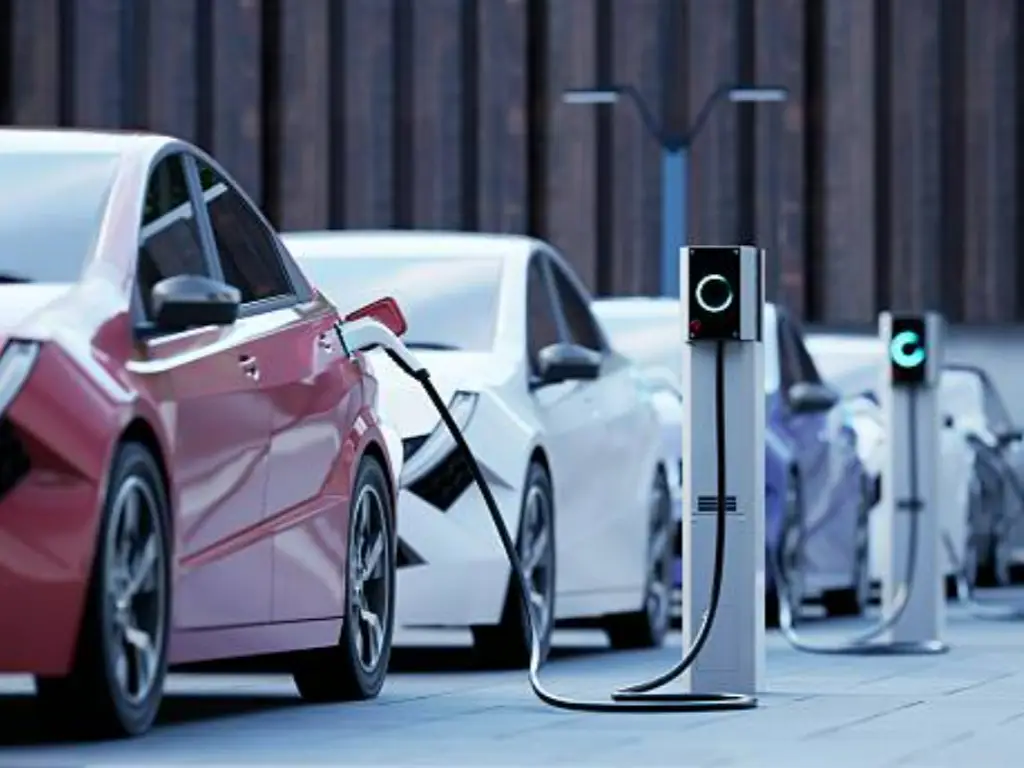
In order to effectively defend the project, organizations should not only focus on the short-term costs of operation but also consider the charging station as a long-term asset that will lead to growth. What is the need for this investment? This section disaggregates the multi-dimensional value of workplace EV charging, how it attracts the best talent, simplifies fleet management, enhances property value, and improves the visitor experience-setting the provable business case before we discuss costs and installation.
Employee attrition is one of the greatest, but least quantified, profitability sinks in the contemporary economic environment. The replacement cost of talented employees, the cost of recruitment, the cost of training, and the lost productivity of the transition can easily exceed six to nine months of the salary of that employee.
Workplace charging is a high-impact, non-financial benefit that directly alleviates this risk of attrition and leads to tangible business value:
This better picture is an irresistible, non-negotiable attractant of the best talent. The new business sign is the charging facility, which says, we support your green choices.
On-site charging is a business necessity, not a luxury, for companies that operate corporate fleets or are converting delivery vehicles to electric.
The installation of EV infrastructure is a direct investment in the long-term value of the asset to the owners of commercial properties and facility managers.
The benefits do not just apply to the internal workforce. Charging will be available to visitors, which will guarantee a hassle-free experience to clients, partners, and investors who arrive in electric vehicles.

With the strategic benefits established, the next crucial pillar focuses on minimizing financial exposure and capitalizing on external funding. Successfully bridging the gap between desire and deployment means mastering the financial framework, which starts with an accurate Total Cost of Ownership (TCO) calculation. Financial viability hinges on this assessment—including both capital and operational expenditure—which is, fortunately, often drastically reduced by global financial incentives designed to accelerate EV infrastructure adoption.
A detailed TCO analysis must break down the upfront installation cost (hardware, utility upgrades required) against recurring costs (electricity, network fees, maintenance contracts). At the same time, the finance department should carefully study the financial incentives available in its jurisdiction. The costs are highly variable due to the sheer variability of site factors. For illustrative purposes, a single dual-port Level 2 station installation (excluding major utility upgrades) often falls into the following range, based on specific factors:
| Cost Factor | Low Estimate (Greenfield Site) | High Estimate (Complex Retrofit) |
|---|---|---|
| Hardware (Dual Port L2) | $2,500 | $5,000 |
| Installation Labor & Wiring | $3,500 | $12,000 (Requires long trenching) |
| Permitting & Design | $500 | $2,500 |
| Total Illustrative Installation Cost (Per Dual Port) | $6,500 | $19,500 |
Note: The main variable that will influence this range is the distance between the main electrical panel and the parking space.
These incentives vary significantly by region:
| Region | Example Incentive Program | Focus | Benefit Type |
|---|---|---|---|
| United States | Inflation Reduction Act (IRA) 30C Tax Credit | Commercial Charging, Alternative Fuel Infrastructure Tax Credit | Up to $100,000 per property site (Tax Credit) |
| Canada | Zero Emission Vehicle Infrastructure Program (ZAP) | Public and Workplace Charging | Federal Funding Contribution (Grant) |
| United Kingdom | Workplace Charging Scheme (WCS) | Businesses, charities, and public sector organisations | Vouchers toward purchase and installation (Grant) |
| European Union | Various National/Regional Programs (e.g., Germany’s KfW) | Fleet electrification, smart charging infrastructure | Low-interest loans and direct grants |
| South Korea | EV Charger Subsidy Program | Commercial and Public Charging | Direct Subsidies for Installation and Operation |
| Australia | State-level rebates (e.g., NSW EV Strategy) | Fleet and destination charging | Rebates and grants for hardware/installation |
This strategic layering of subsidies can reduce the net initial investment by 30% to 70%, transforming a multi-year proposition into an immediate win for the balance sheet.
But getting the budget is not the whole battle. It is important to note the pitfalls that tend to sink corporate EV projects before proceeding to the physical deployment. By considering these issues as risks to be addressed, the business can take the initiative to put in place solutions that are outlined in the subsequent sections (Implementation Steps).
Once the financial strategy is established and the risks are identified, all attention is paid to the execution. The key to the successful deployment is a step-by-step, technically sound strategy that will not only solve the problem of power infrastructure constraints but also governance issues.
The initial process in implementation is rigorous planning. The secret of the successful implementation is the understanding that planning is among the aspects that can be used to avoid overruns in the future and promote EV adoption among the workforce.

After planning capacity, we will take one step to equipment selection. The tangible commercial EV chargers are the day-to-day interaction with the employee and represent the trustworthiness of the company. As we leave the planning stage to procurement, we cannot afford to compromise on the quality of hardware or network intelligence since it is a nightmare to maintain, and the users will not be satisfied.
Charging of equipment at the workplace, especially in the outdoor setting, exposes the equipment to severe operational loads. The procurement checklist should focus on the equipment that complies with the highest international safety standards and environmental durability:
The network management software defines the efficiency and scalability of the entire operation. A smart platform needs to be chosen to manage in the long term.
The most important requirement is OCPP (Open Charge Point Protocol) compliance. This global communication standard ensures that the hardware (the physical charger) and the software (the cloud management system) are able to communicate with one another, regardless of the vendor. This freedom removes vendor lock-in, so that future flexibility is available in the choice of network services, billing, or access control. The platform must provide fine-grained access control to users, remote diagnostics (to guarantee maximum uptime), and robust reporting to utility billing and internal sustainability audits.
The installation of hardware is not the final stage, but the start of the operations. Once the critical phase of hardware purchase is over, all attention is paid to operational viability. The key to successful long-term deployment is to learn to break the technical limits of power infrastructure and the behavioral dynamics of employees at the same time, which will result in real operational success.
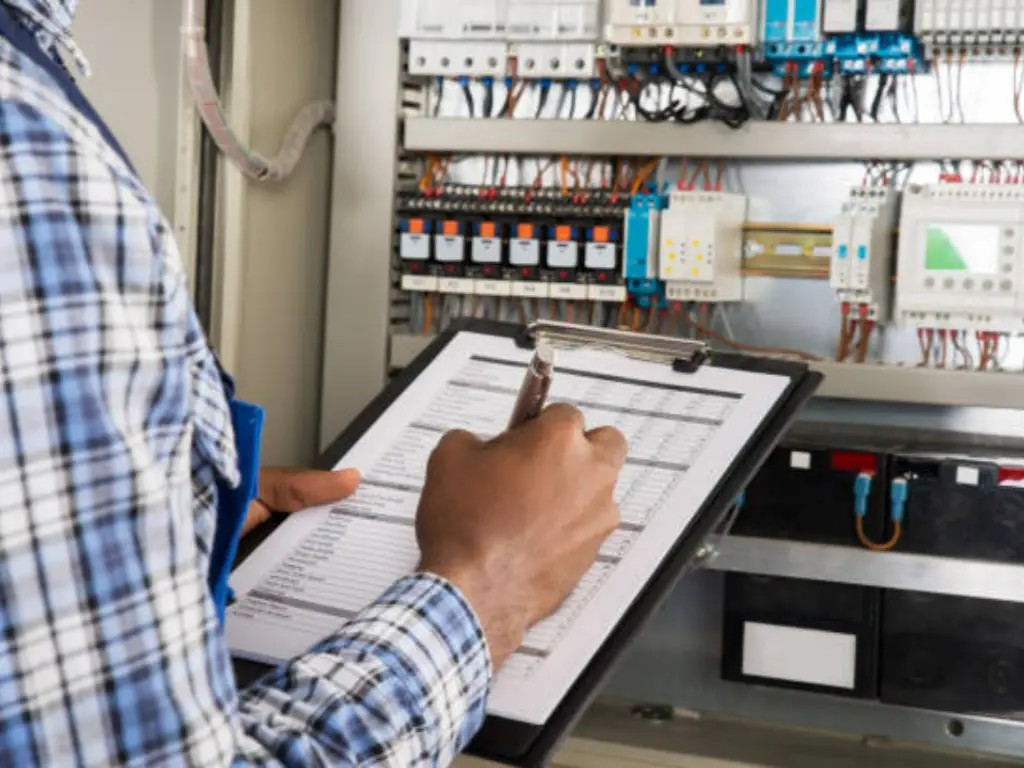
The technical solution should deal with the main financial risk to deployment, the cost of scaling electrical infrastructure.
The cumulative attraction of multiple EV chargers may result in the overall consumption of a building surpassing its usual peak, resulting in severe demand penalties. In addition, the business will need to pay for prohibitively expensive and time-consuming utility service upgrades when the theoretical maximum load of all installed chargers exceeds the existing panel capacity. This rise in the cost of operation expenditures ought to be minimized. Uncontrolled charging is the equivalent of establishing a power siphon on your electrical system–it takes the highest price at the time of the greatest demand.
The only countermeasure to this simultaneous peak-hour charging is Dynamic Load Balancing (DLB). DLB technology is a digital gatekeeper that constantly monitors the quantity of power at the facility. It actively and instantly controls the quantity of energy that is transmitted to individual chargers to ensure that the electrical limit established by the building is never breached. When a factory floor abruptly turns on heavy machinery, the DLB automatically reduces the output of the chargers, avoiding an overload situation without affecting the delivery of energy.
It is not only standard hardware that is needed to avoid expensive grid upgrades, but also intelligent systems. BENY offers intelligent solutions that are specifically designed to work in a commercial setting, where power is a limited resource. Our AC chargers have a high level of Dynamic Load Balancing (DLB) Technology that is integrated into the main system. In addition, in large-scale applications, our special Commercial Monitoring Device (BCP-MH-01) is created to actively and smartly control and allocate current to a group of charging stations in real-time. This dynamic load management is a good way to prevent circuit overloads, to fully utilize your existing electrical infrastructure, and to reduce OpEx.
The “pump hog”—an employee who leaves a fully charged vehicle connected for eight hours—can quickly sour the value of the amenity. Success in operations needs to be governed.
| Strategy | Mechanism | Pros | Cons |
|---|---|---|---|
| Idle Fees (Overstay Fees) | Automatically charges a high hourly rate once charging is complete (e.g., after 30 mins grace period). | Most effective deterrent; forces turnover. | Requires sophisticated software; potential for employee friction if not clearly communicated. |
| Reservation System | Employees book specific time slots (e.g., 8am-12pm) via an app. | Guarantees access for employees; reduces queue frustration. | Requires proactive booking and management; can lead to unused reserved slots. |
| “Charging Buddy” System | Pairs two employees to one port, requiring them to coordinate the mid-day switch. | Low-tech, zero software cost; promotes peer-to-peer accountability. | Scales poorly; relies entirely on employee compliance. |
Transparency is the most important thing, whether the charging is free, subsidized, or billed. The system should make sure that, in case the electricity charges are transferred to the user, the billing is easy, transparent, and verifiable, normally in terms of kWh used through the OCPP-compliant system. This avoids the feeling that the employer is making an undue profit out of an alleged benefit.
While operations ensure internal efficiency, long-term stability depends on external agreements. As internal operational excellence is ensured by smart load and policy controls, attention is paid to external dependencies. In the case of businesses that lease their premises, the introduction of charging infrastructure creates a possible legal friction. To make the deployment successful, the legal agreement should be viewed as a win-win blueprint and not a zero-sum negotiation.
The lease or a particular Access and Use Agreement should cover the following, using international standards:
Strategic planning involves looking beyond today’s installation to the next decade. The EV charger will become not just a mere energy dispenser but also an important component of a smart energy network.
The move towards EV charging of commercial properties is a strategic move that requires dedication to three pillars, namely, quantified financial payoff, careful technical safety, and smart operational management.
Collaborate with other professionals, such as BENY, a well-established manufacturer of EV protective products and EV charging stations. With more than 30 years of electrical safety history, we offer integrated, smart charging solutions, including high-durability hardware and sophisticated DLB systems, designed to be safe and cost-effective over time.
© 2025 EV Charging Guide – Smart Charging Solutions for Every Driver