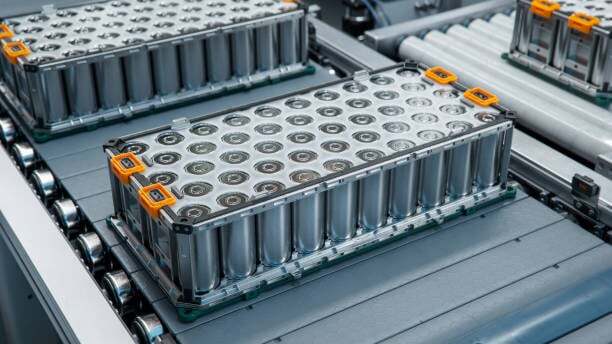
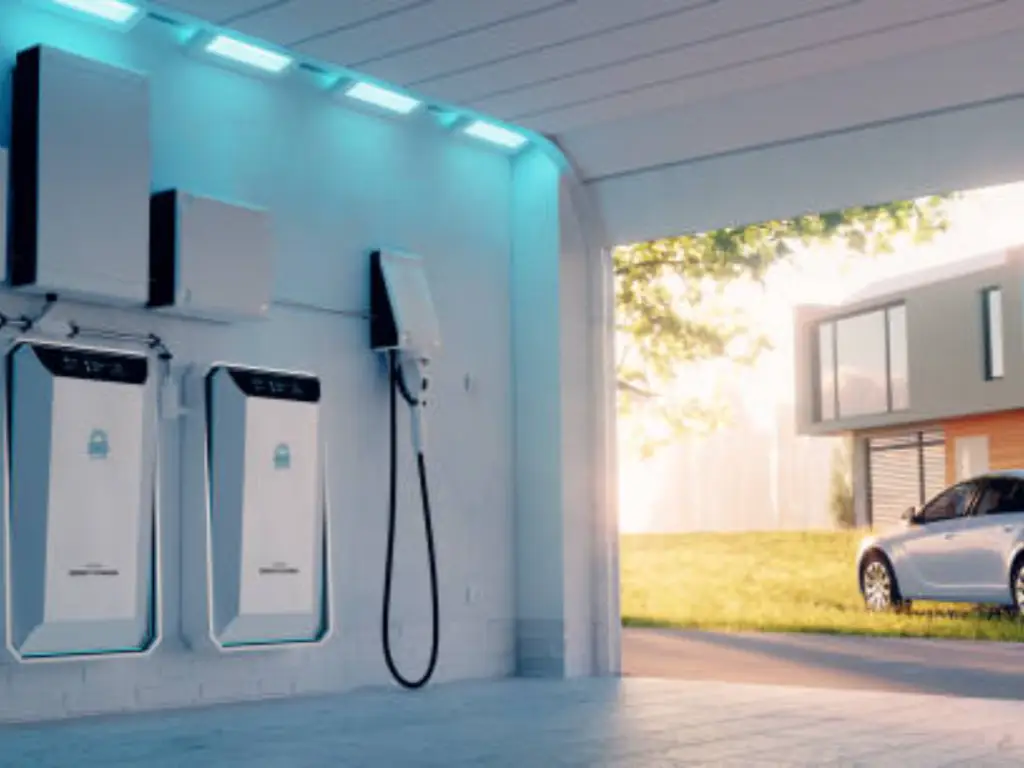
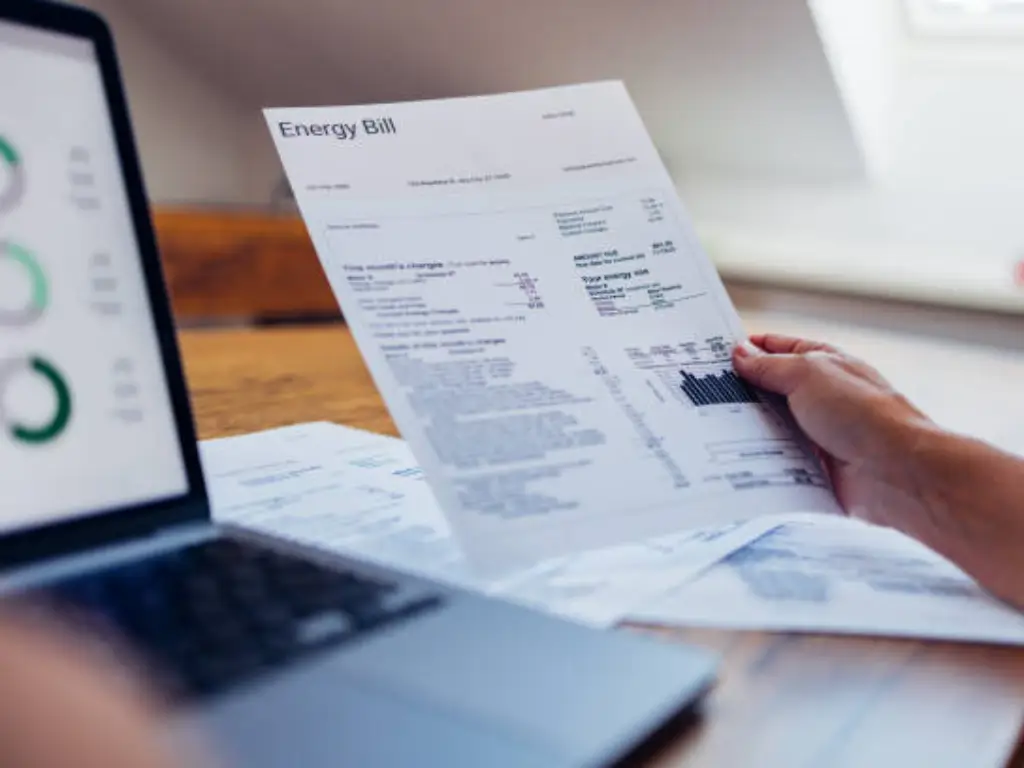
If your financial modeling for upcoming utility-scale energy storage projects relies on feasibility studies from 2024—or even early 2025—your baseline is already dangerously obsolete. Driven by massive manufacturing overcapacity and the stabilization of lithium carbonate prices at historic lows, battery cell prices have crashed. You have likely seen the aggressive headlines shouting that cell prices have plummeted to “$40/kWh.” While technically accurate at the factory gate, this isolated metric is a dangerous siren song for developers.
For project developers, EPC (Engineering, Procurement, and Construction) estimators, and infrastructure funds, accurately calculating the true cost of grid scale battery storage is the only metric that dictates the survival of an Internal Rate of Return (IRR). Buying a battery cell is not the same as building a high-voltage power plant. Between the factory floor and the Commercial Operation Date (COD) lies a treacherous landscape of Balance of System (BOS) hardware, localized union labor rates, heavy crane logistics, and multi-year interconnection queues. This comprehensive guide breaks down exactly where every dollar goes in 2026, revealing the hidden costs that can wreck your CapEx, and demonstrating how modern integration engineering is fighting back to protect your project’s Levelized Cost of Storage (LCOS).
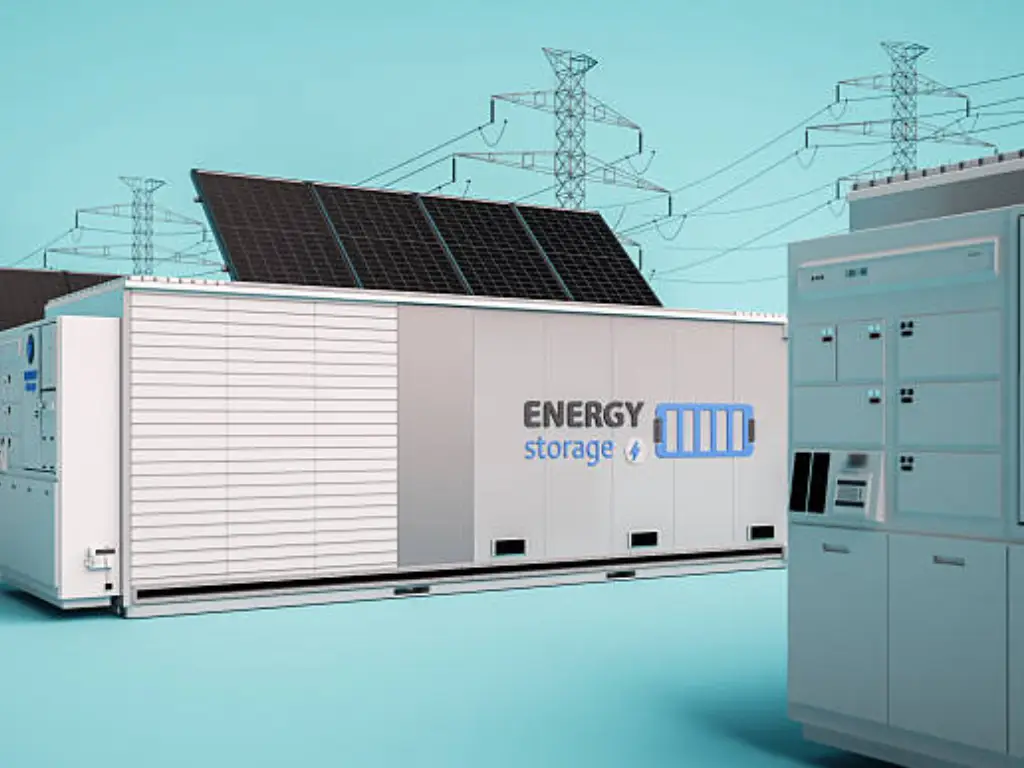
The 2026 Benchmark: Separating Cell Prices from Turnkey Reality
Let us begin by establishing the absolute baseline for 2026. Taking a $40/kWh ex-works cell price to a board of directors to justify a 100MW project will inevitably lead to a catastrophic funding shortfall during the EPC bidding phase. A grid-scale Battery Energy Storage System (BESS) is a complex orchestration of electro-chemistry, high-power power electronics, and rigorous civil engineering.
Based on the latest late 2025 and early 2026 benchmarks from leading market intelligence firms like BloombergNEF and Ember, the actual global average utility-scale battery storage cost per kwh for a fully installed turnkey system currently sits squarely in the $117 to $125 range (excluding US-specific tariffs, which we will address later). This figure represents the true “all-in” capital expenditure (CapEx) required to go from an empty plot of land to a fully commissioned asset actively discharging into the grid.
Understanding this benchmark requires a fundamental shift in perspective. You are not purchasing batteries; you are purchasing a localized, dispatchable power plant. To model this accurately, we must dissect the turnkey price tag and look inside the container.
Where Does the Money Go? A 100MW Project Cost Waterfall
To understand the comprehensive cost of utility scale battery storage and satisfy the strict granularity required by financial modelers, we must break down the $125/kWh average into its core constituent parts. Imagine a standard 100MW / 400MWh project. How is the capital distributed across the physical and operational layers of the deployment?
| Cost Category | Sub-Components Included | Estimated 2026 Cost ($/kWh) | % of Total CapEx |
|---|---|---|---|
| 1. The DC Block (Battery System) | Tier-1 ESS-specific cells, Battery Management System (BMS), liquid-cooling HVAC, racks, fire suppression (NFPA 855), outer enclosure. | ~$50 – $60 / kWh | ~45% |
| 2. Power Conversion (AC Side) | 1500V Power Conversion Systems (PCS / Inverters), Medium Voltage (MV) step-up transformers, switchgear, Energy Management System (EMS). | ~$20 – $25 / kWh | ~18% |
| 3. EPC & Balance of Plant (BOP) | Civil engineering, concrete foundations, trenching, heavy crane logistics, DC/AC cabling, physical security, and EPC profit margins. | ~$30 – $35 / kWh | ~25% |
| 4. Soft Costs & Interconnection | Grid study fees, substation upgrade allocations, environmental permitting, legal fees, and development overhead. | ~$10 – $15 / kWh | ~12% |
- The DC Block: Cells, Racks, and Enclosures Accounting for roughly 45% of the total CapEx, the DC side is the “engine” of your system. While the bare cells have plummeted in price, the rigid costs of safely packaging them remain. To meet stringent global fire codes, these cells are housed in heavy-duty racking structures, enveloped by advanced liquid-cooling manifolds, and protected by highly sensitive aerosol or water-based fire suppression systems. The enclosure itself must be weather-proof (IP55 or higher) and structurally sound enough to withstand global shipping logistics.
- Power Conversion: PCS and MV Transformers Batteries store direct current (DC), but the grid operates on alternating current (AC) at extremely high voltages. The AC side is the indispensable “translator” of the power plant. 1500V Power Conversion Systems (PCS) and Medium Voltage transformers are heavy, materials-intensive assets. Because they rely on global commodity prices for copper, electrical steel, and specialized power semiconductors, their costs are highly resistant to the downward trends seen in lithium manufacturing. This creates a rigid floor for your total project cost.
EPC and Soft Costs: The Integration Premium
This is the deepest and most dangerous water for project budgets. Procuring cheap hardware means nothing if you have to pay localized union labor exorbitant hourly rates to manually wire racks, configure software protocols, and troubleshoot ground faults in the field. Traditional piecemeal procurement—buying batteries from vendor A and inverters from vendor B—leads to skyrocketing Engineering, Procurement, and Construction (EPC) margins and prolonged, painful commissioning times.
The Integrator’s Edge: To mitigate these highly volatile EPC soft costs, leading utility-scale developers are actively abandoning scattered procurement. Instead, they are shifting entirely to highly integrated, pre-commissioned 1500V liquid-cooled containers. Industry leaders like BENY leverage their deep expertise in DC system protection to provide fully integrated BESS architectures. By factory-assembling the PCS, BMS, and cutting-edge thermal management systems into a cohesive, pre-tested unit, the deployment transforms into a true plug-and-play operation. This strategy directly amputates the need for extensive on-site MV terminations, slashes heavy crane rental hours, and eliminates the dreaded SCADA integration delays, safeguarding the project’s baseline IRR.
2-Hour vs. 4-Hour Storage: The Duration Discount Explained
When financial analysts loosely quote a flat $125/kWh figure without context, they usually fail to specify the system’s duration. In the engineering reality of grid-scale storage, you cannot simply take the price of a 2-hour system, multiply it, and expect an accurate model for a 4-hour system. Because the power conversion hardware (PCS) is priced by power output ($/kW), while the battery racks are priced by energy capacity ($/kWh), stretching the duration mathematically dilutes the fixed costs. For instance, estimating a baseline 1 mw battery storage cost requires knowing whether that megawatt of power is paired with 2MWh or 4MWh of energy capacity.
- The Math Behind the C-Rate and PCS Dilution Consider the C-rate (charge/discharge rate). A 100MW/200MWh (2-hour) system operates at 0.5C. It requires 100MW worth of expensive inverters and grid interconnection equipment. Now, consider a 100MW/400MWh (4-hour) system operating at 0.25C. You have doubled the battery capacity (the “tank”), but you are using the exact same 100MW inverter infrastructure (the “pipe”). Therefore, the heavy costs of the PCS, the transformers, and the substation upgrades are amortized over twice as many kilowatt-hours. This results in a significant step-down in the blended unit price. In 2026, a standard 2-hour turnkey system may average ~$140 to $145/kWh, whereas a 4-hour system benefits from this massive dilution, dropping the turnkey average to ~$115 to $120/kWh.
- Aligning Duration with Market Revenue Streams While the lower per-kWh cost of a 4-hour system is financially attractive, duration selection must be strictly dictated by your localized revenue streams. A 1-to-2 hour system is perfectly optimized for markets that heavily compensate high-frequency ancillary services, such as dynamic frequency regulation or spinning reserve, where rapid, short bursts of power are required. Conversely, 4-hour systems dominate in markets like California (CAISO) or Texas (ERCOT), where daily solar-shifting, deep energy arbitrage, and stringent Resource Adequacy (capacity compensation) dictate the project’s profitability.
The Shift to High-Capacity Cells (314Ah & Beyond): Shrinking the Footprint
In 2026, discussing the choice between LFP (Lithium Iron Phosphate) and NMC (Nickel Manganese Cobalt) for grid-scale applications is largely a waste of breath. LFP has decisively won the stationary storage war due to its superior safety profile (NFPA 855 compliance) and immense cycle life. The real technological shift redefining CapEx models today is the rapid migration toward ultra-high-capacity prismatic cells.
The industry standard is moving swiftly from the legacy 280Ah cell format to Tier-1 ESS-specific high-capacity cells, such as the 314Ah, 500Ah, and even 587Ah variants. This is not merely an incremental chemistry update; it is a structural revolution for EPC cost reduction.
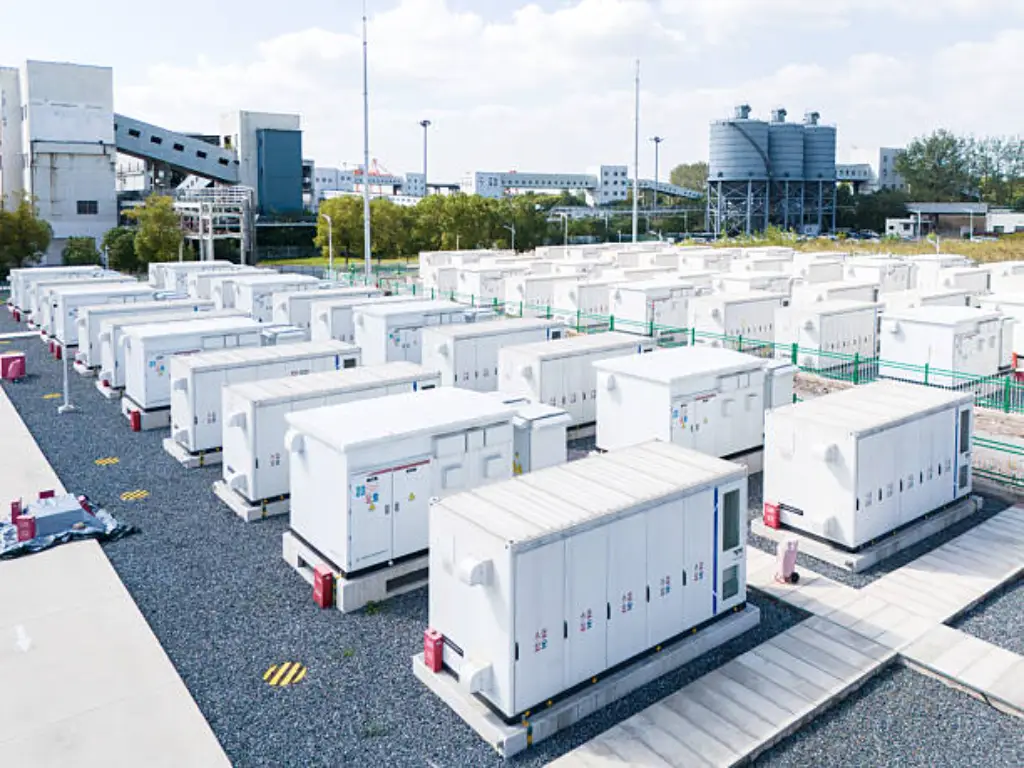
By utilizing larger cells, manufacturers can pack significantly more energy into the exact same spatial footprint. A standard 20-foot liquid-cooled container, which historically held roughly 3.4MWh, can now comfortably exceed 5MWh of energy density. For a 100MWh project, this means you are purchasing, shipping, and installing 20 containers instead of 30. That translates directly to fewer concrete foundation pads poured, less trenching for DC cables, and days shaved off expensive heavy crane logistics. The volumetric efficiency of high-capacity cells directly suppresses the EPC premium.
The Hidden Costs Wrecking Project IRRs in 2026
Even with optimized integrated containers and high-capacity cells, a project’s financial model is vulnerable to external industrial realities. Veteran developers know that the equipment purchase order is only the tip of the iceberg. The true killers of project IRRs in 2026 are time and bureaucracy.
- Transformer Lead Times: The global electrification push has created a massive bottleneck in heavy electrical equipment. High-voltage switchgear and custom step-up transformers are currently facing excruciating lead times of 18 to 24 months. Securing cheap battery capacity early is financially toxic if you are forced to pay bridge loan interest while waiting two years for a transformer to arrive.
- Interconnection Queues: Gaining permission to connect to the macro-grid often forces the developer to absorb the cost of localized substation upgrades. These network upgrade allocations are highly unpredictable and can add millions of dollars to the final soft costs, varying wildly depending on the specific grid node.
- Commissioning Delays: When disparate hardware systems fail to communicate via SCADA protocols on-site, commissioning can stall for weeks. This is why factory-integrated, pre-tested systems are rapidly becoming mandatory for risk-averse developers.
CapEx vs. LCOS: Why Thermal Management is Your Financial Shield
Focusing obsessively on the initial Capital Expenditure (CapEx) while ignoring the Levelized Cost of Storage (LCOS) is the hallmark of an amateur financial model when evaluating any utility scale battery storage cost. CapEx is a static, Day-1 snapshot; LCOS is the dynamic, brutal reality of operating the asset over a 20-year pro forma. Currently, a highly optimized utility-scale project should target an LCOS of roughly $65/MWh.
LCOS is dictated by the total amount of energy the system can successfully discharge over its lifetime. The two most critical variables in this equation are Round-Trip Efficiency (RTE)—how much energy is lost as heat during the charge/discharge cycle—and Cycle Life (how many times the battery can cycle before degrading below commercially viable limits).
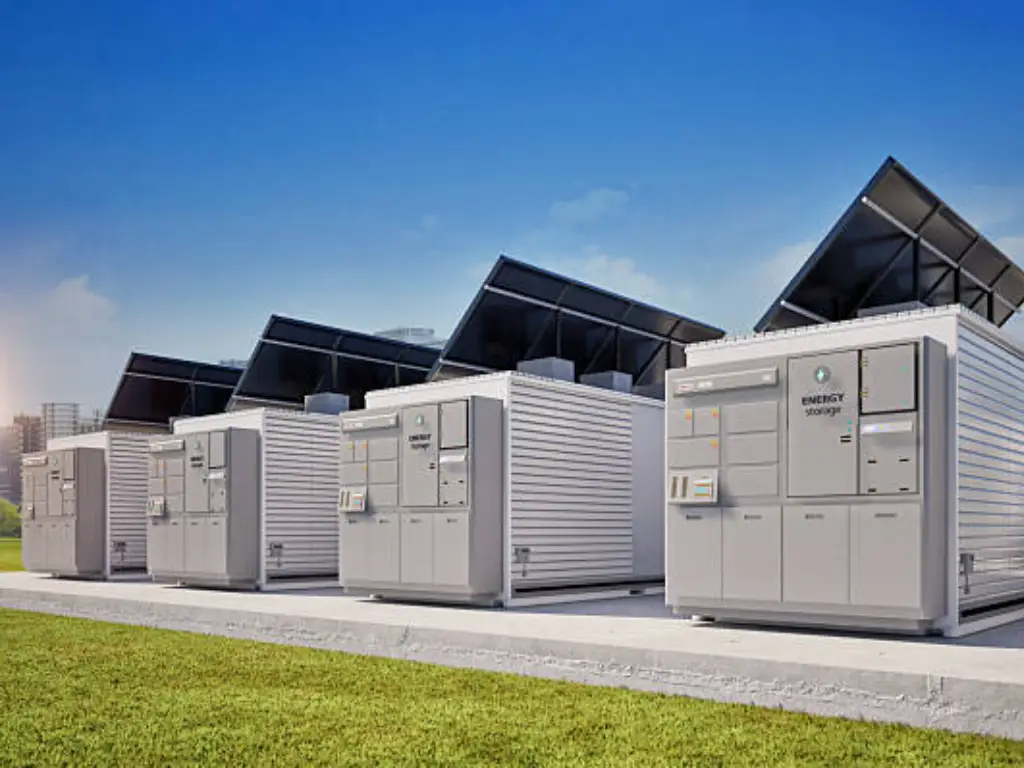
The Thermal Lifeline: The single greatest destroyer of LFP cycle life is temperature variance. If the cells within a massive container experience uneven cooling, degradation accelerates exponentially, crippling the asset’s lifespan and destroying the LCOS. This is where engineering pedigree matters. Utility-scale BESS solutions architected by BENY employ uncompromising, state-of-the-art liquid cooling manifolds paired with intelligent BMS algorithms. This advanced thermal management rigorously suppresses the temperature difference across the entire cell matrix to an astonishing ≤3°C. By eliminating thermal hotspots, this architecture guarantees that the high-capacity cells can genuinely endure their rated 8,000 to 10,000+ cycle life under rigorous grid dispatch profiles, serving as the ultimate financial shield for your investment.
US Tariffs vs. IRA Incentives: The Geographic Premium
If global benchmark prices are falling, why are developers in the United States still forced to model significantly higher utility scale battery storage costs? The answer lies at the intersection of geopolitics and federal policy.
The imposition of Section 301 tariffs on Chinese-manufactured battery cells and critical minerals creates a formidable price floor for imported hardware. To offset this artificial premium, developers must rigorously navigate the Inflation Reduction Act (IRA). The IRA offers massive Investment Tax Credits (ITC)—up to 30% as a baseline, with an additional 10% Domestic Content Bonus for projects that utilize sufficient US-manufactured components and adhere to prevailing wage and apprenticeship requirements.
Consequently, the financial calculus for deploying a 100MW BESS in ERCOT (Texas) is fundamentally different from deploying the exact same hardware in Australia or the EU. Success in the US market requires a sophisticated procurement strategy that perfectly balances the unavoidable tariff premiums against the maximum extraction of tax equity through the IRA.
2027 Outlook & Strategic Procurement
As we project into 2027, the relentless battery price war is expected to hit a hard floor defined by raw material mining costs and rigid BOP manufacturing overhead. The era of waiting for prices to drop is over. The primary constraint on energy storage deployment is no longer the cost of lithium; it is the availability of grid interconnection points and high-voltage transformers.
For strategic developers and EPCs, the mandate is clear: delaying procurement to chase another 2 cents per watt-hour drop in cell prices is a dangerous gamble. It risks losing your hard-fought position in the interconnection queue and exposes your project to further delays in the transformer supply chain. The time to lock in Tier-1, highly integrated liquid-cooled systems is now.
Stop Guessing Your CapEx. Secure Your Project’s IRR Today.
Conclusion
The true grid scale battery storage cost in 2026 has decoupled from the sensationalized headlines of plunging cell prices. At a turnkey benchmark of $117 to $125/kWh, the economics of BESS deployment are now governed by system integration efficiency, thermal management precision, and the ruthless realities of the electrical supply chain. By abandoning piecemeal procurement in favor of pre-commissioned, high-capacity liquid-cooled systems, developers can actively amputate soft costs, mitigate commissioning risks, and secure the ultra-long cycle life required to deliver a market-beating Levelized Cost of Storage. In the modern energy transition, the winners will not be those who buy the cheapest cells, but those who engineer the most resilient power plants.