For facility managers, electrical engineers, and financial controllers operating in the commercial and industrial sectors, opening the monthly utility bill can often feel like a frustrating financial shock. While most residential consumers are billed solely based on the total amount of energy they consume, commercial utility bills introduce a highly complex and deeply punitive element known as the demand charge. In many heavy manufacturing, chemical processing, and commercial real estate scenarios, these energy demand charges can constitute an astonishing thirty to seventy percent of the total operating expense for electricity. This is not a clerical error by the utility company, nor is it a random penalty. It is a calculated infrastructure cost shifted directly onto the facilities that create the most strain on the electrical grid. This comprehensive guide will bypass the oversimplified consumer explanations and dive straight into the hardcore physics and financial structures of grid capacity. From decoupling instantaneous power and understanding power factor penalties to leveraging programmable logic controllers and deploying predictive battery energy storage systems, this is your definitive action plan to permanently slash demand charges and reclaim your operational margins in 2026.

The Physics and Economics of Grid Capacity: Why Demand Charges Exist
To truly formulate a strategy to reduce utility costs, one must first clarify what is demand charge and the standard demand charge definition applied to large-scale facilities. One must abandon the residential mindset of simply turning off lights and understand the macroeconomics of the electrical grid. According to official reporting from the U.S. Energy Information Administration, a significant portion of commercial and industrial electricity rates is dedicated strictly to the amortization of fixed capacity costs and transmission infrastructure. The foundational physics problem of the grid is that it cannot store massive amounts of alternating current. Power must be generated at the exact moment it is consumed.
When a manufacturing plant simultaneously starts up heavy machinery, the local utility must instantly dispatch expensive natural gas peaker plants and ensure that every substation, transformer, and transmission line along the route has the physical thermal capacity to handle the extreme load without melting down or triggering widespread outages. Demand charges are essentially a dedicated infrastructure leasing fee that enterprises pay to the utility for maintaining this extreme concurrent redundancy. The utility company is forced to build the local grid architecture for your absolute worst-case scenario. They pass that massive capital expenditure directly back to you, regardless of whether your facility uses that maximum peak capacity for just one fifteen-minute window or sustains it for the entire month.
Decoupling Capacity (kW) from Consumption (kWh) in C&I Billing
Establishing a precise common language between the engineering floor and the financial department is the critical first step in energy management. We must utilize strict industrial metrics to understand how the utility billing structure dissects your operations. The difference between real power draw and how the electric demand charge is applied to integrated energy dictates exactly how your facility is penalized.
| Electrical Property | Billing Logic | Industrial Scenario | Reduction Strategy |
|---|---|---|---|
| Instantaneous Real Power (kW) | Dictates the demand charge penalty based on the absolute highest peak reached during the cycle. | A 100kW heavy air compressor running at full load for just one hour. | Peak shaving, dynamic load shifting, sequential interlocking. |
| Energy Integrated Over Time (kWh) | Dictates the energy consumption charge based on the total accumulated electrical work performed. | Ten separate 10kW exhaust fans running continuously for ten hours. | High-efficiency motors, LED lighting retrofits, thermal insulation. |
Looking closely at the hardcore industrial scenarios outlined in the table above, both operations consume exactly 100 kWh of energy. However, the 100kW compressor creates a massive instantaneous shock to the grid’s upstream circuit breakers and ampacity specifications. You pay a severe demand charge for the compressor’s momentary capacity occupation, and a standard, usually much lower, energy charge for the total work done by the fans over time.
Decoding the 15-Minute Rolling Interval Algorithm
How Smart Meters Integrate Power Over Time
There is a widespread panic among factory operators that a single second of overloading will result in massive fines. This is a fundamental misunderstanding of how modern industrial smart meters operate. Utility companies utilize an integration algorithm to smooth out transient spikes over a specific timeframe, typically a fifteen-minute rolling interval or a block interval demand period.
If a 200kW centrifugal pump runs at full load for only seven and a half minutes within a fifteen-minute billing window and then completely shuts down, the meter records a maximum demand of 100kW for that specific interval, not the peak 200kW. Therefore, the brief seconds of extreme motor inrush current are completely diluted in the 900-second average integration pool. While inrush current causes local voltage sags, it is rarely the primary mathematical culprit for soaring monthly demand charges.
Pinpointing the Billing Determinant in the Cycle
A standard thirty-day commercial billing cycle contains approximately 2,880 individual fifteen-minute intervals. At the end of the month, the grid’s billing software will coldly and systematically scan these thousands of data points, extract the single highest 15-minute average value, and multiply it by your applicable kilowatt tariff rate. You only need to lose control of your facility’s load orchestration for one single interval to be forced to pay the maximum capacity penalty for the entire operational month.
The Time-of-Use Trap: Coincident Peaks and Pricing Multipliers
In advanced commercial billing frameworks, when you consume electricity is often vastly more critical than how much total capacity you demand. To prevent grid collapse during extreme weather events, utilities apply time-of-use multipliers based entirely on macroeconomic grid congestion. A non-coincident peak, which is your facility’s isolated maximum power draw, might occur at three in the morning when regional grid demand is at its lowest. During this off-peak window, that capacity might cost a manageable ten dollars per kilowatt. However, if your production schedule forces you to hit that exact same 500kW peak between four and nine in the evening—triggering a coincident peak during maximum grid stress—the utility’s multiplier can aggressively push your rate to thirty-five dollars per kilowatt or substantially higher, tripling your operational expenses for the exact same mechanical output.
Conducting a Clinical Dissection of Your Utility Bill
To fight these compounding charges effectively, financial controllers must learn to identify the specific demand charge on electric bill statements like a forensic auditor rather than a passive consumer. Relying purely on theoretical knowledge is insufficient; you must map these concepts directly onto your specific commercial tariff documents.
Figure 1: Simulated PG&E E-19 Industrial Tariff with Demand Multiplier Highlighted
Taking a complex industrial rate schedule like the simulated PG&E E-19 bill above as an example, the massive total dollar amount printed in the top summary section is deeply misleading. The true financial bleeding is hidden deep within the detailed breakdown pages under specific line items typically labeled as max billed demand, summer on-peak demand, or facilities charge. As illustrated in the diagram, while the raw energy usage might only cost a few thousand dollars, the demand multiplier can easily account for the vast majority of the bill. Before prescribing any hardware upgrades, your engineering team must locate these exact line items to determine your baseline vulnerability.
The Financial Death Spiral: Surviving Demand Ratchet Clauses
Hidden deep within many commercial utility contracts is arguably the most predatory and financially devastating rule of all: the demand ratchet clause. This highly punitive clause dictates that your minimum billable demand for the current month cannot fall below a certain fixed percentage—often fifty to eighty percent—of your absolute highest peak recorded during the previous eleven months. This historical maximum peak is almost always established during the harsh summer months when HVAC loads are stacked on top of production loads.
Figure 2: The 11-Month Demand Ratchet Penalty Discrepancy
Consider the cruel financial reality of a plastics packaging plant rushing a massive order in August. Three main injection molding machines run concurrently, hitting an 800 kilowatt peak. In December, business slows down significantly, and the actual recorded peak only reaches 300 kilowatts. Because of an eighty percent ratchet clause in their contract, the utility company will completely ignore the 300 kilowatt reality and forcefully bill the plant for 640 kilowatts. A single fifteen-minute scheduling error in the summer results in a guaranteed eleven-month financial death spiral, destroying profit margins long after the heavy equipment has been powered down.
The Power Factor Penalty: Why kVA Matters More Than kW
Many junior engineers and accountants stare obsessively at the real power line item on their bills, completely missing the invisible black hole of reactive power. According to IEEE standards regarding inductive loads in industrial power distribution, heavily inductive equipment like legacy induction motors, transformers, and resistance welders require the grid to supply extra current known as reactive power to maintain electromagnetic fields. This energy performs no actual mechanical work, but it heavily clogs up the grid’s transmission infrastructure.
The industrial death line is a power factor below 0.85. Once your facility crosses this threshold, utilities stop billing you in real power and start billing you in apparent power or kVA, resulting in an immediate and massive surcharge. The most intelligent mitigation strategy here does not require replacing expensive machinery. Facilities simply need to install capacitor banks in the electrical room. For a modest investment of a few thousand dollars, these static units provide localized reactive power compensation, instantly pulling the power factor above 0.95, permanently eliminating the apparent power penalty, and delivering a remarkably fast return on investment usually within three to six months.

Zero-CapEx Mitigation: PLC Interlocking and Strategic Load Shifting
Programmable Logic Controller (PLC) Interlocking
Before spending capital on new hardware, facilities must exhaust all management strategies that require zero capital expenditure. Consider the morning shift at eight o’clock. Operators habitually hit the start buttons on four massive air compressors simultaneously, immediately spiking the fifteen-minute interval average. The solution is hardcoding staggered startup logic into the programmable logic controller system. This sequence programming physically forces the second machine to wait until the first has reached a steady state for five minutes before engaging the grid. By artificially breaking up concurrent demand, facilities can slash their peaks in half without spending a single dime on new electrical hardware.
Rescheduling Energy-Intensive Batch Processes
Facility managers must also conduct a rigorous audit of the manufacturing workflow, distinguishing clearly between continuous operations and batch operations. Energy-intensive batch processes that do not require dense human intervention, such as electric furnace preheating, massive water tank chilling, or bulk material grinding, must be rigidly shifted to the night shift to take advantage of off-peak dispatching. This strict operational discipline ensures these massive, predictable loads never overlap with the daytime base load of the main assembly line.
Hardcore ROI: Variable Frequency Drives and Battery Energy Storage
Exploiting Affinity Laws with Variable Frequency Drives (VFDs)
For continuous manufacturing facilities that simply cannot alter their production schedules, hardware upgrades are absolutely mandatory. The core logic of using variable frequency drives to reduce demand charges is rooted in fluid mechanics, specifically the affinity laws for centrifugal loads like fans and pumps. The power consumed by a centrifugal pump is proportional to the cube of its rotational speed. If a variable frequency drive reduces the motor speed by just twenty percent during a critical 15-minute interval, the average power consumption violently drops by nearly forty-nine percent. This is an incredibly powerful technological weapon to suppress average demand on the fly without ever halting ongoing production.
Automated Peak Shaving with Battery Energy Storage Systems (BESS)
For industrial operations that demand absolute, uninterrupted power and refuse any equipment throttling, the battery energy storage system represents the pinnacle of modern energy architecture. An AI energy management system continuously monitors the facility’s main utility meter, utilizing high-precision predictive interval tracking. The moment the algorithm predicts that the current 15-minute interval integration will breach a predefined threshold, the energy storage system executes a second-level dynamic load dispatch. It discharges stored battery power to carry the excess load, effectively blinding the utility meter and forcing it to record a perfectly flat, penalty-free demand line.
The BENY Advantage: Industrial-Grade Reliability
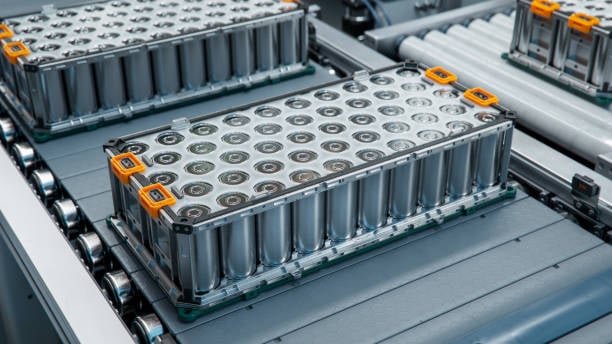
Deploying massive lithium-ion energy vaults next to millions of dollars of manufacturing assets requires uncompromising safety and algorithm accuracy. This is exactly why top-tier industrial storage manufacturers like BENY engineer their systems specifically for the harsh realities of heavy industry. BENY equips its commercial battery systems with an industrial-grade EMS specifically tuned for predictive interval tracking, ensuring it never misjudges the 15-minute integration trend. Furthermore, utilizing the highest safety-rated LiFePO4 cell architecture, combined with multi-level active aerosol fire suppression, BENY provides the critical hardware redundancy required for facility managers to confidently hand over their peak shaving operations entirely to an automated algorithm.
Stop Guessing, Start Shaving
Step 1: Send your latest utility bill to BENY’s team of senior energy engineers for a complimentary initial rate tariff diagnosis.
Data-Driven Savings
Step 2: Upon identifying structural inefficiencies, our engineers will assist you in exporting your official 15-minute interval data from your utility provider. Only by running this true historical load profile through BENY’s proprietary software can we simulate the exact kilowatt reduction you will achieve and deliver a mathematically proven, month-by-month ROI timeline.
Conclusion
Escaping the crushing weight of commercial demand charges is no longer a matter of simply hoping your operators do not turn everything on at once. It requires a clinical, engineering-driven approach to utility bill dissection and a willingness to deploy modern grid-edge technologies. Whether you are utilizing zero-capex programmable logic controller interlocking to stagger your motor startups, deploying variable frequency drives to exploit fluid dynamics, or installing a BENY battery energy storage system for automated, predictive peak shaving, the tools to take back control of your operating expenses are available today. The utility company has optimized its billing algorithm to maximize your penalties; it is time you optimize your facility’s energy architecture to permanently eliminate them.