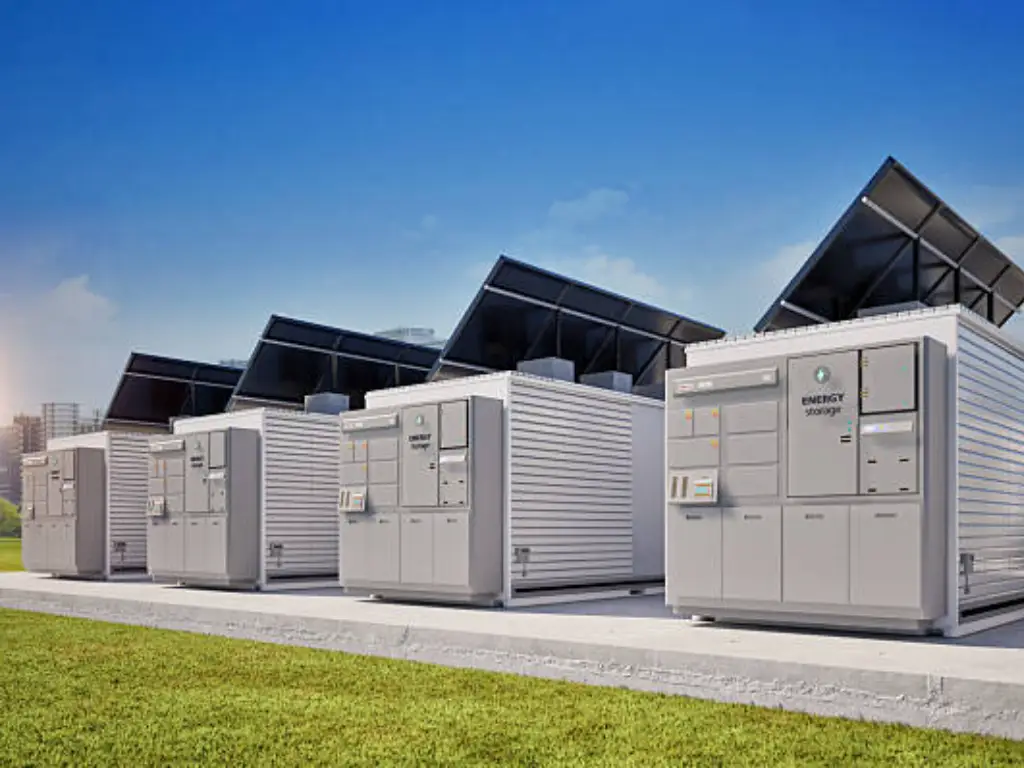
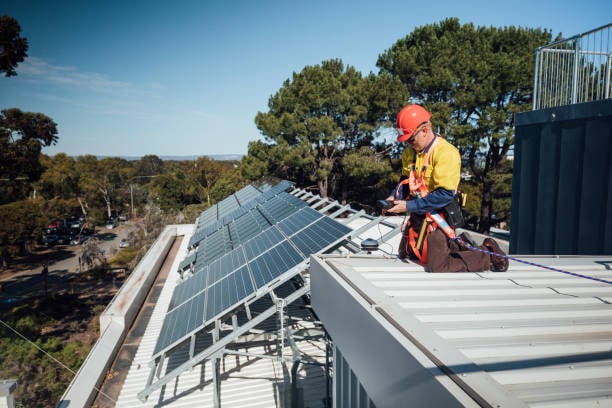
For facility managers and enterprise executives, commercial solar isn’t just about corporate sustainability—it’s a critical financial maneuver to survive unpredictable grid outages and skyrocketing peak energy rates. But deploying a commercial-grade battery energy storage system (BESS) is a complex engineering feat that requires precision, compliance, and flawless execution.
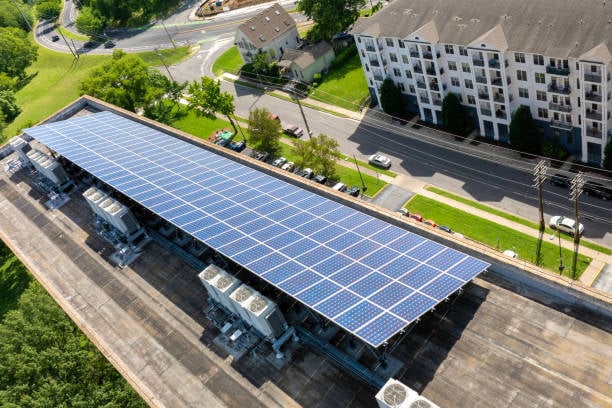
Why Are Businesses Adding Battery Storage to Their Solar Arrays?
The adoption of commercial energy storage is accelerating rapidly. While consumer batteries are mostly for backup, B2B decision-makers are investing hundreds of thousands of dollars into these systems for three distinct, ROI-driven reasons:
- Peak Demand Shaving (The Financial Engine):
According to the U.S. Energy Information Administration (EIA), demand charges can account for 30% to 70% of a commercial electric bill. A smart BESS uses predictive algorithms to discharge stored solar power during your facility’s highest consumption spikes, effectively “shaving” the peak and saving tens of thousands of dollars annually. - Uninterruptible Power & Grid Resilience:
A momentary grid flicker can cause sensitive CNC machines to crash or wipe out server data. Commercial batteries offer millisecond-level switchovers (Seamless Islanding), keeping production lines running seamlessly during brownouts or severe weather events. - ESG Compliance & Energy Arbitrage:
Beyond meeting corporate carbon-neutral goals, batteries allow facilities to participate in Time-of-Use (TOU) arbitrage—storing cheap solar power in the morning and consuming it when utility rates peak in the late afternoon.
(See chart below: The red dotted line represents expensive utility demand peaks, while the solid black line demonstrates how the EMS automatically discharges battery power to flatten the curve and avoid penalties.)
How Much Does a Commercial Battery System Actually Cost?
If your goal is to secure a truly affordable commercial solar battery installation, you need to look past vague estimates. Let’s break down the actual monetary costs for a standard mid-sized manufacturing facility requiring a 250kW / 500kWh battery storage system.
A high-quality turnkey installation of this size typically ranges from $300,000 to $450,000 before tax incentives. Here is the exact breakdown of where your capital goes:
- Hardware ($150,000 – $220,000):
This includes the LFP battery racks, thermal management (HVAC) systems, fire suppression units, and commercial-grade bidirectional inverters. - Balance of System & Construction ($90,000 – $140,000):
The heavy lifting. Includes pouring reinforced concrete pads, heavy-gauge trenching, laying conduit, switchgear upgrades, and high-voltage labor. - Soft Costs ($30,000 – $50,000):
Essential engineering work, Single-Line Diagrams (SLDs), structural stamps, and navigating the complex AHJ permit and utility interconnection applications. - Lifecycle O&M (~$10,000/year):
Annual EMS software licensing, preventative maintenance (coolant swaps), and long-term capacity warranties (augmentation reserves).
A Real-World ROI Sandbox Calculation
Let’s run a highly realistic, dynamic financial sandbox. Assuming a gross turnkey cost of $350,000, the Federal Investment Tax Credit (ITC) shaves off 30% (-$105,000). Factoring in MACRS depreciation tax shields (roughly -$50,000), your net capital outlay drops to exactly $195,000.
Now, let’s look at the operational cash flow. If the system saves you $45,000 a year in shaved demand charges, we must subtract the estimated $10,000 annual O&M costs. Your true net cash flow is $35,000 per year.
- Net Capital Outlay: $195,000
- Annual Gross Savings: $45,000
- Annual O&M (OPEX): -$10,000
- Net Annual Cash Flow: $35,000
- Dynamic Payback Period: 5.5 Years
The Financial Leverage (Day-1 Positive Cash Flow): Savvy CFOs rarely lock up $350,000 in working capital. By utilizing financial levers like C-PACE (Commercial Property Assessed Clean Energy), PPAs, or equipment leasing, enterprises achieve zero-down deployments. If your monthly peak shaving yields $3,750, and your financed payment is only $2,500, the microgrid generates absolute positive cash flow from the very first day of operation.
Space Requirements and Fire Safety Codes You Must Pass
A project can look perfect on a spreadsheet but die instantly during site inspection. Whether you are navigating Title 24 in California or planning a compliant commercial installation in Leicester subject to UK fire regulations, local Authorities Having Jurisdiction (AHJs) rigidly enforce spatial and safety codes.
Physical Footprint and Clearances
Industrial battery enclosures are immensely heavy and require rigorous thermal management. Pre-installation requires pouring a dedicated, reinforced concrete pad. More importantly, strict physical clearances are legally mandated. According to the foundational parameters of NFPA 855, a BESS must be installed a minimum of 10 feet (3 meters) away from any building openings (doors, windows, HVAC intakes) to prevent toxic gas ingress in the event of a fire. Furthermore, individual battery clusters exceeding 50kWh must maintain a default 3-foot isolation gap from one another.
NFPA 855, Thermal Runaway, and DC Protection
-
The Battery End (Buying Space with UL 9540A):
You cannot simply hand an inspector a UL 9540A certificate; the engineering team must use large-scale fire test data to submit a Hazard Mitigation Analysis (HMA). Use a strong UL 9540A report as leverage for a Clearance Waiver. This allows you to bypass the strict 3-foot isolation rule and achieve high-density, back-to-back installations, saving expensive factory floor or loading dock space. -
The Transmission End (NEC Standards):
Catastrophic failures often originate from rooftop solar arrays via DC arc faults, requiring neutralization through advanced AFCI and Rapid Shutdown Devices (RSD). Incorporate BENY’s commercial DC protection to guarantee instant de-energization during thermal events. Showing this 30-year legacy of NEC-exceeding safety to fire inspectors significantly accelerates permit approvals.
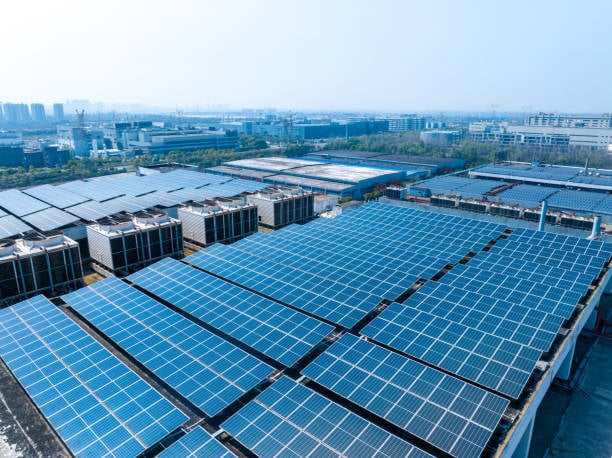
Commercial Solar Batteries vs. Diesel Generators
For decades, facilities relied on massive diesel generators for backup power. However, the modern manufacturing environment requires a level of precision and monetization that mechanical generators cannot match.
| Capability | Modern Commercial BESS | Traditional Diesel Generator |
|---|---|---|
| Startup Delay | Seamless (Milliseconds). No voltage sags. | 10 to 30 seconds. Causes sensitive equipment to crash. |
| Demand Shaving | Excellent. Cycles daily to reduce utility bills. | None. Legally restricted from running daily for peak shaving. |
| Maintenance | Low. Solid-state electronics, occasional HVAC checks. | High. Requires fuel polishing, oil changes, load testing. |
| Operational Noise | Minimal. Only cooling fan noise. | Deafening. Often violates commercial noise ordinances. |
The Verdict: A diesel generator is a sunk cost. It sits idle for 99% of its life, consuming maintenance budgets just to remain operational. In stark contrast, a commercial solar battery is an income-generating asset. Because it operates daily to shave peak demand charges, a BESS actively pays for itself year over year.
What Does the Installation Process Actually Look Like?
Transitioning from a signed contract to a fully operational microgrid means treating your commercial solar battery storage installation as a meticulous, phased engineering project rather than a simple hardware drop-off. Here is the exact roadmap:
- Step 1: Site Audit & Load Data Logging
Engineers visit your facility to inspect your main electrical panels and available land. They capture your minute-by-minute energy consumption over several weeks, establishing a precise baseline for system sizing. - Step 2: System Design & Engineering (SLDs)
Electrical engineers create detailed Single-Line Diagrams (SLDs) and structural layouts. This determines the exact cable routing and integration points with your existing switchgear. - Step 3: The Permitting & Interconnection War
Before construction begins, the design must pass local city planners, the fire department (NFPA 855 compliance), and your utility company to secure an Interconnection Agreement. - Step 4: Site Prep & Balance of System (BOS)
Crews pour the reinforced concrete pads, dig trenches for high-voltage cables, run heavy-duty conduit, and upgrade your facility’s Main Service Panel if necessary. - Step 5: Rigging & Electrical Tie-Ins
Cranes carefully place the multi-ton battery cabinets onto the pads. Master electricians perform the critical high-amperage terminations, connecting DC power to AC inverters. - Step 6: Commissioning & PTO
The utility company performs a final walkthrough. Once passed, you are granted Permission to Operate (PTO). The EMS software is activated, and peak shaving begins.
The Hidden Bottleneck: Permitting and Utility Interconnection
The hard truth: physical installation is not the finish line. Navigating utility monopolies and government bureaucracy takes time. Managing expectations through the following timeline is crucial:
- Phase 1: Interconnection Agreement
Filing the initial request with your local utility to ensure the regional grid transformer can handle your system’s load and potential power export without destabilization. - Phase 2: AHJ Permitting
Submitting the structural and electrical plans, alongside the critical Hazard Mitigation Analysis (HMA), to local building and fire departments. - Phase 3: Permission to Operate (PTO)
Even after the battery is physically wired, it is illegal to turn it on. The utility must conduct a final inspection and grant official PTO. Activating the system prematurely can result in forced disconnection and heavy fines.
Choosing the Right Battery Technology and Architecture
When engineering a hybrid commercial solar and battery system installation, selecting the right chemistry and system architecture is paramount for longevity, efficiency, and safety.
The Shift to LFP Cells
For commercial applications that cycle daily, the industry has universally shifted away from Nickel Manganese Cobalt (NMC) to Lithium Iron Phosphate (LFP). While slightly heavier, LFP boasts a significantly higher thermal runaway onset temperature, making it much easier to design fire suppression systems around. Crucially, LFP easily handles the aggressive daily cycling required for peak shaving, delivering thousands of cycles with minimal degradation.
System Coupling Architecture: AC vs. DC
- AC Coupling (The Retrofit Choice):
The battery connects to the AC side of your facility’s electrical panel and utilizes its own dedicated storage inverter. Ideal for facilities with existing, functional commercial solar arrays. It allows you to add battery storage without replacing your current solar inverters, rewiring the roof, or voiding existing equipment warranties. - DC Coupling (The High-Efficiency Choice):
The solar panels and the battery share a single, central commercial hybrid inverter. The absolute gold standard for new microgrid builds or complete system overhauls. It prevents solar “clipping” losses and offers superior efficiency (up to 3-5% higher) because the power doesn’t have to unnecessarily convert from DC to AC and back to DC before being stored in the battery.
Choose an All-in-One Integrator (Avoid “Frankenstein” Systems)
Regardless of whether you choose an AC or DC coupled architecture, the biggest operational trap B2B buyers fall into is building a “Frankenstein system”—splicing together solar panels, inverters, battery cabinets, and DC combiner boxes from different, obscure manufacturers to save a few dollars.
The most painful lesson in this industry is buying a cobbled-together system resulting in endless communication protocol (CAN/RS485) failures. This results in “finger-pointing” voided warranties between vendors and stranded assets. A 3-day downtime trying to patch software conflicts can easily erase an entire month’s peak shaving savings.
Commercial facilities are rapidly transitioning away from fragmented components toward unified microgrid ecosystems. BENY exemplifies this standard by delivering an All-in-One C&I energy solution where storage units, PV inverters, and DC protection components are engineered to synchronize natively.
This pre-integrated approach under a single intelligent EMS eliminates the “Frankenstein” communication failures, ensuring your system functions as a high-performance energy asset rather than a collection of conflicting parts. By choosing a unified ecosystem, you secure a single point of accountability for your entire facility’s uptime.
Get a Unified Microgrid Integration ConsultationHow to Prove ROI Before You Sign the Contract?
You should never install a commercial battery and just “wait for the next electric bill” to see if it worked. B2B procurement demands financial certainty before capital is deployed.
To accurately measure your expected ROI, your installation partner must perform a predictive load simulation. They will request your historical utility interval data—an 8760-hour log mapping your facility’s consumption every 15 minutes for a full year. By running this massive dataset through advanced EMS simulation software alongside your specific local utility tariffs, they predict exactly how the battery will behave.
This produces a financially binding ROI model. It allows your CFO to clearly view the projected Internal Rate of Return (IRR), the net cash flow after MACRS/ITC, and the exact month the system reaches breakeven—all before a contract is signed.
Conclusion: Empowering Your Facility’s Future
Investing in a commercial solar battery system is no longer just an environmental statement; it is a strategic defense mechanism against volatile utility monopolies. By fundamentally restructuring how and when your facility consumes power from the grid, a carefully engineered BESS transforms expensive demand charges into measurable profit.
Success relies on getting the engineering right. From securing UL 9540A spatial waivers to selecting a unified hardware ecosystem that prevents communication failures, partnering with the right experts is crucial. Take control of your energy profile today, and turn your facility’s dead space into a resilient, income-generating asset.