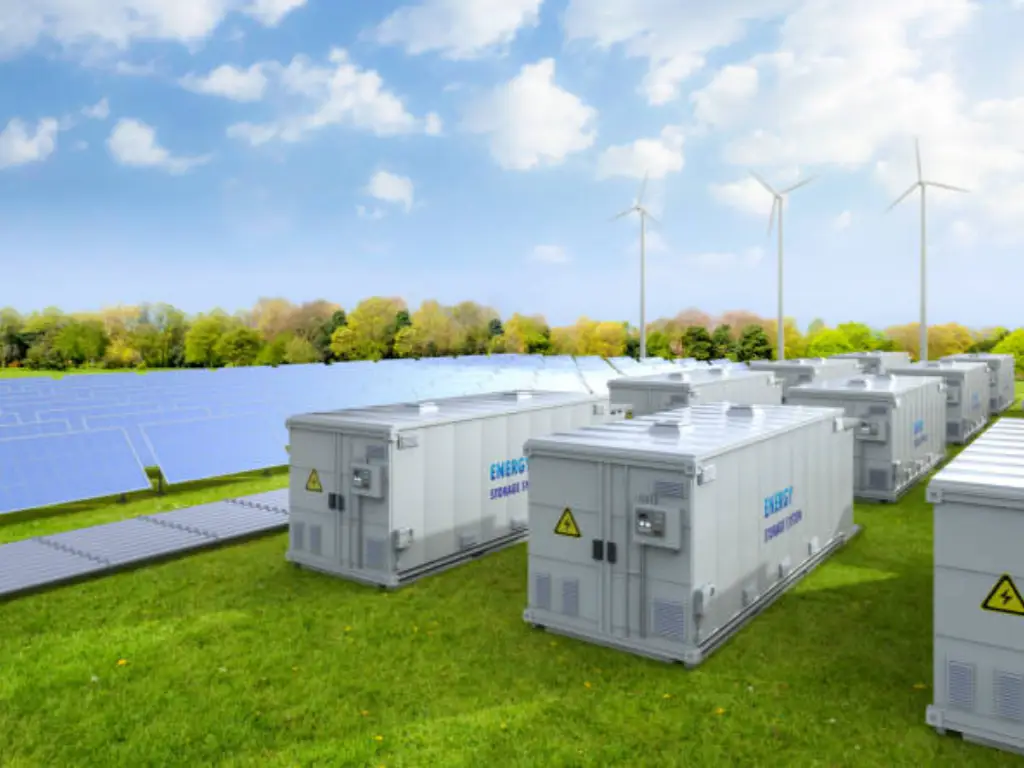
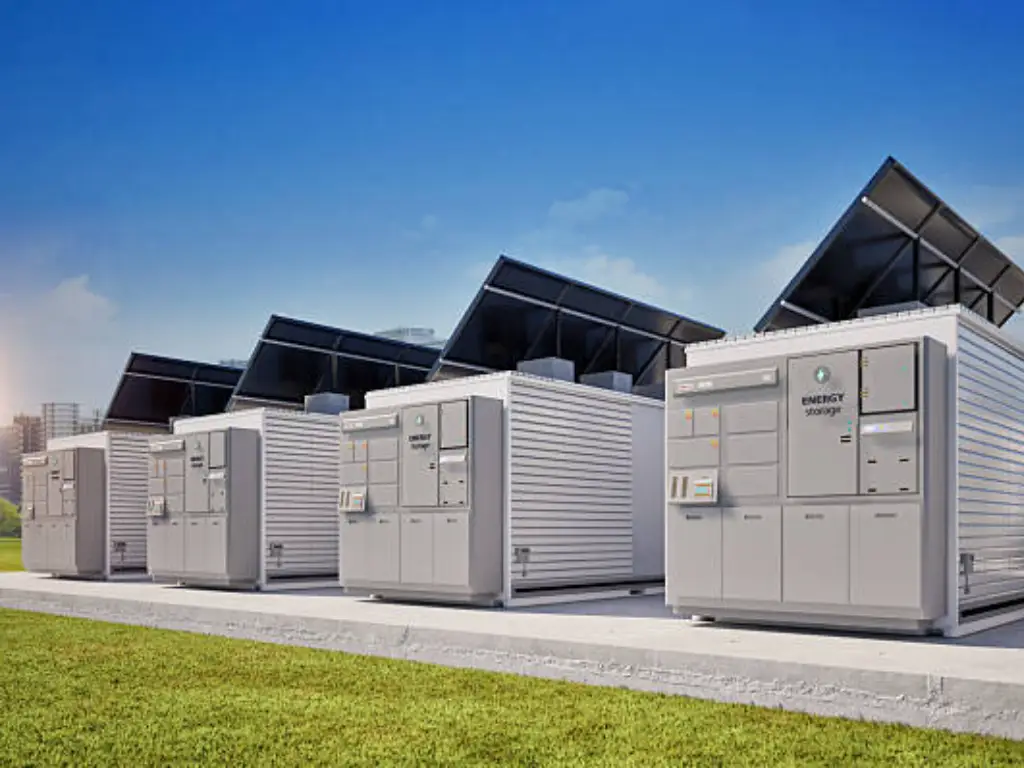
As grid instability increases and utility peak demand charges continue to erode corporate profitability, businesses are urgently seeking resilient power solutions. Commercial and Industrial (C&I) Energy Storage Systems have emerged as the definitive answer, transforming electricity from a volatile expense into a controllable asset. This comprehensive guide breaks down everything facility managers and enterprise executives need to know about C&I battery storage—from core technologies and fire safety standards to maximizing your Return on Investment (ROI).
What Exactly Is Commercial and Industrial (C&I) Energy Storage?
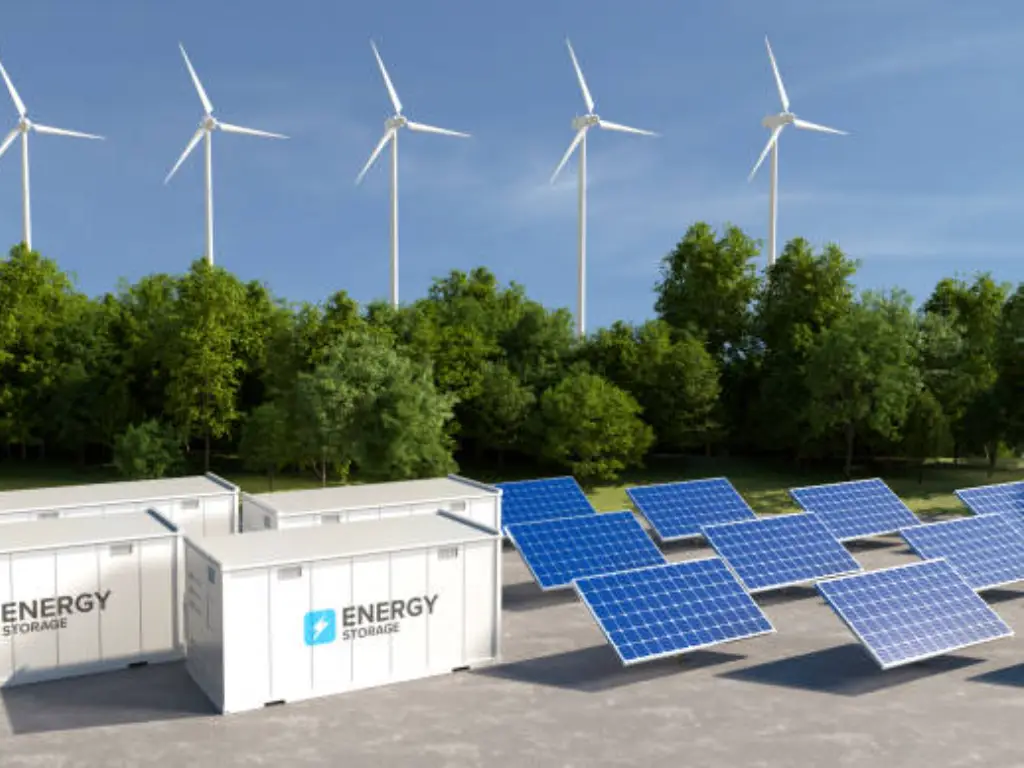
An industrial and commercial energy storage system occupies a highly specialized, mission-critical middle ground in the global energy transition. To truly understand its definition, we must explicitly separate it from the systems you see in residential garages or sprawling utility fields.
C&I storage systems are “private, localized electrical reservoirs” engineered specifically for factories, warehouses, EV charging hubs, and commercial complexes. Unlike residential systems meant to keep the lights on during a storm, C&I systems are active financial engines designed to manipulate 3-phase AC industrial loads and generate measurable return on investment (ROI).
The Definitive Boundary: Residential vs. C&I vs. Utility-Scale
| Specification | Residential Storage | C&I Storage (Our Focus) | Utility-Scale Storage |
|---|---|---|---|
| Capacity Range | 5 kWh – 20 kWh | 50 kWh – 10+ MWh | 50+ MWh to Gigawatt-hours |
| Electrical Integration | Single-Phase (120V/240V) | 3-Phase AC (480V / 1000V+) | High-Voltage Transmission Grid |
| Primary Objective | Home backup, solar self-consumption | Demand charge reduction, ROI generation, ESG compliance | Grid frequency regulation, macro-level load shifting |
| Complexity | Plug-and-play, standard app | Requires intelligent EMS, predictive AI dispatch, precise thermal management | Massive infrastructure, custom SCADA systems |
The Real Reason Your Facility Needs an Energy Storage System
Most facility managers operate under the assumption that exorbitant electricity bills are an unavoidable cost of doing business. In reality, a massive portion of that monthly invoice is a penalty. Your bill is split into Energy Charges (kWh) for the total volume consumed, and Demand Charges (kW)—a punitive fee based on your highest peak power drawn during a brief 15-minute window.
Beyond crushing these hidden demand charges, a commercial and industrial energy storage system provides seamless backup against catastrophic micro-outages (voltage sags that ruin production lines), maximizes the self-consumption of your commercial solar rooftops, and ensures your company meets increasingly strict ESG decarbonization mandates.
Under the Hood: The Core Components of a C&I Battery System
A commercial-grade system is a synchronized network of four critical pillars:
- Battery Racks:
The physical cells storing the DC energy. - PCS (Power Conversion System):
The bi-directional heavy-lifter that inverts AC grid power to DC battery power. - BMS (Battery Management System):
The immune system preventing overcharging at a micro-level. - EMS (Energy Management System):
The brain. The hardware gives you capacity, but the EMS software dictates your ROI by precisely deciding when to charge and discharge based on dynamic grid pricing.
Show Me the Money: How C&I Storage Generates Hard ROI
Energy storage is not a passive backup generator; it is an active financial asset. Let’s look at the exact mathematical mechanisms that drive payback periods down to attractive commercial timelines.
1. Peak Shaving (The Demand Charge Assassin)
This is where the heaviest ROI is generated. Suppose your manufacturing plant spins up heavy compressors at 2:00 PM. Your facility’s load instantly spikes from 1MW to 2.1MW for just 20 minutes.
If your utility charges a $15/kW demand rate, that single spike costs you thousands in penalties. With a battery, the intelligent EMS predicts this spike. In milliseconds, it discharges stored battery power to “shave” the peak off. The utility meter only sees a flat baseline draw.
Data Visualization: The grey industrial load curve experiences a severe 2.1MW spike at exactly 2:15 PM. The red ESS dispatch curve illustrates the Energy Management System responding in under 20 milliseconds, releasing 1MW of stored power to perfectly flatten the grid draw, completely neutralizing the demand penalty zone.
ROI Sandbox: Before vs. After Monthly Utility Bill Simulation
To understand the sheer magnitude of these savings, let us run a financial simulation for a mid-sized plastics manufacturing facility deploying a 1MW/2MWh storage system.
| Billing Metric (Rate) | Before ESS Installation | After ESS Installation (Peak Shaved) | Financial Delta |
|---|---|---|---|
| Peak Demand (kW) | 2,100 kW | 1,100 kW (1MW Shaved) | – 1,000 kW |
| Demand Charge ($15/kW) | $31,500 | $16,500 | Save $15,000 |
| Energy Consumed (kWh) | 500,000 kWh | 500,000 kWh (Shifted via TOU) | 0 kWh difference |
| Energy Charge (Blended) | $50,000 | $45,000 (Arbitrage Savings) | Save $5,000 |
| Total Monthly Bill | $81,500 | $61,500 | Net Monthly Savings: $20,000 |
Financial Projection: For a typical 2MW/4MWh system, combining these stacked revenue streams aggressively drives the payback period down to 3.5 – 5 years, depending on local utility tariffs and ITC tax credits.
2. Time-of-Use (TOU) Arbitrage & Cycle Life Economics
Beyond peak shaving, your system acts as an energy day-trader. It automatically charges at 2:00 AM when electricity is dirt-cheap, and discharges at 4:00 PM during peak pricing hours. The secret to making this arbitrage highly profitable is the Asset Depreciation Rate. Modern C&I systems utilize advanced LFP chemistry that delivers a massive 6,000 to 8,000 super-long cycle life. This allows the system to perform daily deep discharges for 10 to 15 years, driving the Levelized Cost of Storage (LCOS) to rock bottom.
3. Grid Demand Response (DR) Subsidies
During extreme grid stress, utilities face rolling blackouts. Through DR programs, the grid will literally pay your facility a premium to switch to battery power and reduce grid strain. You earn capacity payments just for being enrolled, plus energy payments when dispatched.
Let’s Talk Safety: Engineering to Mitigate Thermal Runaway Risk
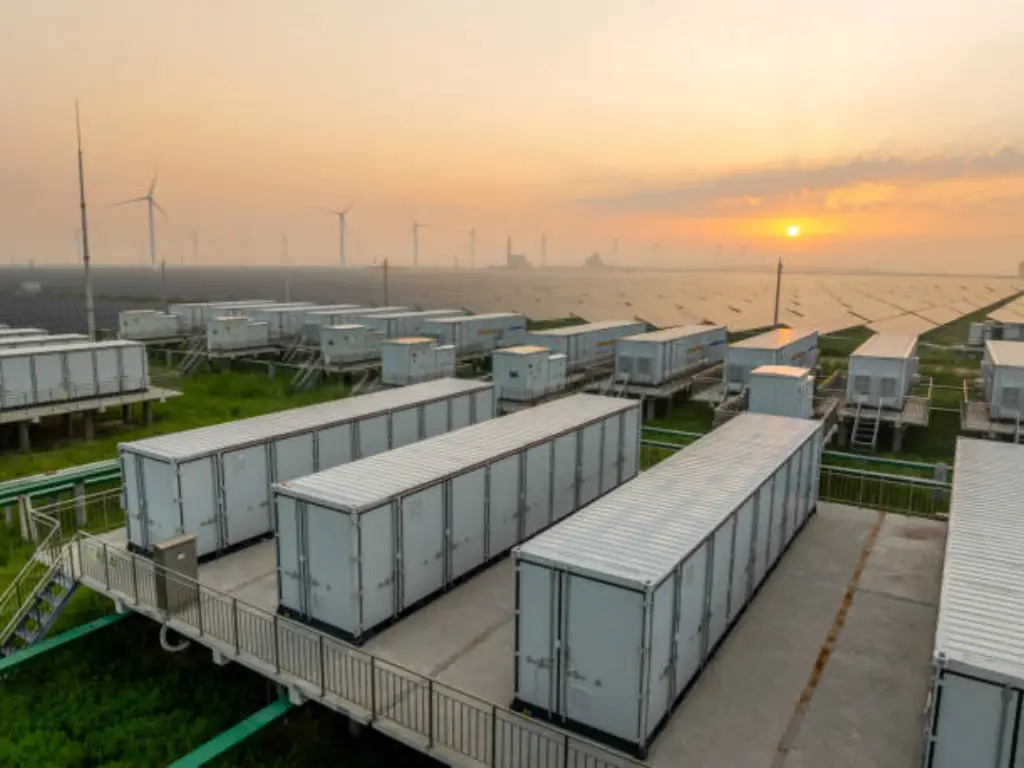
The greatest anxiety for any facility manager evaluating energy storage is fire risk. In multi-megawatt high-density battery arrays, safety is not about marketing claims; it is about respecting extreme physical boundaries and implementing multi-layered propagation prevention.
The Chemical Mandate: LFP and the Off-Gassing Reality
The chemistry inside the cell dictates the baseline safety. You must understand the hard metrics between the two dominant lithium-ion technologies:
- NMC (Nickel Manganese Cobalt):
Widely used in electric vehicles for high energy density. However, its thermal runaway threshold is perilously low at around 210°C. Worse, when NMC cells breach this temperature, they chemically release oxygen (O2)—fueling a self-sustaining fire. - LFP (Lithium Iron Phosphate):
The absolute gold standard for stationary C&I storage. LFP’s thermal runaway threshold exceeds 270°C, and its molecular structure does not release oxygen.
However, ignoring the extreme failure boundaries of LFP is a dangerous mistake. While LFP prevents oxygen-fueled fires, it still off-gases flammable hydrogen (H2) and carbon monoxide (CO) during thermal failure. True C&I safety requires integrated combustible gas detection systems and Deflagration Venting (NFPA 68/69 compliant) to prevent catastrophic Vapor Cloud Explosions (VCE) inside the cabinet.
Physical Thermal Control: Liquid Cooling vs. Air Cooling
Even with LFP, batteries generate intense heat during rapid discharging. Traditional HVAC Air Cooling creates a dangerous temperature variance (ΔT) of 5°C to 8°C across the battery racks. Cells near the fan stay cold, while those in the corners bake, leading to localized degradation and heightened thermal risks.
Industry Benchmark: Precision Thermal Control & Deflagration Safety
To overcome the limitations of air cooling and address off-gassing risks, tier-one providers have fundamentally restructured cabinet architecture. For instance, BENY’s advanced C&I Energy Storage Systems strictly utilize Pack-Level Liquid Cooling that maintains a cell temperature variance of under 3°C even during continuous 0.5C peak shaving dispatches.
Crucially, recognizing the engineering realities of thermal events, these systems integrate active aerosol fire suppression alongside standard-compliant deflagration venting panels, transforming battery safety from a theoretical promise into a physically engineered, propagation-resistant reality.
The Compliance Minefield: Navigating Fire Codes and Certifications
No matter how safe a system claims to be, local Authorities Having Jurisdiction (AHJ) and fire marshals will immediately reject uncertified hardware. Here is your definitive pitfall avoidance guide:
- UL 1973 vs. UL 9540:
Do not be fooled by a vendor claiming “UL certified” just because individual cells passed UL 1973. You must demand UL 9540, which certifies the safety of the entire integrated system (inverter, batteries, and enclosure working together). - The UL 9540A Necessity:
This is a brutal thermal runaway fire propagation test. It provides the “crash test data” proving to the fire marshal that if one single cell is forced into thermal runaway, the fire will not spread to adjacent cabinets or burn down your factory. - NFPA 855 Setback Rules:
Siting is critical. NFPA 855 dictates strict spacing requirements (e.g., maintaining 3 feet of clearance between cabinets, and specific distances from building egress routes).
How to Size and Buy the Right System for Your Business?
Procuring C&I storage requires a rigorous, four-step sequential approach to avoid stranded assets and ensure maximum ROI.
Step 1: Load Profiling (Data Acquisition)
Never size a system based on your total monthly electric bill. You must request 12 months of 15-minute interval data from your utility to expose the exact timing, frequency, and magnitude of your power spikes.
Step 2: Calculate ROI & Payback Period
Using the 15-minute data, engineers will size the PCS Inverter (kW) to cover your highest peak demand, and size the Battery Capacity (kWh) to ensure it can sustain that discharge. A detailed cash-flow model—accounting for demand savings, TOU arbitrage, and tax incentives—must be generated to prove the 3-5 year payback period.
Step 3: Site Planning & NFPA Setbacks
A physical site survey must map out the footprint, ensuring compliance with NFPA 855 spatial constraints and identifying the optimal interconnection point to your facility’s main switchgear.
Step 4: Choose an All-in-One Integrator (Avoid “Frankenstein” Systems)
The most painful lesson in this industry is buying a cobbled-together system (Batteries from Brand A, Inverter from Brand B) resulting in endless communication protocol (CAN/RS485) failures. This results in “finger-pointing” voided warranties between vendors and stranded assets. A 3-day downtime trying to patch software conflicts can easily erase an entire month’s peak shaving savings.
Unified Microgrid Ecosystems
Commercial facilities are rapidly transitioning away from fragmented components toward unified microgrid ecosystems. BENY exemplifies this standard by delivering an All-in-One C&I energy solution. Their storage units natively synchronize with commercial PV inverters and EV charging infrastructure under one self-developed, intelligent EMS. This pre-integrated approach eliminates field-level handshake failures, delivering a true plug-and-play energy asset backed by a single point of accountability.
Explore BENY’s All-in-One C&I Storage SolutionsWhat’s Next? AI, VPPs, and the Future of C&I Storage
The future of commercial energy storage is software-defined. AI-driven EMS platforms now integrate weather APIs (to predict tomorrow’s solar generation) and dynamic tariff engines to predictively dispatch power days in advance.
Additionally, your battery will soon become a node in a Virtual Power Plant (VPP). By networking hundreds of C&I systems together, the grid will pay premium rates to tap into your reserved capacity during macro-level grid crises, transforming your hardware into a continuous digital revenue stream.