Nevertheless, because of regional differences in electrical grids, namely, the distinction between single-phase and three-phase power, two different standards were created: CCS1 and CCS2. For ev owners, operators, and exporters, there is no technicality in the main difference between the two, but it is a business decision that is vital. The choice of the incorrect standard leads to incompatible hardware and high sunk costs. These technical and geographical boundaries are crucial to understanding infrastructure reliability and long-term returns on investment in the fast-changing world of ev charging. This guide is a comprehensive comparison that assists owners, operators, and ev users to overcome the challenges of global EV charging.
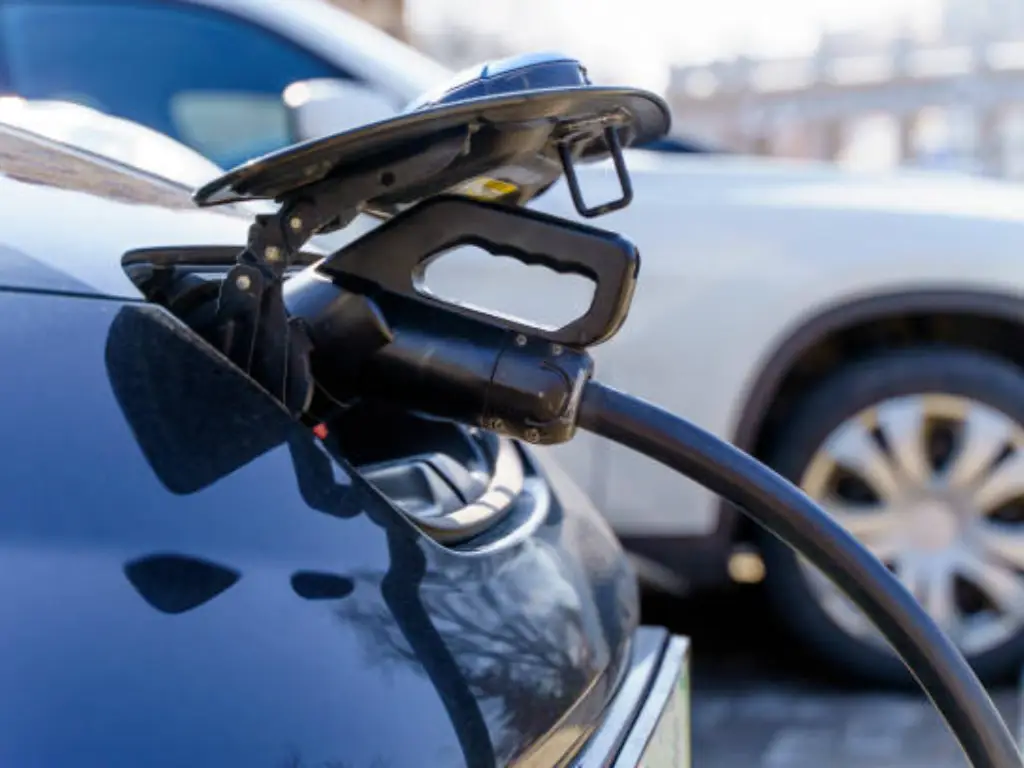
The ccs type 1 connector is the standard that has been developed mainly in the North American and South Korean markets. It is a variant of the J1772 (Type 1) AC plug, on which American charging has been based more than ten years. The industry has added two large dc contacts at the bottom to form a combo port which enables a vehicle to receive both slow AC charging at home and rapid DC charging at highway stops without having two separate inlets on the car body.
CSS1 is technically a single-phase standard. In North America, single-phase or split-phase power is used to construct residential and most light-commercial electrical systems. Due to this fact, the AC component of the CCS1 plug only uses a single port layout to supply power. This design was very logical in a market where three-phase power is seldom supplied to homes or small businesses, making the charging experience straightforward for the average user.
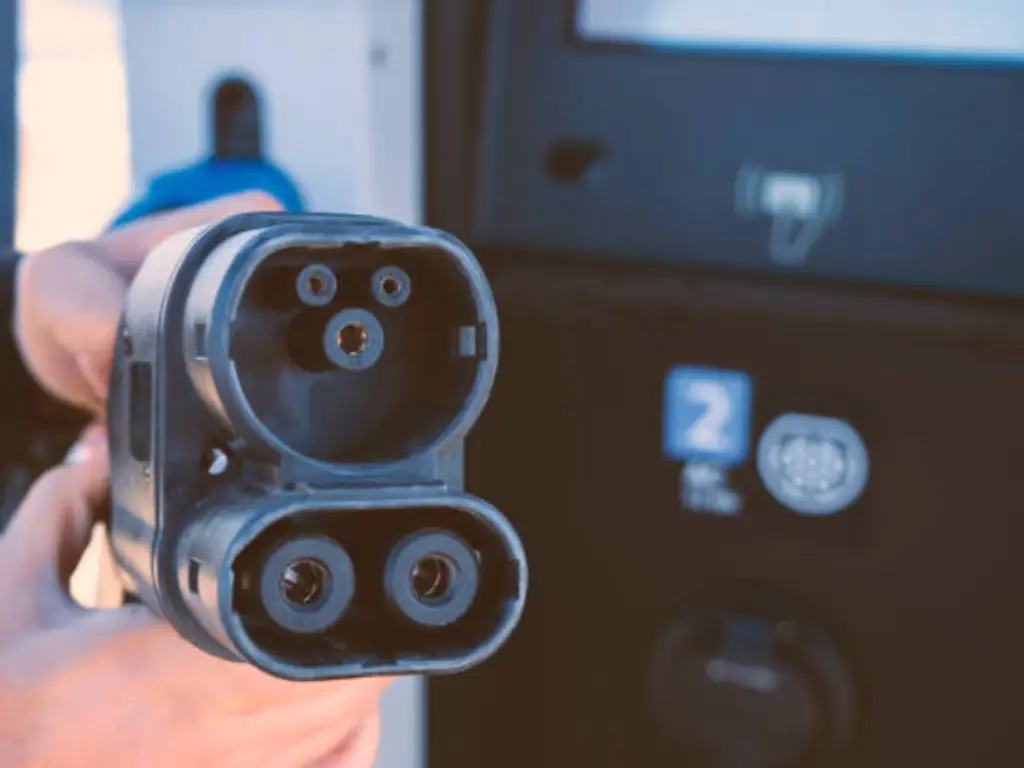
The european standard equivalent is CCS2, which is quickly becoming the dominant standard in the rest of the world, not in North America, China, and Japan. It is constructed on the Mennekes (Type 2) AC plug. The CCS2 connector was a three-phase AC connector, unlike its American counterpart, which was built on a different design to accommodate three-phase AC power.
Three-phase power is the standard of both industrial and residential distribution in Europe and much of Oceania and Asia. CCS2 enables vehicles to draw much more power when charging slowly in AC mode with the Type 2 base, which can be as high as 22kW. The two DC pins at the bottom make it a high-speed charging connector that is physically larger and rounder than the CCS1 but has a higher ceiling to performance across the board.
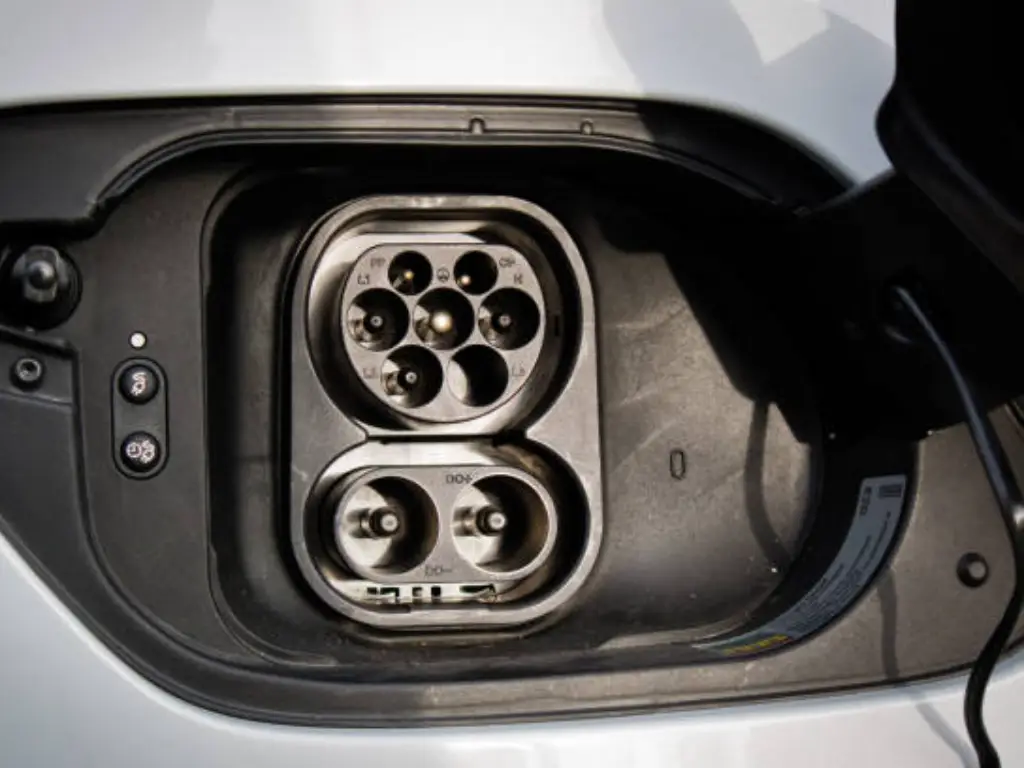
In order to maneuver through the intricacies of EV implementation in the world, it is necessary to look beyond the plastic casing. The table below and the analysis below further subdivides the fundamental technical differences between these two standards.
| Feature | CCS1 (North American Standard) | CCS2 (European/Global Standard) |
|---|---|---|
| Physical Design | Circular top profile resembling a traditional fuel nozzle with a long, industrial handle. | D-shaped profile with a flat top, offering a more streamlined and integrated appearance. |
| Pin Configuration | 5 upper pins based on the Type 1 (J1772) standard plus 2 lower DC pins. | 7 upper pins based on the Type 2 (Mennekes) standard plus 2 lower DC pins. |
| Electrical Architecture/strong | Engineered specifically for single-phase AC power grids. | Built to support both single-phase and three-phase AC power grids. |
| Locking System | Manual mechanical latch activated by a user-controlled thumb button on the handle. | Automatic electronic lock controlled by the vehicle’s ECU via an internal actuator. |
| Durability & Safety | External plastic latch is exposed and prone to breaking if dropped, which can prevent charging. | Internal electronic pin is protected from the elements, reducing the risk of arcing or tampering. |
| AC Power Capacity | Typically limited to 7.4 kW or 11 kW due to single-phase constraints. | Supports significantly higher speeds, typically up to 22 kW or 43 kW at public stations. |
| DC Performance | Theoretically supports 350 kW, but often limited by older infrastructure to 200A. | Robustly handles high-current loads up to 500A and 1000V with higher thermal consistency. |
| Thermal Stability | Prone to “thermal throttling” under heavy loads due to air-cooling or basic liquid systems. | Features advanced liquid-cooling manifolds that maintain peak speeds for longer durations. |
| Smart Grid Readiness | Basic PLC data exchange with fragmented rollout of advanced ISO 15118 features. | Mature implementation of ISO 15118 protocol, enabling Plug & Charge and V2G capabilities. |
| Primary Markets | Concentrated in North America, South Korea, and Taiwan. | Standard across Europe, Oceania, South America, Southeast Asia, and the Middle East. |
| Strategic Outlook | Transitioning into a specialized legacy standard, particularly as North America pivots to NACS. | The inevitable global common denominator for international scalability and supply chain optimization. |
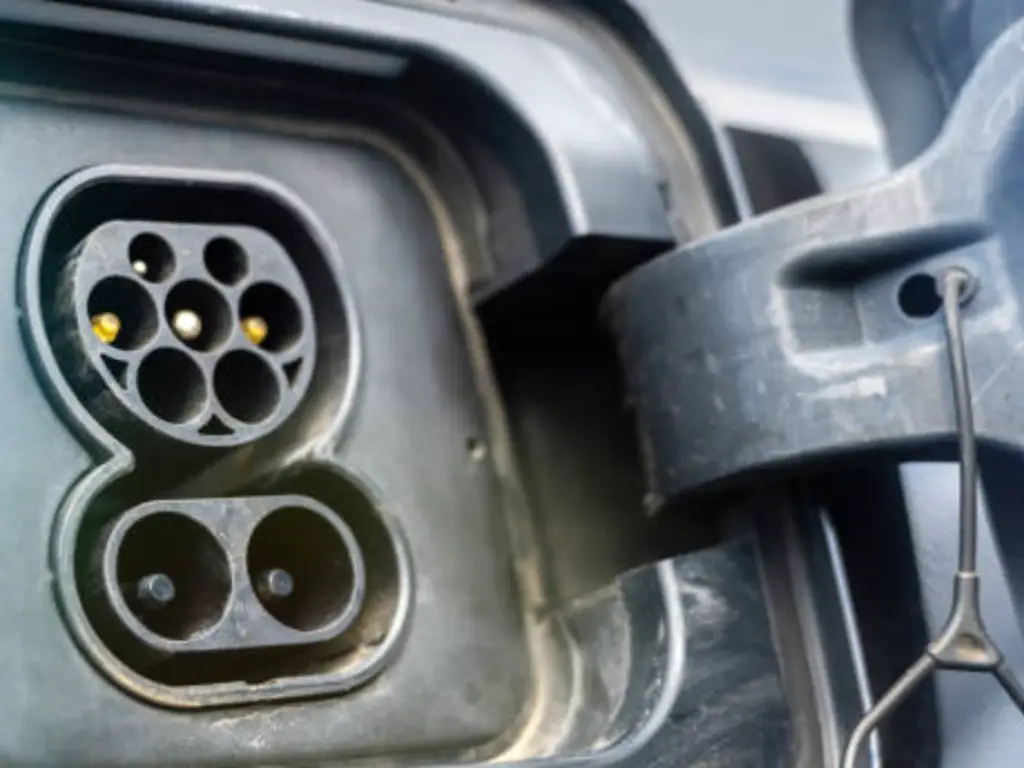
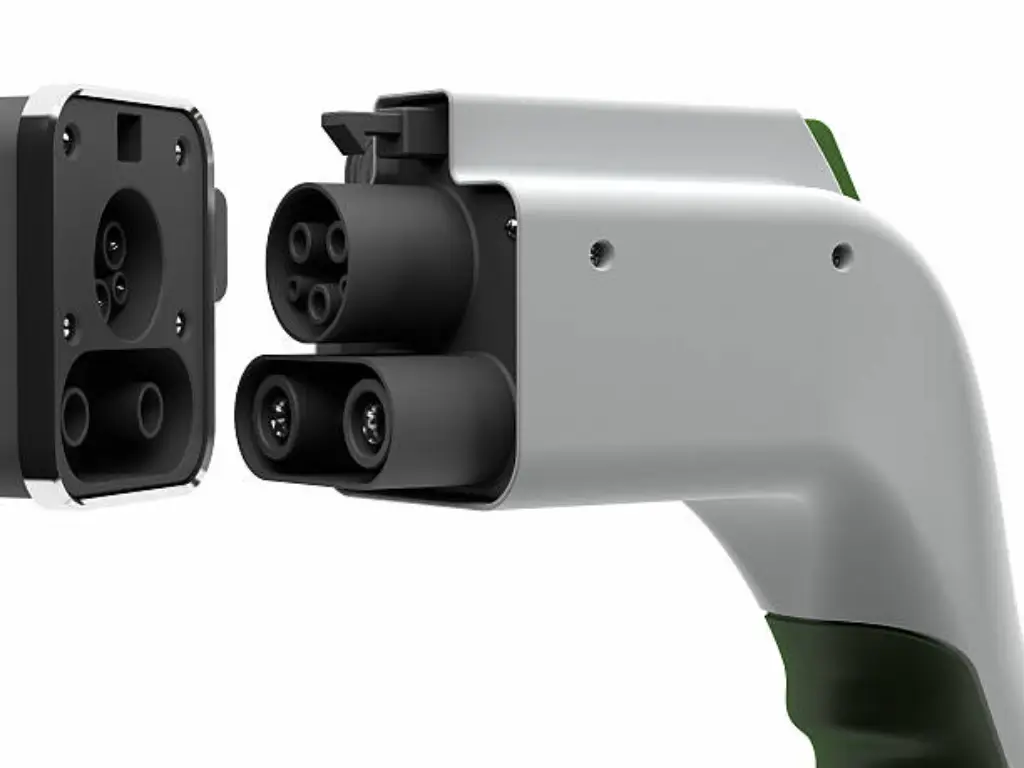
The regional origin and the electrical systems supported by CCS1 and CCS2 define the physical difference between the two. Although both are based on the same two-pin DC setup at the bottom to enable quick charging, the upper part of the two is very different in shape and size, number of pins, and locking systems.
The electrical standards supported by each connector are directly reflected in the physical footprint and silhouette of the connector. Although the two systems have the same large DC pins at the bottom, the upper parts are very different in shape and size.
The main structural variation is in the AC (alternating current) part of the connector:
This technical split describes the existing split in the world markets. The industry in North America is quickly moving towards the NACS (SAE J3400) of Tesla. Since the North American grid is mostly single-phase, the fact that CCS1 could not handle three-phase power was not a big loss. NACS being a single-phase-native design as well, it was an easy transition to the US market to switch to the smaller Tesla standard. On the other hand, the CCS2 7-pin layout is an unavoidable necessity in Europe due to the use of three-phase power. This technical requirement makes CCS2 the unquestioned regional standard, since no single-phase connector (such as NACS or CCS1) can make full use of the capacity of the European grid.
How the connector attaches itself to the vehicle is the greatest functional difference between the two standards, which affects both the day-to-day usability and the long-term reliability.
In addition to the physical interface, the practical use of these connectors is defined by their electrical architecture and software that controls the flow of energy.
Although the technical specifications are in kilowatts, the real effect is in time. The efficiency difference is dramatic in the case of a typical 100 kWh battery in 2026. A CCS2 system can provide a 90 percent charge in a standard four-hour work charge, compared to a CCS1 system that provides approximately 28 percent, leaving the vehicle nowhere near being ready. This is also extended to overnight charging, with CCS2 taking 4.5 hours to complete a full cycle, as opposed to 13.5 hours in CCS1. In addition to pure speed, CCS2 ensures grid stability through balancing the electrical load on three lines, eliminating the voltage drops and cable overheating hazards of the heavy single-line draw of CCS
The technical richness of a charging standard is determined by the capability of the standard to communicate between the vehicle and the electrical grid. Although CCS1 and CCS2 have similar foundations, their directions in 2026 have been different depending on regional priorities and the development of smart-grid technology.
The international separation between CCS1 and CCS2 is a direct indication of regional electrical grids. This technical split compels companies to either go local with specialization or global with scalability.
With NACS as the North American standard in 2026, CCS1 owners will have to live in an interim period characterized by adapter-reliance. The efficiency of these adapters is usually reduced by 1-3 percent to heat, which may cause thermal throttling and reduce the speed of charging during high-power sessions. Also, the protocol translation required can introduce a delay of 10-15 seconds to the first handshake between the charger and the car. To be safe, one must not compromise on the use of UL 2251-certified hardware; otherwise, the hardware will not have the thermal sensors required to prevent the welding of connectors to the port when the current is high.
The choice between CCS1 and CCS2 is based on the trade-off between regional infrastructure needs and technical performance, security, and long-term hardware durability.
| Pros | Cons |
|---|---|
| Established Network: Widely adopted in North America and South Korea with a mature supply chain for parts. | Latch Fragility: The external manual hook is a high-failure point; if dropped, the broken latch can disable the charger. |
| Tactile Feedback: Provides a clear physical “click” that allows users to confirm the connection without checking a screen. | AC Speed Limit: Restricted to single-phase AC charging, making it significantly slower than CCS2 at public stations. |
| Compact Design: The smaller AC footprint makes it easier for designers to fit into narrow vehicle body panels. | NACS Transition: Facing a sunset period in North America as major automakers shift toward Tesla’s NACS standard. |
The simplicity of CCS1 is characterized by its mechanical simplicity, which is its greatest weakness. The tactile click is user friendly, but the exposed plastic latch is notorious in breaking in high traffic public stations. Moreover, its failure to accommodate three-phase power restricts its use among users who need high-speed AC charging in the workplace or during shopping.
| Pros | Cons |
|---|---|
| 3-Phase Efficiency: Native support for three-phase AC (up to 22kW) enables much faster charging at destination sites. | Cable Ergonomics: The additional wiring for three-phase power makes the cables noticeably heavier and stiffer to handle. |
| Active Security: Features an internal electronic lock controlled by the car, preventing unauthorized removal during a session. | Mechanical Complexity: Relying on an internal motor to lock the plug creates a risk of the cable becoming “trapped” if the motor fails. |
| V2X Readiness: Better engineered for “Vehicle-to-Everything” (V2X) applications, such as powering a home from a car battery. | Over-Engineering: In regions with only single-phase power, users pay for high-end hardware they cannot fully utilize. |
CCS2 is the technically better standard, which focuses on high power delivery and security. It enhances the capability of the current electrical grids by supporting three-phase electricity. This however comes at the expense of ergonomics; the cables are bulky to some users and the electronic locking mechanism introduces a level of software-hardware complexity that CCS1 does not have.
The CCS1 standard is most commonly used in the North American and South Korean markets, where it is the main fast-charging port of the Ford F-150 Lightning, the Hyundai Ioniq 5 (US-spec), and the Chevrolet Bolt. Also, more recent American-made electric trucks such as the Rivian R1T use CCS1 as their high-speed charging system.
Conversely, the CCS2 standard has emerged as the unquestioned world leader particularly in Europe and Australia. Examples of representative models with this port are the European versions of the Volkswagen ID.4, the Porsche Taycan, and the Polestar 2. It is noteworthy that Tesla has a proprietary plug in the United States, but in Europe and Australia, its Model 3 and Model Y have native CCS2 ports to align with local power grids.
One should keep in mind that the compatibility of vehicles is frequently defined by the area of sale, but not the brand. An example would be a Hyundai Ioniq 5 sold in California will have a CCS1 port, whereas the same model sold in Berlin or Sydney will be assembled with a CCS2 port. This is the main cause of the prevalence of adapters when importing cars, but they usually have the safety and efficiency compromises mentioned above.
Is it possible to export a US-spec CCS1 car to Europe or the Middle East and simply put in a converter? The technical response is yes, but the reality on the ground is a collision of hardware and software standards.
The initial obstacle is power phase. Single-phase onboard chargers are used in North American CCS1 vehicles. Because European and Middle Eastern grids are three-phase, an adapter can frequently reduce your charging rate, which is 11kW to a pathetic 3.7kW as the car is only fed on a single line. Other intelligent stations can even deny the connection altogether to prevent an unbalanced load.
Although both standards are based on Power Line Communication (PLC), they are based on different regional dialects. A delay of 100ms in the handshake signal may result in a Communication Error. It is these timing differences and differences in Control Pilot (CP) duty cycles that cause many adapters to not start a session.
Not every converter is equal and selecting the wrong one may cost a lot.
A complete hardware upgrade is the standard of permanent reliability. It is not just a matter of simple adapters, but a physical replacement of the CCS1 inlet with a native CCS2 module and a full adaptation of the high-voltage wiring harness.
But hardware is not everything. A digital alignment is needed to make sure that the vehicle properly reads three-phase power and communication signals. To operators or owners who might want to take this route, the following data-driven disaggregation shows the realistic costs and technical risks of a professional retrofit:
| Key Consideration | Details & Potential Risks |
|---|---|
| Estimated Cost | $1,500 – $3,500 (Includes the CCS2 inlet, high-voltage wiring harnesses, and control modules). |
| The Software Wall | A technician must re-code the vehicle’s Gateway (GTW) firmware to recognize three-phase AC signals; without this, the car will refuse to charge. |
| Warranty Status | In almost 100% of cases, a DIY or third-party retrofit will void the manufacturer’s warranty on the battery pack and high-voltage system. |
| Safety Risk | Improper sealing during a retrofit can lead to condensation inside the high-voltage port, triggering “isolation faults” during heavy rain or car washes. |
The choice of the appropriate standard is concerned with the matching of hardware to the local infrastructure to prevent technical and financial losses in the long run.
It doesn’t matter whether you are operating in a mixed-standard market or are trying to achieve the best performance in a single region, the appropriate hardware partner is it all. This is where the flexible charging solutions of BENY come in.
Our engineering addresses the specific pain points of global operators:
Whether you need a custom connector or a fleet-wide management solution, BENY New Energy offers a 3-year warranty with a 100% replacement guarantee. We don’t just provide a plug; we provide a future-proof ecosystem that maximizes your ROI.
The EV landscape is shifting as regional standards evolve to meet higher power demands and smarter grid integration.
The choice between CCS1 and CCS2 is rarely a matter of preference; it is a matter of location and grid physics. CCS1 remains the legacy champion of the North American single-phase grid, despite its mechanical vulnerabilities. CCS2 is the versatile, high-speed powerhouse that has conquered most of the world through its three-phase AC capability and robust electronic locking.
For the user, the goal remains the same: a seamless connection that delivers power safely and quickly. By understanding the technical underpinnings of these two giants, and choosing infrastructure partners like BENY who prioritize safety and global compliance, we move one step closer to a world where “plugging in” is as simple and reliable as the turn of a key once was.
⚡ Is CCS1 fast charging?
Yes, CCS1 (Combined Charging System Type 1) is a DC fast charging standard designed for high-power energy transfer, allowing for significantly shorter charging times compared to standard AC Level 2 charging.
🔌 Can a CCS1 charge a Tesla?
A CCS1 charger can charge a Tesla vehicle provided you use a compatible CCS1-to-Tesla adapter and the vehicle’s firmware supports CCS communication (common in newer North American models).
🚗 Can I use CCS1 on J1772?
A CCS1 plug cannot be used on a standard J1772 vehicle port because the two additional DC pins physically prevent it from fitting; however, a J1772 plug can be inserted into the upper portion of a CCS1 vehicle inlet for AC charging.
🔋 How to tell if EV charger is level 1 or 2?
A Level 1 charger uses a standard 3-prong 120V household outlet and a thinner cable, while a Level 2 charger requires a 240V high-power outlet (similar to a dryer plug) or a hardwired station and features a noticeably thicker cable.
© 2026 CCS1 vs CCS2 Connector Guide – Professional EV Charging Solutions