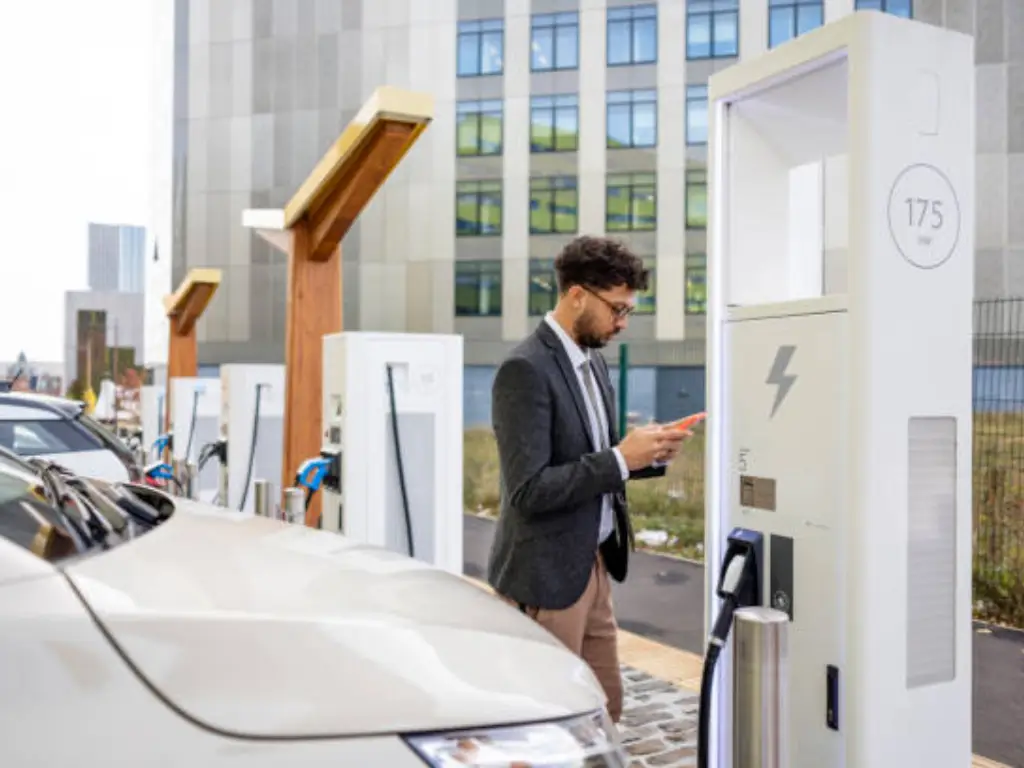
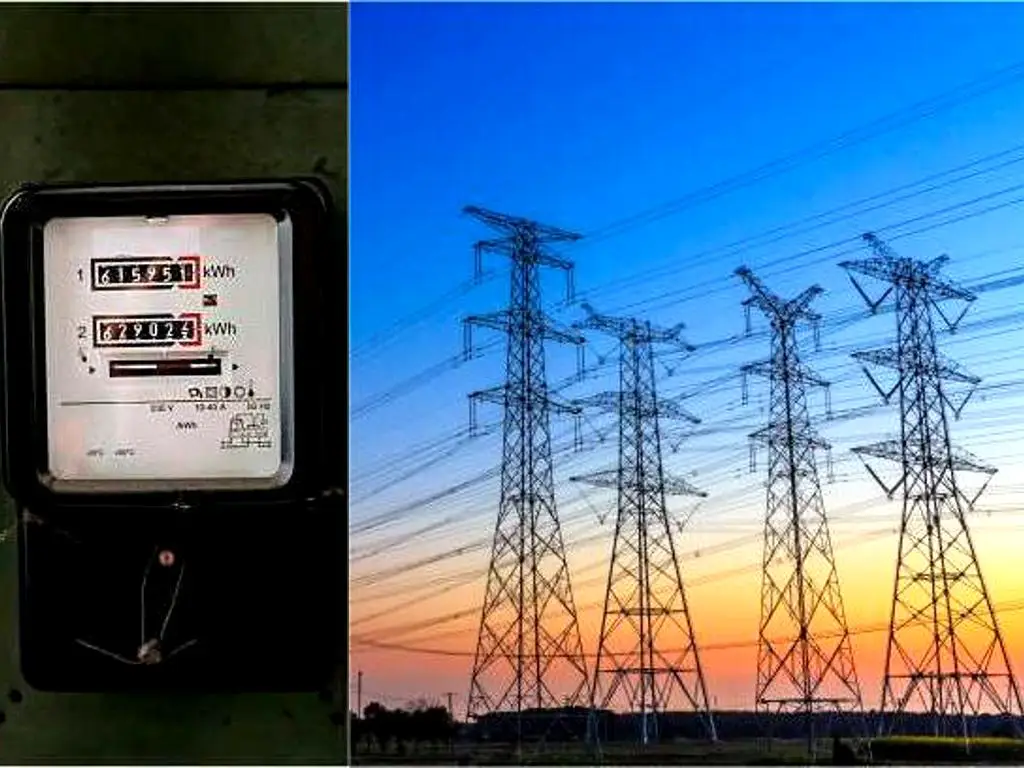
In contrast to single-family homeowners, apartment owners and tenants have a coordination issue characterized by complex infrastructure constraints and fragmented incentives. The logistics, liability, and high cost of major electrical upgrades often scare off landlords, leading to the common response of No. Tenants who cannot charge at home often delay EV adoption. This equation cannot be solved by enthusiasm alone; it needs a strategic alignment of user demand, owner investment metrics, and intelligent engineering. This discussion will disaggregate these barriers and provide a roadmap to trustworthy apartment EV charging that satisfies the utility requirements of both parties.
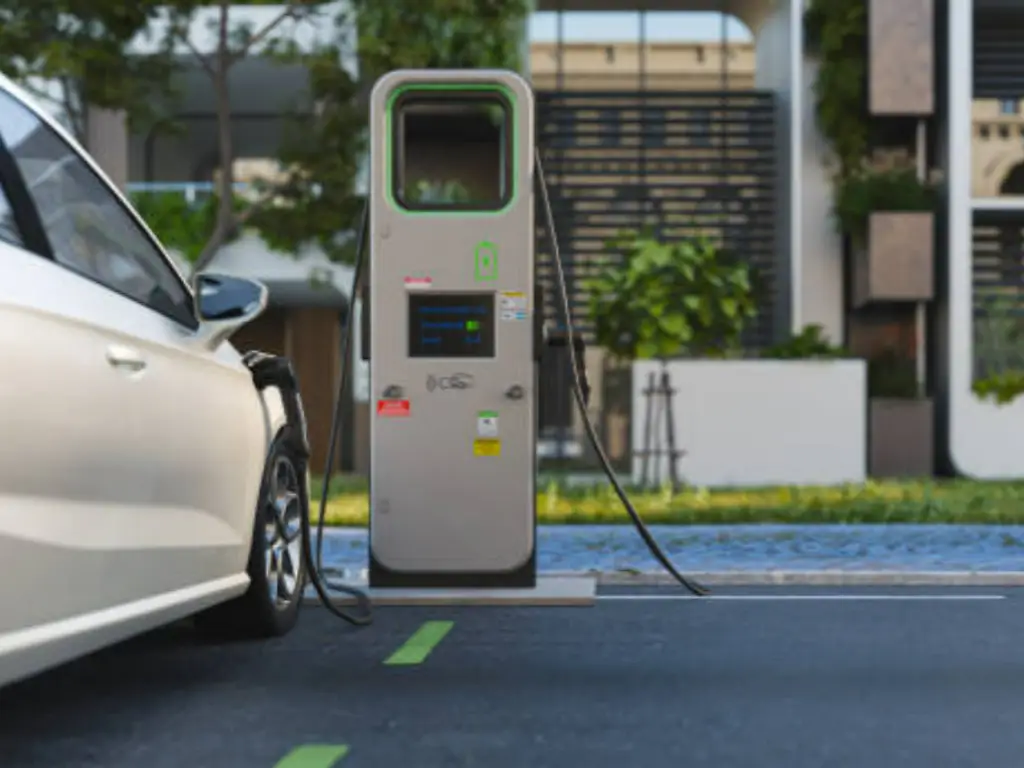
To interpret the decision to install Electric Vehicle Supply Equipment (EVSE), it is necessary to consider it not as a sunk cost or a charity facility, but as a capital enhancement that will address an increasing asset shortage. The economic argument of electrification in multi-family housing is strong, yet the value proposition is different among the two main stakeholders.
In the case of property investors and Homeowners Associations (HOAs), EV infrastructure integration must be considered in terms of asset management and competitive positioning.

To the residents, the utility role is determined by the economics of operation and integration of lifestyle.
The table below presents the unique value propositions of property owners and residents:
| Benefit Category | Landlord / Property Owner Value | Renter / Resident Value |
|---|---|---|
| Financial | New revenue streams; Tax credits (e.g., US 30C). | Lower fuel costs; Hedge against gas price volatility. |
| Operational | Reduced tenant turnover; Code compliance. | “Full tank” daily; No public station wait times. |
| Strategic | Green certification (LEED); Brand differentiation. | Extended battery life; Reduced carbon footprint. |
With the economic imperative in place, the strategic focus becomes asset selection. Not every charger is equally useful; the selection is largely determined by the dwell time. In apartment environments, cars are parked between 8-12 hours at night, which essentially changes the selection criteria to highway stops.
The following table is a comparison of the charging levels to show why Level 2 is the standard of MUDs:
| Feature | Level 1 (Trickle) | DC Fast Charging (Rapid) | Level 2 (The Standard) |
|---|---|---|---|
| Voltage | 120V (US) / 230V (EU) | 480V+ (3-Phase) | 208V – 240V |
| Speed | ~4 miles/hr | ~100-250+ miles/hr | ~25-40 miles/hr |
| Grid Impact | Negligible | Massive | Manageable (Scalable) |
| Cost | Minimal | Prohibitive ($50k+) | Moderate ($500 – $1,500) |
| Verdict | Emergency Only | Unsuitable | Optimal for Apartments |
After identifying the best hardware and the necessary intelligence capabilities, the second step is a stringent financial evaluation to make sure that the investment is within the budget and revenue objectives of the property. The financial feasibility of EV infrastructure is based on the proper modeling of both initial investment (CapEx) and operating expenses (OpEx) in the long term.
The biggest obstacle is usually the initial investment, which often deceives property owners who only consider the price of the charger itself.
Long-term expenses are foreseeable but have to be controlled using intelligent systems to make profits.
Government subsidies are the key to breaking the financial barrier of CapEx, especially the high and unpredictable cost of infrastructure upgrades. These programs worldwide offer financial subsidies that hasten the project’s return on investment (ROI). As an example, the 30C tax credit (US), KfW grants (Germany), and the OZEV grant scheme (UK) are specifically aimed at lowering the net cost of hardware and installation to property owners and businesses, occasionally to 80 percent of the cost. Proper CapEx modeling, along with the acquisition of these available government subsidies, is necessary to transform the charging system into a productive asset rather than a financial liability.
To illustrate the practical use of these costs and the need to be smart in planning, take the example of a 50-unit apartment building in a large metro area that intends to install 10 Level 2 chargers with a DLM solution.
| Component | Cost Type | Estimated Cost (USD) | Notes |
|---|---|---|---|
| Hardware (10 Chargers) | CapEx | $15,000 | Assumes $1,500 per OCPP-compliant unit. |
| Installation Labor | CapEx | $20,000 | Wiring, conduit, mounting, and dedicated circuits. |
| Infrastructure Upgrade | CapEx | $5,000 | Cost for installing Current Transformers (CTs) and necessary DLM hardware only; avoids full panel upgrade. |
| Total CapEx (Before Incentives) | – | $40,000 | – |
| Annual Network Fees | OpEx | $2,400 | Assumes $20/charger/month for CPO software access. |
| Annual Maintenance | OpEx | $2,000 | Covers software support and general upkeep (approx. 5% of hardware cost). |
| Net Annual Revenue Potential | OpEx | Positive | Revenue generated from resident usage fees (markup) must offset electricity and network fees. |
Government incentives heavily influence the determination of the Payback Period. As the case study above illustrates, the project’s upfront Capital Expenditure (CapEx) totals $40,000, while the Annual Operating Expenditure (OpEx) is approximately $4,400. Assuming a net annual revenue of $12,000 generated from resident usage fees (including electricity cost and a reasonable markup), the net annual profit is $7,600. Without any incentives, the project’s payback period is approximately 5.26 years. However, by leveraging global government subsidies and tax credits (which often cover 50% or more of the CapEx, reducing the net investment to $20,000 or less), the estimated payback period is drastically shortened to under three years. Once this break-even point is reached, the charging infrastructure is transformed into a pure profit center, continuously generating positive cash flow while significantly enhancing the property’s long-term market value and competitive edge.
The project is now in the execution phase, with the hardware specification complete. The process of EV infrastructure installation in a multi-unit setting is complicated and needs a systematic engineering strategy to overcome physical, electrical, and legal limitations. This is a 5-step roadmap that stakeholders should adhere to in order to have a smooth deployment.

The first step is a mandatory load calculation. The main switchboard of the building should be audited by the property owner or a qualified electrician to identify the spare electrical capacity. It is not merely a matter of looking at blank spaces in the breaker box, but a calculation using the National Electrical Code (NEC) or local equivalent to calculate the peak demand load. This test determines the physical maximum number of chargers that can be installed at once versus the number of chargers that need infrastructure upgrades.
After the capacity is known, the design phase deals with the physical layout. This is a decision between Wall-Mounts (which are best suited to garage pillars and are usually less expensive) and Pedestal Mounts (which are required in open lots but necessitate trenching, which is expensive). One of the critical decision points here is the Conduit Strategy. In retrofit situations, there is a common debate between concealing wires behind walls (costly, untidy) or installing surface-mounted conduit. Surface-mounted conduit is frequently the logical economic decision, with the practical cost-saving of the concealed aesthetic of wall-cutting.
Before any physical installation begins, final approval must be secured from local municipal bodies and the property governance structure (HOA/Landlord). This step involves demonstrating adherence to global and national standards regarding property alteration and liability.
Global Regulatory Checklist for Installation Approval:
| Region | Key Installation Compliance | Required Project Documentation & Liability |
|---|---|---|
| United States | Local Permits and Liability Insurance (Jurisdictional) | Mandatory proof of enhanced liability insurance naming the MUD/HOA as an additional insured; Requires submission of electrical plan by licensed professional. |
| Europe (EU) | EPBD Directives and IEC 60364 Electrical Standards | Requires submission of technical feasibility study and certification that the system meets fire and safety standards. |
| United Kingdom | Building Regulations Part S and Certified Installer Requirement | Proof of installer certification (e.g., OZEV authorized) and certification that the system meets required safety standards. |
| Australia | NCC and AS/NZS 3000 Wiring Rules | Requires detailed electrical plan submission and certification that spare capacity assessment was performed according to AS/NZS 3000. |
| Canada | Provincial Electrical Safety Codes and Condo Acts | Submission of engineering plan to the board; documentation proving compliance with local electrical safety authority and obtaining permits. |
This is the building stage in which the plan is put into action. The dedicated circuits will be operated by licensed electricians between the central panel and the parking spots. In the case of pedestal mounts, this is done by trenching asphalt to install underground conduits. Major safety precautions are taken here, such as the installation of emergency shut-offs and correct grounding. To avoid liability in the future, it is important to make sure that all work is done in accordance with local fire and electrical codes.
The hardware is installed, but the system is not commissioned until it is commissioned. This will include linking the chargers to the network (4G or Bluetooth), setting up the load management software, and testing the safety measures. The installer will also test the charging sessions to make sure that the billing software (OCPP) is recording the usage properly and that the chargers are communicating with the management platform.
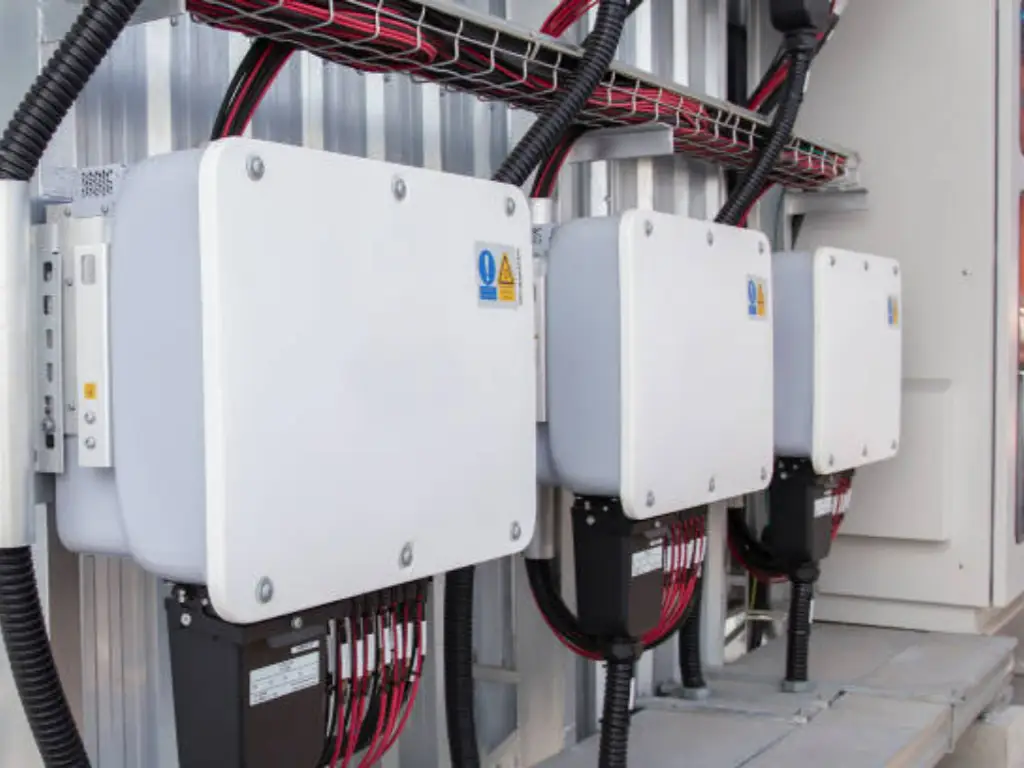
In most older structures, the Assessment process usually shows a “Capacity Wall”-insufficient amperage to power several EVs. As an example, an apartment complex built in the 1970s may have a spare capacity of 100 Amps, which mathematically restricts the building to only two chargers. The conventional remedy, which is to upgrade the main service panel to receive additional power on the utility grid, may cost tens of thousands of dollars, which is tantamount to killing the ROI of the project.
Rather than expensive physical upgrades, the solution lies in Dynamic Load Management (DLM). DLM is the larger plan of checking and regulating the energy flow throughout a property to avoid overloads. This is made possible by a particular mechanism of EVs, which is Dynamic Load Balancing (DLB).
DLB technology is used to track the overall energy use of the building in real-time. The system will automatically reduce the EV charging rate when the usage is at its peak (e.g., 6 PM when residents are cooking). It increases the charging speed again to maximum when the usage decreases (e.g., 2 AM). This transforms a hard hardware limitation into a software variable that can be safely adjusted, enabling a building to safely have 20 chargers on a panel that would have only been able to support two.
The battle is not won by successful installation, but the viability of the project in the long term is determined by a strong Operations and Maintenance (O&M) strategy. O&M in a multi-user environment is not just about the repairs, but also about the financial procedures, security, and community regulations that control the day-to-day use of the infrastructure. The following are some of the practical tips and best practices of sustainable operation.
Whether or not multi-unit housing can be electrified is no longer a question of how, but rather how effectively properties can change. With EV charging becoming a luxury and a necessity to own high-end real estate, the key to success lies in choosing infrastructure that is both safe and scalable.
BENY fills this gap by having more than 30 years of protection experience. We combine Type B RCD safety, industrial durability, and smart Dynamic Load Management to offer the strong backbone required in modern living. Get in touch with us today to find out more about EV charging in multifamily buildings and create a charging ecosystem as resilient as it is progressive.
© 2025 Apartment EV Charging Guide – Powering Multi-Unit Living