Navigating the complex landscape of electrical engineering requires a profound understanding of how protective components safeguard both infrastructure and operational continuity. In modern industrial and commercial power distribution, selecting the appropriate circuit breaker is never a trivial matter of matching basic amperage. It is a critical architectural decision that directly influences the safety of personnel, the longevity of expensive machinery, and the financial stability of the entire facility. Among the most debated selections in low-voltage panel design is the choice between a Miniature Circuit Breaker and a Molded Case Circuit Breaker. This comprehensive guide dismantles the technical barriers, exploring the absolute performance redlines, physical constraints, and commercial downtime implications that dictate exactly when and where each of these vital components must be deployed to ensure flawless system reliability.
The short answer to the MCCB and MCB debate
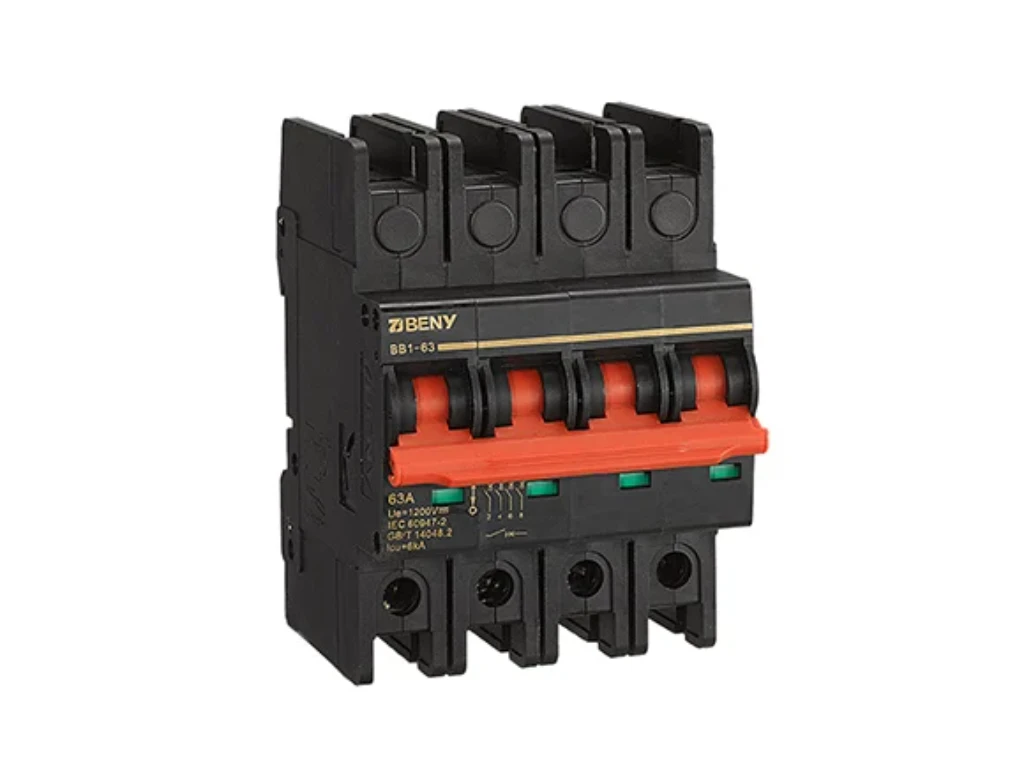
In the realm of electrical system design, the fundamental difference between a Miniature Circuit Breaker and a Molded Case Circuit Breaker establishes your facility’s baseline defense against catastrophic thermal and electrical events. You can conceptualize the miniature variant as a highly standardized, fixed-capacity lightweight goalie. It is engineered specifically for highly predictable, lower-tier faults where the environmental variables are tightly controlled. Conversely, the molded case variant operates as a highly adjustable, heavy defense tower. It is constructed with massive internal architectures designed to physically withstand and securely interrupt extreme short-circuit fault currents that would otherwise vaporize lesser components.
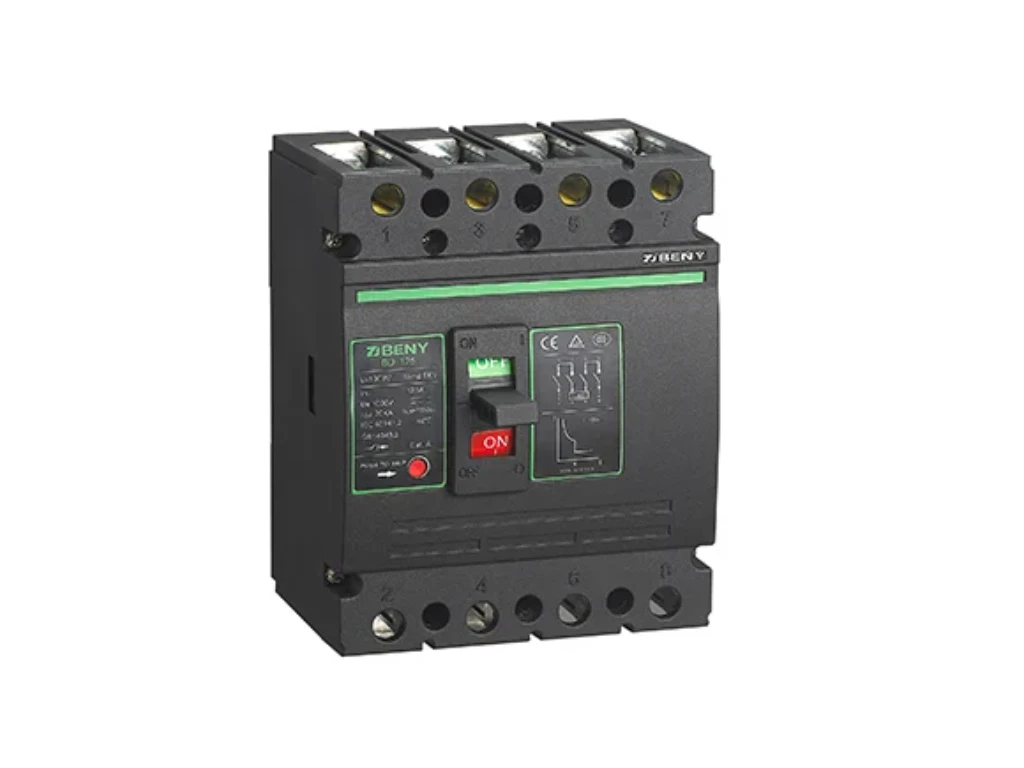
The industry-standard threshold separating these two devices is dictated by two absolute metrics: a continuous current of 125A, and an expected short-circuit fault level hovering around 15kA. Exceeding either of these metrics immediately mandates the heavier molded case solution. For instance, even if your localized continuous load is only drawing 63A, an anticipated short-circuit fault capacity of 35kA at that specific network node completely disqualifies the miniature breaker. To use a fluid dynamics analogy, the miniature breaker is akin to a pre-calibrated residential water valve handling standard municipal pressure, whereas the molded case breaker functions as a reinforced industrial sluice gate equipped with micro-adjustable flow control mechanisms capable of holding back a torrential flood.
Unpacking critical electrical performance and lifecycle metrics
When entering the deep waters of rigorous industrial engineering, physical panel space availability must always remain a secondary consideration. Electrical performance parameters and ultimate breaking capacities represent an absolute, non-negotiable redline. Attempting to compromise on these limits to achieve a more compact control cabinet is a direct violation of safety protocols. The distinctions detailed below are governed by the strict international frameworks of the IEC 60898-1 and IEC 60947-2 standards, forming the first definitive barrier in your component selection journey.
Voltage limits, current ratings, and breaking capacities
| Specification Parameter | Miniature Circuit Breaker (MCB) | Molded Case Circuit Breaker (MCCB) |
|---|---|---|
| Operating Current (In) | Up to 125A maximum capacity | Scales massively from 15A up to 2500A |
| AC Voltage Rating (Ue) | Typically standardized at 230V to 400V AC | Engineered for rigorous 600V to 1000V AC networks |
| DC Voltage (Solar PV Specific) | Up to 1000V DC strictly in specialized PV models | 1000V DC to 1500V DC for utility-scale solar arrays |
| Interrupting Capacity (Icu) | Physically capped between 10kA and 15kA | Massive suppression capability spanning 50kA to 150kA+ |
The interrupting capacity is not merely a compliance checkbox; it is quite literally a matter of facility survival. This metric dictates the absolute maximum short-circuit energy a breaker can safely absorb and interrupt without physically exploding, fracturing its housing, or welding its internal contacts permanently shut. In heavy industrial environments, fault currents can instantaneously spike beyond 35kA due to grid anomalies or massive equipment failure. In these high-stakes scenarios, the robust arc chutes and heavy silver-alloy contacts of the molded case breaker are the only things standing between a minor power blip and a devastating electrical fire.
Tripping curves: Fast magnetic response vs. coordination delay
The behavioral characteristics of these breakers under overload conditions are vastly different. Miniature breakers are characterized by their steep, unforgiving tripping curves. A minor overload reaching just 120 to 150 percent of the rated continuous current will activate the magnetic trip mechanism within mere milliseconds. This hyper-sensitive nature is intentional, aiming to isolate downstream appliance faults with extreme prejudice before the thermal damage can propagate upstream into the main wiring infrastructure.
Molded case breakers, however, introduce a sophisticated and vital feature for heavy industrial applications known as coordination delay. Large industrial motors and heavy transformers require immense amounts of energy just to overcome initial physical inertia. The molded case breaker can comfortably tolerate these inrush transients, which often spike up to eight times the rated running value, for an adjustable period of 500 milliseconds or even longer. If you attempt to power up a heavy industrial lathe using a highly reactive miniature breaker, the initial inrush current will cause an immediate nuisance trip, paralyzing your production line. The larger breaker intelligently waits out this harmless starting surge, perfectly balancing critical fire protection with the necessity of uninterrupted manufacturing output.
Maintenance frequency and expected lifespan
- The Replaceable Consumable Miniature breakers are manufactured as entirely sealed, non-serviceable injection-molded units. They carry an expected operational lifespan of roughly ten to fifteen years under ideal indoor conditions. However, if they are deployed in environments with excessive moisture, highly fluctuating temperatures, or corrosive industrial gases, this lifespan degrades rapidly. When a unit eventually fails or becomes heavily compromised by a fault clearance, it holds absolutely zero maintenance value. It must be unclipped from the rail and discarded, requiring a full replacement strategy.
- The Maintainable Asset Molded case breakers are treated as long-term capital assets within a facility’s infrastructure. Safety audits and operational best practices mandate that qualified electrical personnel perform rigorous preventative maintenance on these units every three to five years. This maintenance protocol includes verifying the integrity of the heavy terminal connections, checking contact alignment, lubricating the internal moving mechanical linkages, and physically triggering the manual reset buttons to validate the mechanical tripping threshold. This proactive lifecycle management ensures the backbone of the electrical grid remains resilient.
Physical footprint, configurations, and installation methods
Once the absolute electrical redlines have been established and satisfied, the secondary challenge of control panel layout and installation efficiency comes into sharp focus. Miniature breakers are designed strictly around the EN 43880 standard, which dictates a highly compact format where a standard single-pole module measures exactly 18mm in width. This modularity allows panel builders to calculate space requirements with pinpoint accuracy. For installation, they utilize standard rear clips that allow electricians to rapidly snap the units onto a standardized 35mm DIN rail. The wiring interfaces rely on standard box lug or cage clamp terminals, which are perfectly suited for securing standard gauge electrical wires quickly and safely.
In stark contrast, molded case breakers demand significantly larger volumetric footprints due to their heavily reinforced insulating housings, massive internal arc quenching chutes, and the mandatory spacing required for safe thermal heat dissipation. Depending on the amperage frame, their physical width can range anywhere from 52mm for compact versions up to an imposing 140mm for high-capacity feeder units. You will not find DIN rail clips on these heavy-duty devices. Instead, they require a dedicated, ventilated flanged chassis mounting system. Electricians must utilize heavy-duty nut and bolt connections to directly anchor the breaker’s terminals to the primary copper busbars of the distribution cabinet. A major architectural advantage here is that modern intelligent molded case breakers allow engineers to order flexible two, three, or four-pole configurations within standardized frame sizes, enabling perfectly tailored protection for complex three-phase industrial networks without unnecessarily inflating the panel size.
Where standard miniature breakers do the job perfectly
Financial prudence in electrical design dictates that overspecification is a direct waste of operational capital. There are vast sectors of infrastructure where deploying a heavy-duty breaker is not only unnecessary but economically unjustifiable. Miniature circuit breakers are the flawless, highly efficient choice in predictable, low-fault-risk environments. This primarily encompasses residential distribution panels, small commercial building lighting circuits, and the isolated, low-power control circuitry hidden inside heavy industrial automation cabinets.
When the electrical load is purely resistive, highly stable, well understood, and operating comfortably below the 125A threshold, the compact DIN-rail mounted breaker provides the fastest, most cost-effective line of defense. Attempting to force larger, more expensive protection devices into these localized, low-risk network nodes offers zero additional functional benefits while severely complicating the physical wiring and inflating the project budget.
If you want to explore miniature breakers further, check out our blog on What is MCB? A Complete Guide to Types, Selection, and Reliability.
Scenarios that demand the heavy-duty protection of molded case breakers
Conversely, downgrading to a smaller breaker in high-stress, high-energy environments is an invitation to catastrophic systemic failure. There are definitive redline scenarios where molded case breakers are an absolute, uncompromising necessity. These include industrial machinery centers, motor control centers, utility-level substations, and the massive array combiner boxes utilized in commercial solar power plants.
Consider the critical junction located immediately downstream of a facility’s main step-down transformer. In the event of a dead short circuit in this primary feeder zone, the sheer volume of electrical energy converging on that point is staggering. A standard DIN-rail breaker placed in this position would act as little more than a paper shield; the electromagnetic forces and explosive thermal plasma generated by the fault would instantly bypass the device, triggering a massive electrical fire. Only the substantial structural integrity, immense arc chutes, and robust silver-alloy contact pads of a molded case breaker possess the physical capability to absorb, suppress, and safely extinguish that level of destructive energy.
To dive deeper into these robust devices, please check out our blog on What Is MCCB? Types, Functions, and Applications Explained.
Using both in the same system for selective coordination
Mastering top-tier electrical architecture means understanding that you are rarely forced to make a binary, either-or choice between these two technologies. The true art of advanced system design lies in the principle of selective coordination. This strategy involves arranging protective devices in a cascaded hierarchy so that a localized fault will trip only the breaker immediately upstream of the problem, effectively isolating the danger while leaving the main power trunk online to support the rest of the facility.
Designing commercial EV charging hubs
A prime example of this synergy is found in multi-station commercial electric vehicle charging hubs. At the apex of the system, the main distribution board incomer relies on a heavy-duty 400A molded case breaker equipped with a precise, adjustable time delay mechanism. However, as the power splits off into individual branch circuits feeding the 22kW alternating current chargers, the engineering rules change. These specific branches must strictly utilize C-curve miniature breakers. This is because the onboard chargers inside electric vehicles do not generate the massive, heavy inductive inrush currents associated with industrial motors. Utilizing a delayed curve breaker here would cause dangerous protection lag. Furthermore, these specific miniature breakers must be systematically paired with Type B residual current devices to satisfy the extremely strict commercial compliance codes regarding direct current leakage. Through this coordinated setup, if one specific charging cable experiences a severe internal short, its local miniature breaker trips instantly, while the main distribution breaker holds its ground, ensuring the dozen other vehicles in the hub continue charging without interruption.
Protecting industrial battery storage systems (BESS)
The concept of selective coordination is equally vital in the rapidly expanding sector of utility-scale solar and battery energy storage systems. The main power conversion system, which acts as the massive gateway connecting the battery banks to the external AC power grid, operates in a highly volatile electrical environment. Here, the grid-tie connection point mandates a molded case breaker with an exceptionally high breaking capacity to absorb sudden voltage spikes and frequency anomalies from the utility grid. Concurrently, deep inside the physical storage containers, the vital auxiliary systems such as the thermal management HVAC units, localized lighting, and ventilation exhaust fans are safely and efficiently managed by tightly packed arrays of DIN-rail miniature breakers.
Engineering Insight: Securing the High-Voltage DC Infrastructure
In complex alternating current and direct current hybrid storage architectures, the localized direct current side faces extreme arc risks. The high-frequency switching operation of heavy string inverters and advanced microinverters places immense thermal stress on the wiring topology. Relying on standard, off-the-shelf components in these high-voltage nodes is a fatal engineering oversight that regularly leads to catastrophic site fires.
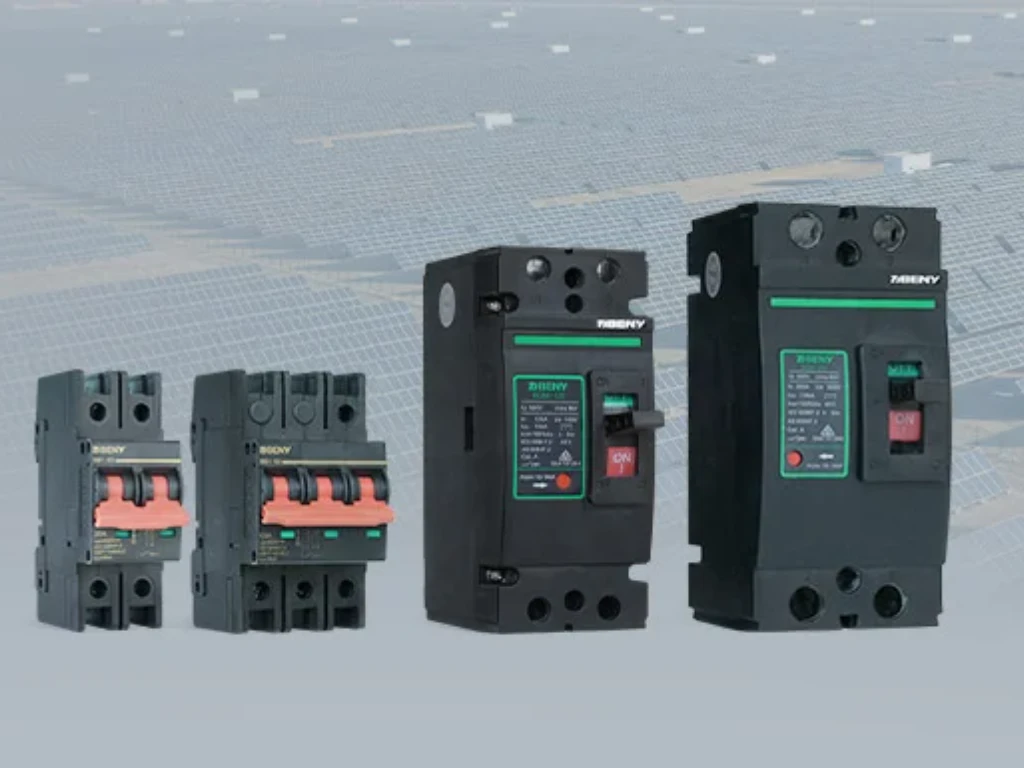
To eliminate these profound deployment risks, top-tier engineering procurement and construction contractors integrate specialized components engineered exclusively for extreme 1500V DC environments. Utilizing BENY’s exclusive patented 1500V non-polar direct current circuit breakers alongside their SunSpec-certified rapid shutdown devices transforms the safety profile of the entire installation. The genius of the non-polar design is that it completely eradicates the risk of catastrophic fires caused by reverse polarity wiring errors made by fatigued installation teams on-site. Built with premium flame-retardant materials and an ultra-fast three-millisecond arc-extinguishing mechanism, this zero-defect protection layer ensures perfect power quality coordination with the main AC distribution board, empowering massive distributed power stations to operate flawlessly even in the most unforgiving outdoor climates.
Analyzing the cost premium: Are MCCBs worth it?
When procurement managers begin analyzing the 63A to 100A crossover zone where both breaker types technically overlap in continuous current capacity, they immediately notice a jarring financial discrepancy. A certified, industrial-grade molded case circuit breaker typically carries a staggering three hundred to five hundred percent cost premium over a miniature circuit breaker possessing the exact same continuous amperage rating. This prompts a critical business question: is the enterprise merely paying an exorbitant markup for a larger plastic housing and thicker copper tabs?
The answer lies in penetrating beyond the initial capital expenditure and evaluating the crushing reality of downtime costs. You are not purchasing heavier plastics; you are purchasing the ultimate elimination of prolonged operational paralysis. When a severe, maximum-capacity short-circuit impacts a miniature breaker, the immense thermal energy often causes the internal metal contacts to irreversibly melt and fuse together. The breaker sacrifices its own life to save the wire. The entire production line must then be powered down, isolated, and locked out while technicians wait for replacement parts to physically swap out the destroyed unit. Conversely, a molded case breaker absorbs that identical kinetic and thermal blow, safely vents the expanding arc gases through its specialized chutes, and survives intact. In most scenarios, restoring full facility power simply requires a technician to manually toggle the heavy operating handle back to the reset position. This capability for rapid, almost immediate operational recovery is the true return on investment that justifies the heavy cost premium.
A quick checklist to finalize your component selection
Transitioning from theoretical electrical physics to actionable procurement requires a streamlined decision-making process. Utilize this rapid diagnostic checklist to lock in the correct component specification for your specific network node without succumbing to either dangerous under-specification or wasteful over-engineering.
- Evaluate the baseline load requirement. Is the expected continuous operating current strictly above 125A, or is the localized expected short-circuit fault level verified to be above 15kA? If either condition is true, safety standards mandate the heavier molded case solution.
- Analyze the load characteristics for motor inrush. Does the circuit need to accommodate the startup surges of heavy industrial machinery, thereby requiring a 500-millisecond coordination delay to prevent nuisance tripping? If so, the molded case breaker is the only viable option.
- Review the facility compliance and maintenance policies. Does your site safety audit mandate a rigorous three-to-five-year mechanical maintenance protocol involving physical verification of the trip mechanisms? If maintenance logging is required, the molded case asset is necessary.
- Assess the physical installation environment. Is the targeted circuit a standard, highly stable resistive load that must be rapidly installed within the extremely tight physical constraints of a standardized DIN-rail panel? If yes, the miniature breaker is your ideal choice.
Navigating the Gray Area in Multi-Tier Architectures?
Does your upcoming facility design involve complex multi-level interlocking protection, or require precise upstream and downstream logic coordination alongside high-frequency conversion architectures like advanced microinverters? Trial and error in these complex, heavy-duty electrical ecosystems carries an astronomical financial risk.Bypass the grueling guesswork and leverage BENY’s thirty-plus years of specialized electrical engineering expertise. Backed by twelve highly automated production lines and an arsenal of over seven hundred proprietary manufacturing molds, our dedicated expert team can deliver a preliminary short-circuit cascade analysis within twenty-four to forty-eight hours. For large-scale deployments, we provide complete, custom energy management blueprints in just two weeks. With a global around-the-clock technical response network and a solid three-year warranty, we ensure your project scales flawlessly from initial prototype to rigorous IEC and UL compliant deployment. Request a Custom Cascade Analysis Today
Conclusion on Optimizing Circuit Protection
Mastering the distinct operational boundaries between miniature and molded case circuit breakers is the hallmark of resilient industrial design. While the smaller DIN-rail modules provide unmatched efficiency and rapid deployment for stable, low-amperage terminal circuits, the heavy-duty molded case variants stand as the ultimate bulwark against devastating grid faults and costly operational paralysis. True engineering excellence is achieved not by choosing one over the other globally, but by orchestrating their strengths through meticulous selective coordination. By accurately assessing your short-circuit vulnerabilities, motor inrush demands, and the true cost of facility downtime, you can construct a highly optimized, fully compliant electrical architecture that guarantees both maximum safety and relentless production continuity.