As global electric vehicle penetration crosses the tipping point in 2026, charging costs are no longer just simple utility bills. They have evolved into a complex financial game involving geographic regulations, time-based algorithms, long-term battery health, and commercial infrastructure returns on investment. For Tesla owners, the Supercharger network once represented pure convenience, but the pricing rules are becoming increasingly intricate. When new EV drivers ask how much does it cost to use a tesla supercharger, they quickly realize the answer requires more than a simple number. This guide dissects the true cost structure of Tesla Supercharging, from micro-level road trip bills to macro-level business-to-business capital expenditures. Whether you are a daily commuter seeking to lower your travel expenses or a commercial real estate operator evaluating charging station profitability, you will find the fundamental economic logic and actionable strategies you need to master the charging ecosystem right here.
So, How Much Does a Tesla Supercharger Actually Cost?
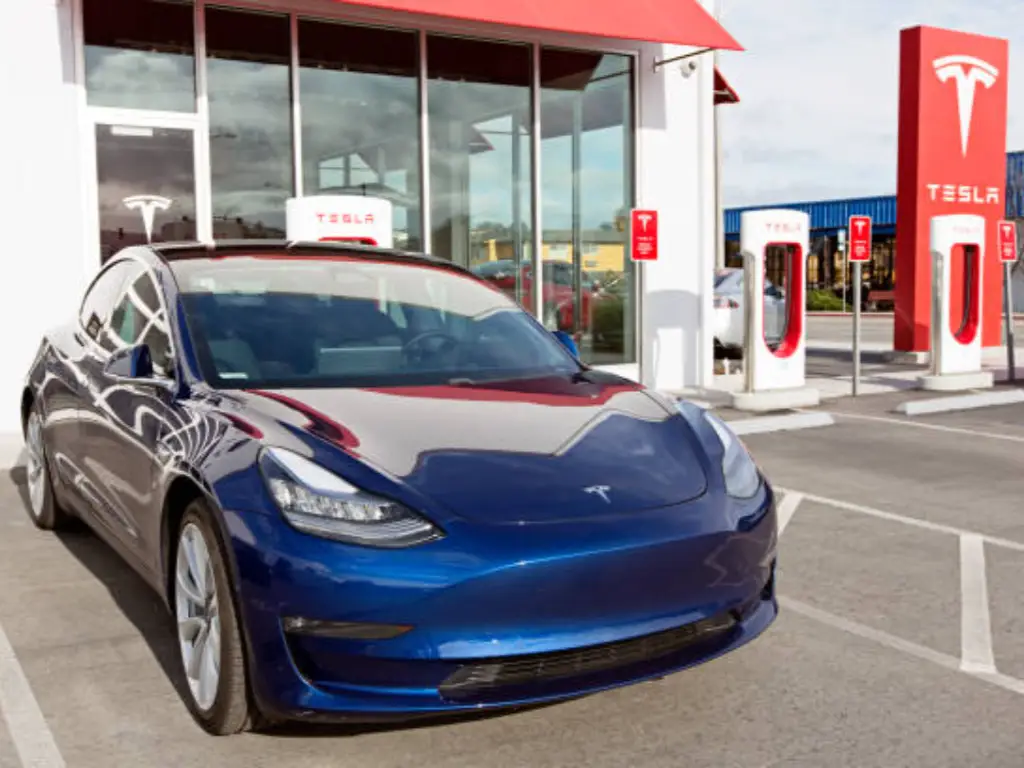
Giving a single flat rate for an electric vehicle charge is mathematically impossible today. Building upon the baseline tesla supercharger cost per kwh 2025 data, current rates show massive geographic variance, typically fluctuating between $0.25 and $0.60 per kilowatt-hour depending on the state and local grid capacity. To instantly clarify the financial gap between different charging methods, we must establish a baseline. Assuming you drive the ubiquitous Tesla Model Y Long Range on a standard highway journey, charging from 20% to 80%—the most physically optimal charging curve for lithium-ion cells—will generally cost you between $18 and $25.
| Fueling Method | Estimated Rate | Cost per 100 Miles | Scenario Evaluation |
|---|---|---|---|
| Tesla Supercharger (Peak Hours) | $0.52 / kWh | $14.56 | Maximum speed, but operational costs approach gasoline vehicles. |
| Tesla Supercharger (Off-Peak) | $0.28 / kWh | $7.84 | The golden financial equilibrium for long-distance highway travel. |
| Standard ICE Vehicle (28 MPG) | $3.65 / Gallon | $13.04 | The legacy baseline currently outclassed by efficient charging models. |
| Home Level 2 AC Charging | $0.16 / kWh | $4.48 | The ultimate financial fortress for electric vehicle owners. |
| Vehicle Segment | Estimated Battery Capacity | 20% to 80% Session Cost (Avg. $0.35/kWh) |
|---|---|---|
| Model 3 / Model Y (Long Range) | ~80 kWh | $15.00 – $22.00 |
| Model S / Model X (Long Range) | ~100 kWh | $20.00 – $28.00 |
This immediate visual comparison reveals a critical truth. Relying exclusively on peak-hour Supercharging pushes your travel costs dangerously close to driving a traditional gas-powered vehicle. However, integrating home charging or off-peak travel strategies exponentially increases your economic advantage over internal combustion engines.
The Billing Standard: Per-kWh vs. Per-Minute Tiers
How you are billed at a Tesla Supercharger depends entirely on local utility regulations, resulting in two distinct billing methods across the network: per-kilowatt-hour and per-minute.
The most common and straightforward method relies on a direct tesla supercharger cost per kwh, where you pay strictly for the volume of electricity your battery consumes, regardless of how long the charging session takes. This is the fairest and most transparent pricing model. However, in certain jurisdictions like Texas, state laws prohibit non-utility companies from selling electricity by the kilowatt-hour. To comply, Tesla uses per-minute billing.
The per-minute method divides charging speeds into four tiers based on the kilowatt delivery rate. Tier 1 applies to speeds below 60kW at a lower per-minute cost, while Tier 4 applies to extreme fast-charging speeds above 180kW at a much higher per-minute cost. Interestingly, because Tier 4 fills your battery exponentially faster, the total session bill is often cheaper than lingering in the lower tiers.
Why Do Prices Fluctuate? Understanding Peak and Off-Peak Rates
Supercharger rates are highly dynamic, rather than static. The final cost of your charging session is primarily driven by two major factors: geographic location and the time of day.
First, location dictates the baseline cost. A Supercharger in downtown San Francisco will always cost significantly more than one in rural Ohio. This is because Tesla passes the local commercial electricity rates, regional taxes, and site-specific infrastructure maintenance costs directly to the consumer. Different states and cities simply have different base costs for energy.
Second, Tesla utilizes Time-of-Use pricing to manage grid congestion at busy stations. Electricity costs more when overall grid demand is high. During peak hours, typically between 4:00 PM and 9:00 PM, you will pay a premium surcharge. Conversely, charging during off-peak hours, such as midnight to 4:00 AM, unlocks heavily discounted rates. By utilizing the Tesla application to review pricing tiers before arriving, you can strategically schedule your stops during off-peak windows and effectively cut your fuel budget in half.
The Idle Fee Trap (And How to Avoid It)
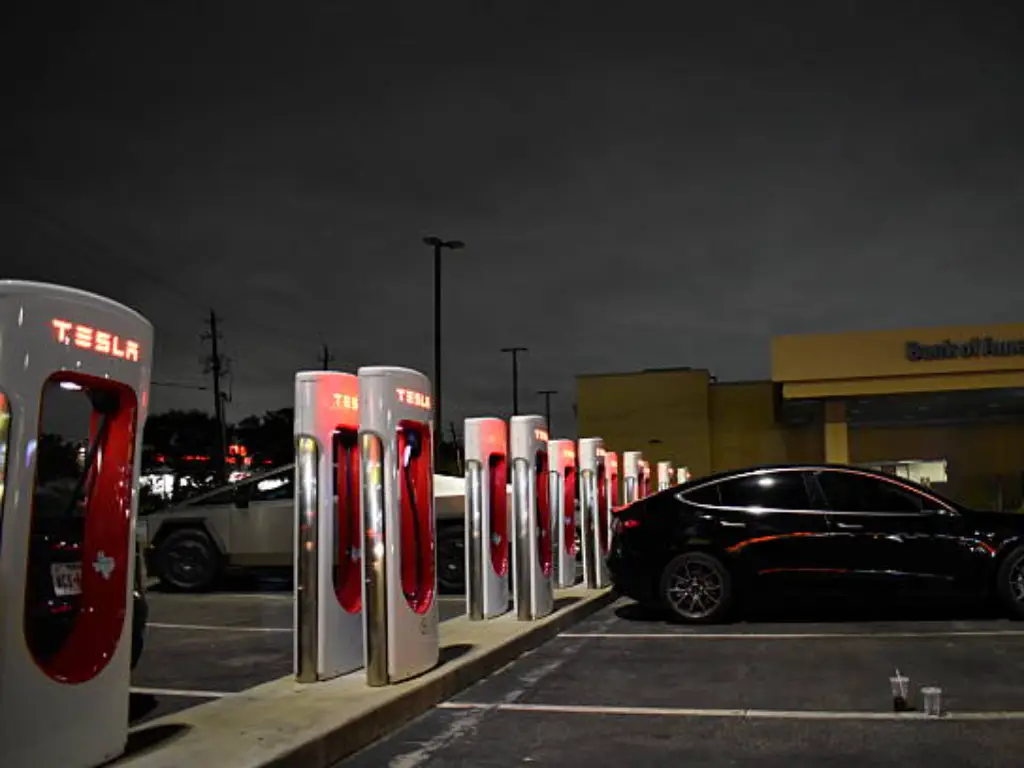
Idle fees represent a strict financial boundary designed to ensure network turnover and prevent charging stalls from being used as VIP parking spaces. They are also the most common monetary trap for new owners. Once your vehicle reaches its predefined charge limit, a brief five-minute grace period begins. If the car remains plugged in after this window and the station is more than half full, idle fees accrue at $0.50 per minute. If the station is at absolute full capacity, this penalty instantly doubles to $1.00 per minute.
Leaving your vehicle connected while finishing a restaurant meal or browsing a shopping mall could easily result in a $60 penalty upon your return. This amount frequently exceeds the cost of the electricity itself. Furthermore, these fees trigger the moment your car hits its specific charge limit, even if you configure the vehicle to stop at 80% rather than waiting for a full battery. You must unplug immediately when your target is reached.
Charging a Non-Tesla? Here is Your Bill
As the Supercharger network aggressively opens to brands like Ford, GM, and Rivian via the Magic Dock and NACS integration, non-Tesla owners are entering a completely different financial agreement. By default, charging a non-Tesla vehicle incurs a premium surcharge, often adding $0.10 or more per kilowatt-hour. This markup helps subsidize the development costs of cross-brand compatibility and protects the charging experience of native Tesla owners. To bypass this premium, Tesla offers a $9.99 monthly subscription that unlocks standard native pricing for anyone.
The breakeven calculation for this subscription is purely mathematical. If your non-Tesla vehicle consumes more than 100 kilowatt-hours per month at Superchargers—which is roughly equivalent to two and a half full charges—the monthly fee pays for itself immediately. Non-Tesla owners must also navigate physical barriers; due to varied charging port locations, some vehicles are forced to occupy two parking spaces to reach the cable, a friction point that may eventually attract specific commercial surcharges.
The Real Cost Per Mile: A Multi-Scenario Audit
To accurately assess the cost per mile and build a reliable tesla supercharger cost calculator for your own household, we must abandon static figures and model real-world scenarios. Charging costs are heavily dictated by your specific living situation and driving habits. The financial outcomes drastically change based on whether you are traversing the country or commuting across a city.
Scenario A: The 1,000-Mile Road Trip (Supercharger Only)
During a cross-country journey relying entirely on the fast-charging network, a Model Y consuming 28 kilowatt-hours per 100 miles will require roughly 280 kilowatt-hours of total energy. At a national average rate of $0.35, this costs approximately $98. In contrast, a comparable internal combustion engine SUV like a BMW X3 would consume about $125 in gasoline. The electric vehicle maintains a clear advantage, though the financial margin on the highway is narrower than most prospective buyers assume.
Scenario B: The Apartment Dweller Penalty
Drivers living in urban apartments without access to overnight charging face a distinct financial burden. Commuting 1,000 miles a month purely on Superchargers means consuming around 280 kilowatt-hours at high commercial rates. While still slightly cheaper than fueling a gasoline car, these drivers lose the ultimate economic advantage of electric vehicle ownership. They absorb higher monetary costs and subject their vehicles to unnecessary battery stress, making public Level 2 chargers a necessary alternative for financial survival.
Scenario C: The Home Charging Fortress
Home charging represents the true financial moat of the electric vehicle ecosystem. When 90% of your charging occurs overnight in your garage at the national average residential rate of $0.16 per kilowatt-hour, the fuel cost for a 1,000-mile journey plummets to roughly $45. This translates to barely a third of the cost of operating a traditional gasoline vehicle, shielding you entirely from dynamic commercial pricing.
Fortify Your Home Grid Without Compromise
While residential electricity is incredibly inexpensive, standard high-power AC chargers pose a hidden threat to older homes. They can easily overload the electrical panel and trigger breakers when household appliances run simultaneously. Furthermore, basic chargers fail to capitalize on the ultimate cost-saving opportunity: rooftop solar arrays.
Engineered specifically for grid stability, matching residential split-phase limits with built-in Dynamic Load Balancing.
Fully compatible with solar systems, allowing you to charge your vehicle using pure sunshine to hit $0 cost.
Aerospace-grade PC/ABS enclosure operating flawlessly in conditions from -40°C to 85°C.
The BENY AC EV Charger transforms your residential infrastructure. It actively monitors your home’s total power draw and adjusts current in real-time, completely eliminating the risk of grid overloads.
Upgrade Your Home ChargingThe Hidden Cost Nobody Talks About: Battery Degradation
A frequently ignored expense of Supercharging is physical hardware depreciation. Direct Current Fast Charging generates immense heat within the battery pack. While the vehicle’s thermal management system works tirelessly to mitigate this, exclusively relying on high-power chargers accelerates chemical wear. Specifically, the extreme temperatures lead to accelerated SEI layer growth and severe cathode degradation.
This microscopic damage permanently reduces your maximum driving range over time. If daily fast charging degrades your battery by an extra 5% over three years, the resulting loss in resale value can far exceed any money saved by utilizing off-peak rates at a local Supercharger. The most financially sound strategy is to rely on slow AC charging for daily driving and reserve fast charging strictly for long-distance travel where time is the priority.
Pro Tips for Cheaper Charging on Your Next Road Trip
To maximize your savings and preserve your battery health on your next cross-country journey, implement these operational guidelines:
- Native Navigation Always use the vehicle’s native navigation to route to the Supercharger. This triggers battery preconditioning, bringing cells to the optimal temperature to accept the highest charging tier.
- The 80% Rule Disconnect once it reaches 80%. The charging curve drops dramatically after this, making the final 20% mathematically inefficient and increasing idle fee exposure.
- Grid Scheduling Plan stops around the grid’s schedule. Avoiding late afternoon and early evening guarantees lower rates and faster speeds without waiting in line.
Behind the Scenes: What Does It Cost to Build a Supercharger?
Transitioning from consumer expenses to commercial realities, the Supercharger network is a marvel of capital efficiency. Commercial real estate owners and fleet operators frequently question the true infrastructure costs behind these stations, hoping to capture a share of the expanding electric vehicle charging market.
Hardware Costs: Tesla’s Unfair Advantage
Legacy charging networks often face hardware costs exceeding $100,000 per stall. Tesla operates on a completely different financial plane. According to official grant data from the Texas Volkswagen Environmental Mitigation Program, the hardware cost for a single Tesla Supercharger stall is remarkably low, documented at approximately $43,000. This dramatic cost reduction is achieved through extensive prefabrication, where charging cabinets and stalls are mounted onto concrete slabs at the factory.
Site Prep, Grid Upgrades, and Soft Costs
The charging hardware represents only a fraction of the total deployment cost. Supplying megawatt-level power for eight rapid charging stalls requires massive utility coordination. Upgrading transformers and completing complex underground trenching can add hundreds of thousands of dollars to the capital expenditure. Furthermore, commercial operators face aggressive Demand Charges from utility companies, where a brief fifteen-minute spike in power usage can drastically inflate the entire month’s operational expenses.
Replicate Big-Tech CapEx Without the Closed Ecosystem
Independent commercial property owners and fleet managers lack Tesla’s proprietary supply chain. Building a profitable network requires industrial-grade hardware with an optimized Total Cost of Ownership profile.
Utilizes an open OCPP protocol platform, completely eliminating expensive annual software fees and keeping OpEx incredibly low.
Innovative liquid and air cooling combined with internal leakage protection extends lifespan and slashes maintenance expenses.
The BENY Commercial DC Fast Charger lineup (30kW to 600kW) serves as the ultimate business-to-business alternative. Supported by 30 years of electrical expertise, ensuring maximum uptime for commercial deployment.
Download 2026 Commercial CapEx Calculator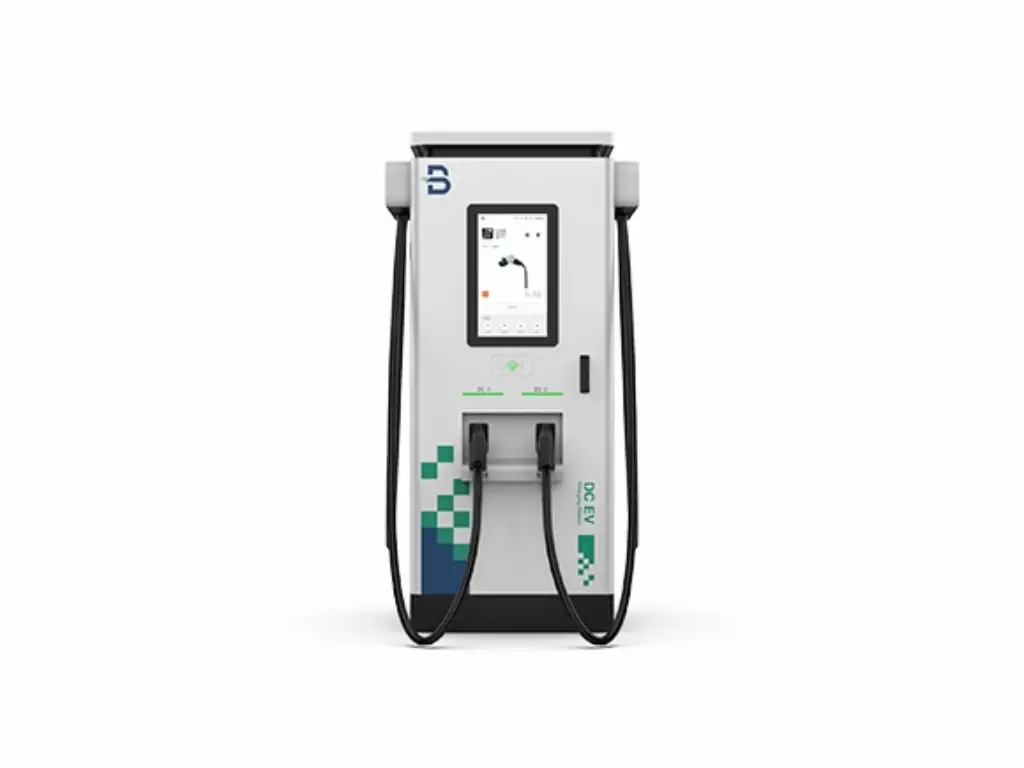
Conclusion: The Future of Your Wallet and the Grid
As we analyze the charging landscape in 2026, it is abundantly clear that the economic benefits belong to those who understand the underlying rules of the grid. For individual drivers, smart home charging remains the ultimate financial stronghold, while the fast-charging network serves as an essential strategic resource for long-distance travel. For commercial investors, replicating low infrastructure costs does not require surrendering to a closed ecosystem; leveraging independent, highly engineered hardware solutions allows you to build a profitable energy center on your own terms. The future of driving is about finding the optimal financial equilibrium amid fluctuating grid pricing and hardware depreciation curves.