This paper gives a detailed description of the MCCB, its construction, working principles, types, and uses in various applications, including both conventional AC and modern DC power systems.
A Molded Case Circuit Breaker (MCCB) is a type of electrical protection device that is used to interrupt the flow of current once a fault has been detected. It is named so because of its housing, which is made of a non-conductive, durable molded material, usually a thermosetting composite plastic. This enclosure not only insulates all internal current-carrying parts, but also gives high mechanical strength to resist the large thermal and magnetic forces produced in the event of a short circuit conditions.
An MCCB has two main protective functions, which include overload protection and short circuit protection. An overload is a situation in which the current flowing through the circuit is greater than the rated current carrying capacity of the circuit over a long period of time, which causes conductors and equipment to overheat. A short circuit is a much more serious occurrence in which current flows in an unwanted and low-resistance path, causing a very high and almost instantaneous current spike. The MCCB is designed to differentiate between the two conditions and respond accordingly to disconnect the circuit and avoid catastrophic failure. In addition, it can be switched manually, so that personnel can de-energize a circuit to perform maintenance.
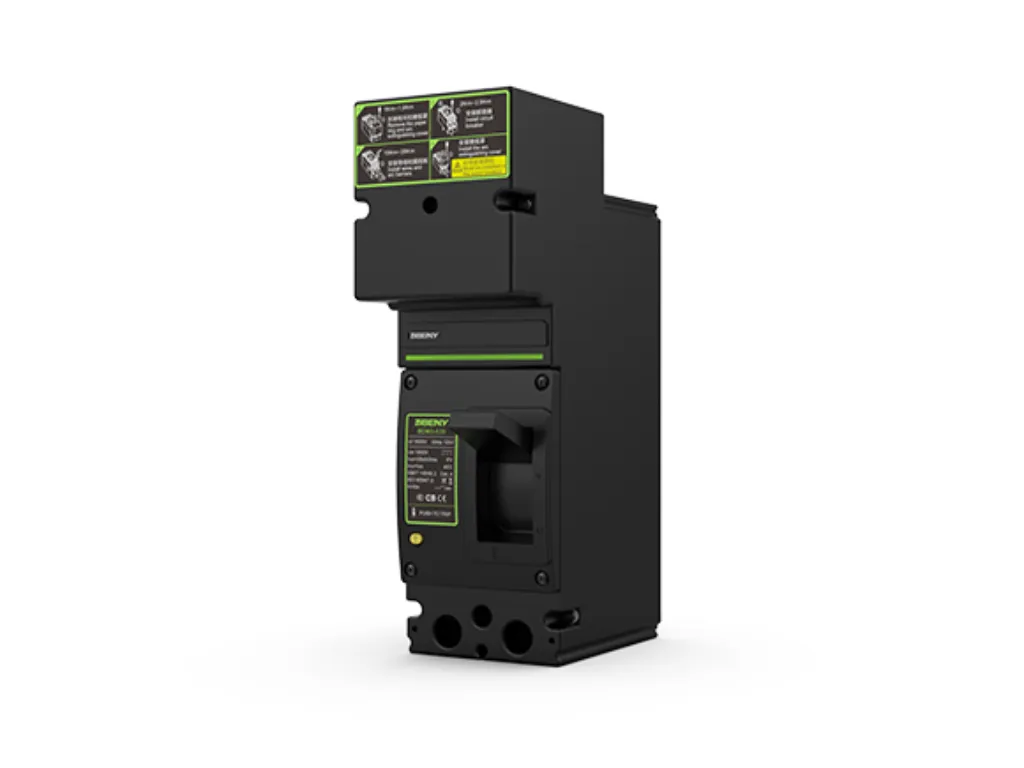
The quality of the internal construction and the quality of the components of an MCCB are the direct results of its reliability and performance. Although the designs differ among manufacturers, all MCCBs have a common set of critical electrical components, each designed to perform a particular task.
The trip unit of an MCCB controls the automatic protective action of the MCCB, and is usually based on a thermal-magnetic principle, or electronic sensing.
There are two mechanisms that operate simultaneously in a typical thermal-magnetic MCCB. The overloads are supposed to be addressed by the thermal protection mechanism. It uses a bimetallic strip that is made of two metals that have varying thermal expansion rates. When an overcurrent is passed through the strip, it heats. This makes the strip bend at a rate that is predictable. When the overcurrent is sustained long enough, the strip will bend enough to physically operate a latch, which will cause the operating mechanism to trip and open the contacts. The mechanism has a time lag in it, so that it can disregard harmless, temporary inrush currents, like that of a motor starting.
The magnetic protection system is intended to react immediately to high short-circuit currents. It is made up of an electromagnet. The large and sudden surge of current flow during a short circuit produces a strong magnetic field in the coil. This field causes an armature to be pulled instantaneously and the operating mechanism is unlatched. This is almost an immediate action that the circuit is disconnected within milliseconds to reduce the destructive power of the fault. These two principles combined offer complete coverage of the entire range of overcurrent events. Although these principles of sensing are universal, the MCCBs themselves are much different in design, with a DC MCCB being designed to interrupt a continuous fault current, which is much harder than interrupting an AC current that naturally crosses zero.
While both MCCBs and Miniature Circuit Breakers (MCBs) are overcurrent protection devices, they are designed for vastly different specific applications and have distinct characteristics.
| Feature | MCB (Miniature Circuit Breaker) | MCCB (Molded Case Circuit Breaker) |
|---|---|---|
| Current Rating | Typically up to 125A | 15A up to 2,500A |
| Breaking Capacity | Lower (usually < 25 kA) | Significantly Higher (10 kA to 200 kA) |
| Adjustability | Fixed trip settings (factory-set) | Often features adjustable trip settings |
| Typical Applications | Residential, light commercial, control circuits | Industrial, large commercial, main feeders |
| Physical Size & Cost | Smaller and less expensive | Larger, more robust, and more expensive |
For a detailed comparison, please check out our blog on MCCB vs MCB: Understanding the Key Differences in Circuit Breakers.
To fully understand the role of an MCCB, it is useful to compare it with other types of circuit breakers.
| Breaker Type | Primary Function | Typical Voltage | Key Distinctions |
|---|---|---|---|
| MCCB | Overcurrent Protection (Overload & Short Circuit) | Low Voltage (< 1000V) | Sealed unit, adjustable trips, high breaking capacity |
| ACB | Main Power Distribution & Protection | Low Voltage (< 1000V) | Very high currents (up to 10,000A), maintainable, draw-out design |
| VCB | High-Current Switching & Protection | Medium Voltage (> 1000V) | Uses a vacuum to extinguish arcs, used in utility substations |
| RCCB | Personnel Safety (Earth Leakage Protection) | Low Voltage | Does not provide overcurrent protection; detects small leakage currents |
To explore other protective devices, please read An In-Depth Look at the Types of Circuit Breakers.
Modern MCCBs are classified by a number of design and functional features to suit various industries and come in a wide range of sizes.
The poles are equal to the number of conductors that the MCCB is capable of protecting.
One of the main classifiers is the technology that identifies faults.

Since the era of building power to the modern solar and EV charging systems, MCCBs offer the necessary protection. There is however a critical difference: AC and DC units cannot be used interchangeably. DC current is continuous and does not have the natural zero-crossing of AC, so its electrical arcs are much more difficult to extinguish. This inherent disparity requires dedicated designs to each application to be safe.
With the changing power systems, the MCCB has become even more important in the challenging world of Direct Current (DC). In this case, it is not only overcurrent, but the difficulty of breaking a persistent DC arc.
It is to these vital safety requirements that the specialized engineering of a manufacturer is really put to the test. The DC MCCB series by BENY is a direct answer to these issues as an expert in this field, and is intended to provide fast and safe fault interruption in systems up to 1500 V. This dependability is ensured by a regulated production process that integrates accuracy design with international quality standards (UL, SAA, CB, CE, TUV, ISO, RoHS, etc.). This specialization guarantees that all devices, 1P to 4P designs, offer the best protection to essential assets in solar PV, EV charging, and battery storage.
The choice of the right MCCB for proper circuit protection is an important engineering choice that needs to have the insight of the underlying meaning of each rating to guarantee safety and reliability.
Technical specifications are not enough. Risk mitigation is an important process that involves the choice of a manufacturer. Third-party certifications, including UL (Underwriters Laboratories) in North America or IEC (International Electrotechnical Commission) in international markets, are used by reputable manufacturers to show that they meet stringent safety and performance standards. A certificated product is an independent assurance that the MCCB will act as required in the event of a critical fault. Moreover, the manufacturers with a long history guarantee the uniformity of the quality of production, utilize high-quality materials, and offer full technical support, which is critical to the long-term reliability of the system.
At BENY, we do not just deliver parts, but we are your manufacturing partner. From initial design to certified mass production, BENY delivers the complete MCCB solution—backed by global safety approvals (UL / IEC / TUV / CE) and lifetime technical support.
An MCCB should be installed properly and maintained to make sure that it works properly during its service life. All conductor connections should be tightened during installation to the required torque value as specified by the manufacturer to avoid overheating. The device should be well ventilated to enable it to cool down.
Repairs are to be done by skilled workers. Visual inspection of any overheating or physical damage should be a part of a regular maintenance schedule. The mechanical action of the breaker must be periodically checked with the aid of the push-to-trip button to make sure that the mechanism is operating freely. The enclosure must be maintained free of dust and contaminants that may affect the insulating properties of the enclosure. These best practices will make the device a dependable guardian of the electrical system.
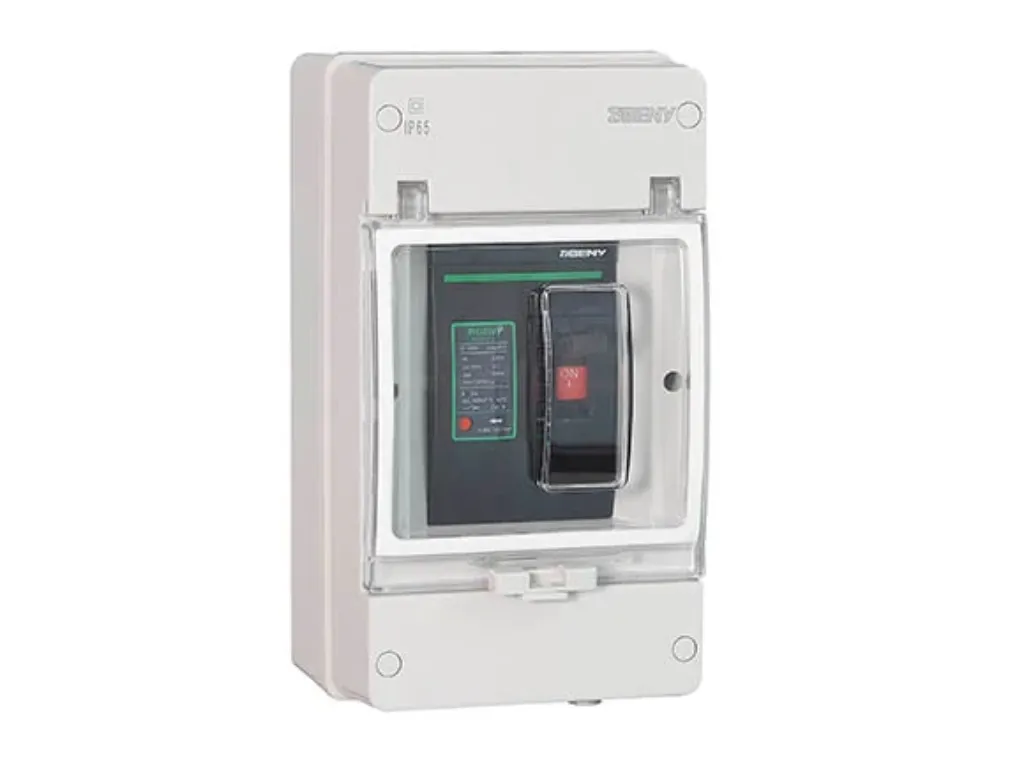
The Molded Case Circuit Breaker is much more than a mere switch. It is an indispensable safety device, often the preferred choice and a foundation of contemporary electrical power distribution. It is capable of automatically identifying and safely breaking damaging overloads and catastrophic short circuits, which is essential to equipment protection, fire prevention, and personnel safety. Knowledge of its components, working principles and correct selection criteria are vital to engineers, technicians and anyone involved in the design and maintenance of a dependable electrical system. A knowledgeable decision, made on the basis of accurate technical specifications and the choice of a certified, quality-oriented manufacturer, is an investment in long-term safety and operational integrity.
© 2025 MCCB Technical Guide – Professional Electrical Protection Solutions